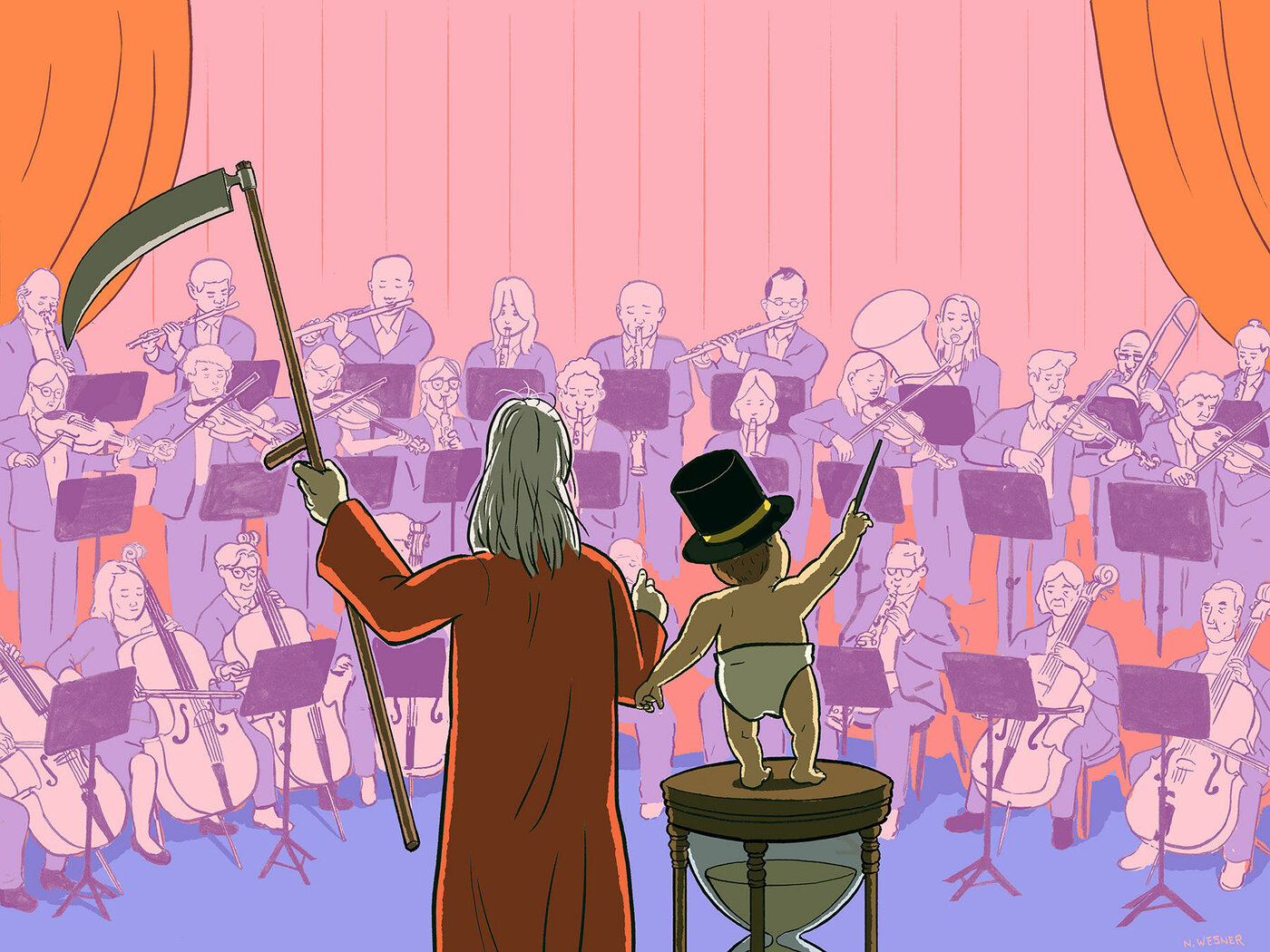
Illustrations by Niklas Wesner.
There’s something strange lurking beneath the surface of some of 2025’s biggest films. Sounds that would make many audiences reach for their earplugs under ordinary circumstances have nonetheless crept into the deep tissue of the year’s cinema without so much as a raised eyebrow. While viewers are otherwise distracted by Leonardo DiCaprio flapping around in his dressing gown, Austin Butler’s slack-jawed look of finely chiseled panic, or Adrien Brody’s shuffling angular frame, some of the most out-there music on offer has found a welcoming home in these films—even if it’s not quite the center of attention.
The orchestral score to Paul Thomas Anderson’s *One Ba…
Illustrations by Niklas Wesner.
There’s something strange lurking beneath the surface of some of 2025’s biggest films. Sounds that would make many audiences reach for their earplugs under ordinary circumstances have nonetheless crept into the deep tissue of the year’s cinema without so much as a raised eyebrow. While viewers are otherwise distracted by Leonardo DiCaprio flapping around in his dressing gown, Austin Butler’s slack-jawed look of finely chiseled panic, or Adrien Brody’s shuffling angular frame, some of the most out-there music on offer has found a welcoming home in these films—even if it’s not quite the center of attention.
The orchestral score to Paul Thomas Anderson’s *One Battle After Another *(all films 2025 unless noted), for instance, may have been composed by Jonny Greenwood of the stadium rock band Radiohead, but the wild, ballistic pulse that drives much of the action comes courtesy of one of the UK’s most exciting and innovative drummers, Tom Skinner, cofounder of raucous London jazz scene mainstays Sons of Kemet and Melt Yourself Down (and Greenwood’s bandmate in The Smile).
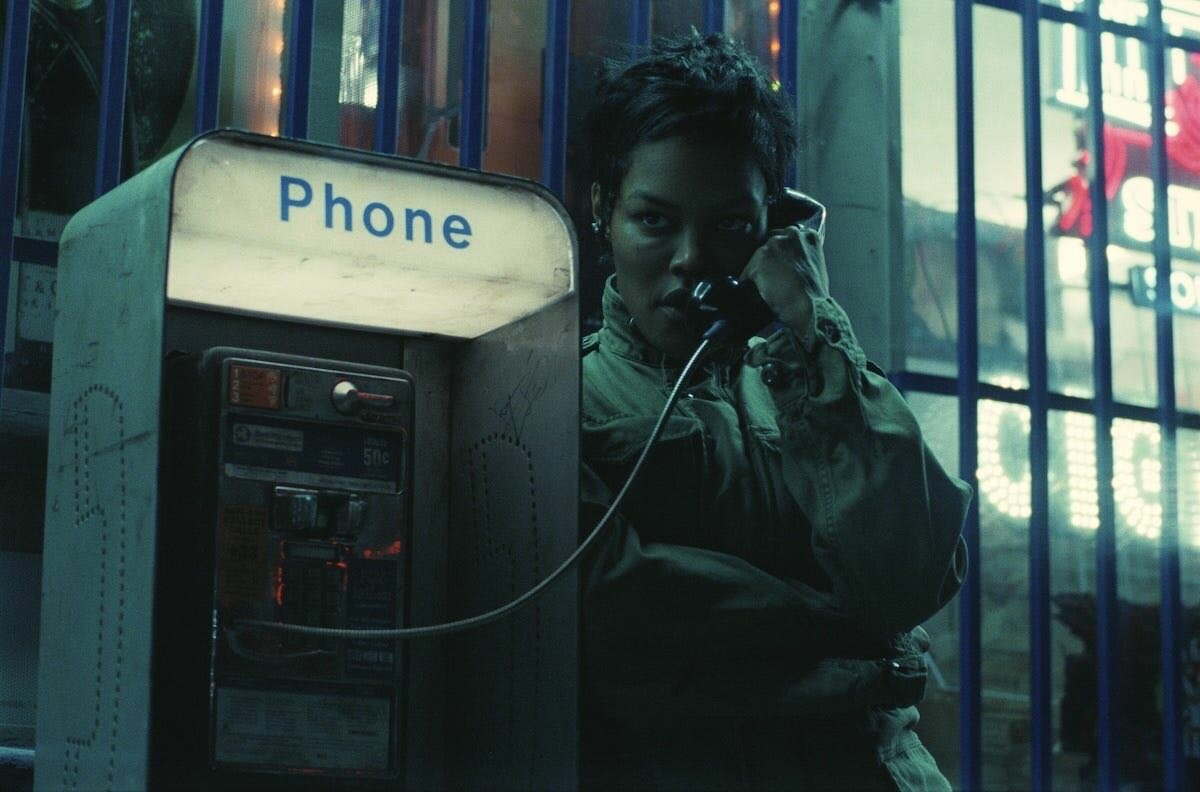
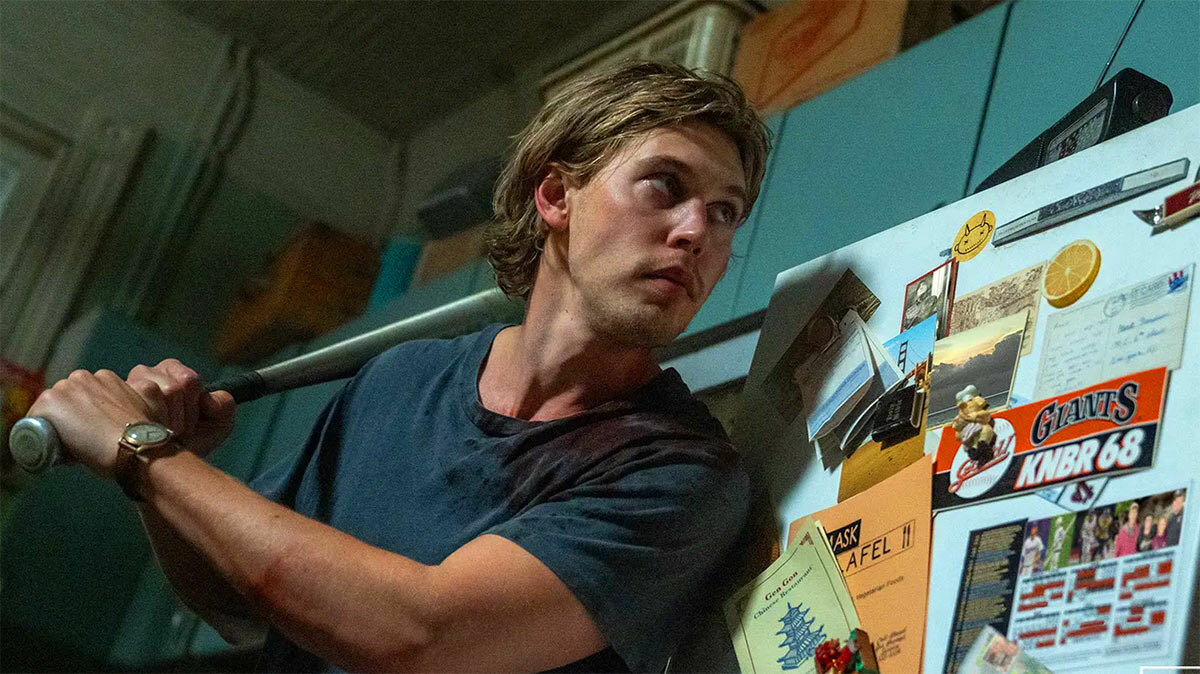
Top: *One Battle After Another *(Paul Thomas Anderson, 2025). Bottom: *Caught Stealing *(Darren Aronofsky, 2025).
Similarly, Darren Aronofsky’s Caught Stealing is largely set to a post-punk score by British band Idles and composer Rob Simonsen, but listen closely in certain scenes, such as the car crash near the end of the movie, and you’ll catch the skronk and growl of free improviser Colin Webster’s saxophone. At key points throughout the film, Webster’s horn is transformed by a battery of electronic effects into a weird, unplaceable fog that heavily clouds the often violent imagery. But at the most intense moments, it lurches into focus, like a steam train hurtling toward you.
And while watching Brady Corbet’s *The Brutalist *(2024), it’ll mostly be composer Daniel Blumberg’s Oscar-winning, brash Wagnerian motifs that grab your attention. But put an ear to the music’s subsoil and you’ll hear a wild brew fomenting. Deep in the mix, you can make out the clang of dissonant piano chords played by AMM’s John Tilbury, one of Britain’s most rigorous interpreters of John Cage and Morton Feldman, plus writhing, squawking saxophone lines played by Seymour Wright (from The Wire magazine favorites أحمد [Ahmed]) and Evan Parker (from pioneering free improv collective The Spontaneous Music Ensemble). It’s a screechy, scratchy sonic universe of scraped piano strings and woodwind multiphonics, bowed cymbals, and other unusual techniques that adds much to the sense of creeping dread and inexorable disaster lurching through the film’s epic 215-minute runtime.
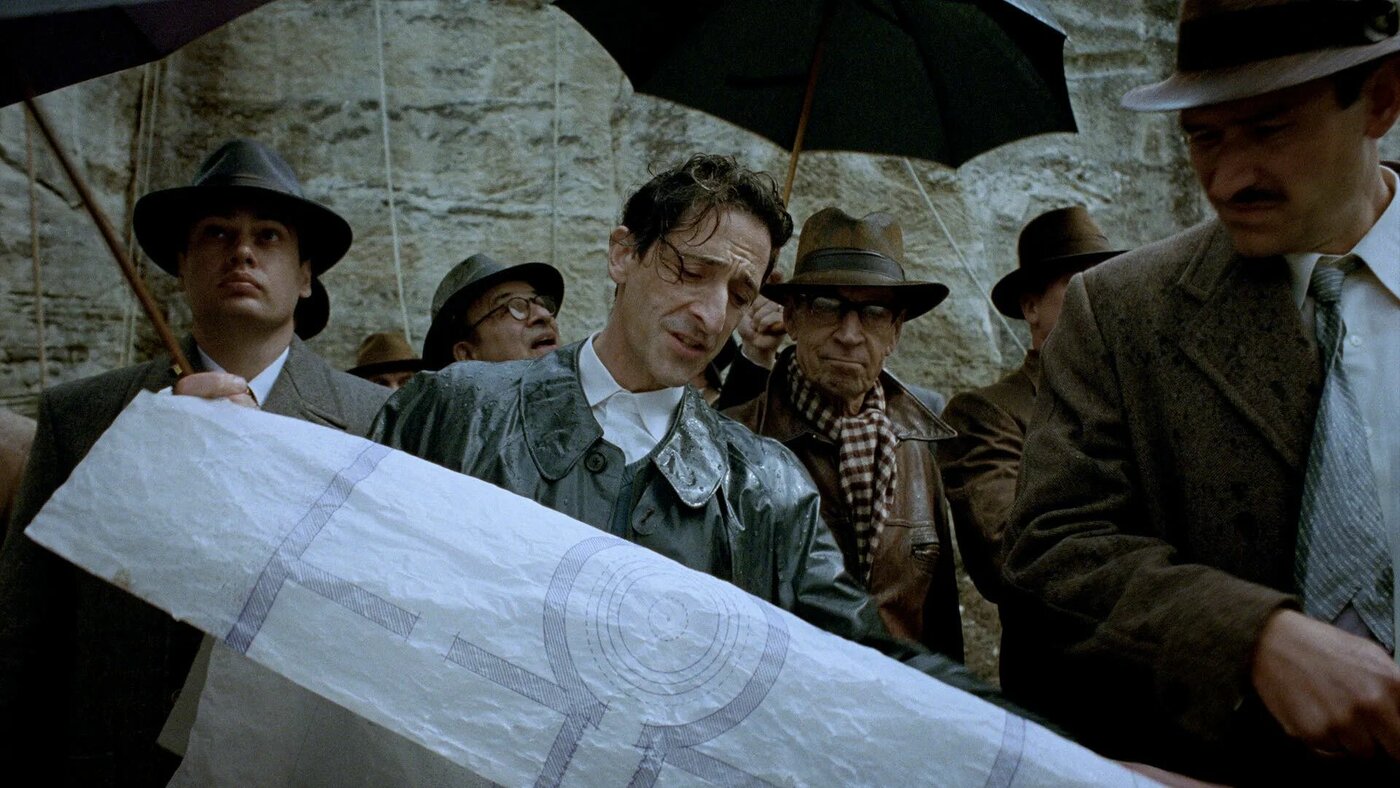
*The Brutalist *(Brady Corbet, 2024).
Everyone recognizes the soaring, heroic themes of John Williams and the epic whoomph of a Hans Zimmer score. Their work has become iconic, and their imitators are legion. In recent years, however, a new generation of composers have entered the film music game, emerging not from film-school courses in scoring to picture and early gigs writing for advertisements, but from the world of experimental music. Venues like Cafe Oto—London’s premier experimental music venue, renowned for adventurous programming and uncompromising sounds—have become unlikely proving grounds for new voices such as Blumberg, but also Mica Levi, one of Jonathan Glazer’s regular collaborators, and Jerskin Fendrix, Yorgos Lanthimos’s favored composer.
It’s certainly been quite a year for avant-garde music at the cinema. First you had Blumberg name-checking Cafe Oto in his Oscars acceptance speech. Then Roofman’s escaped convict Jeffrey Manchester (Channing Tatum) gave as his alias the name of noted downtown New York composer and saxophonist John Zorn. Sure, Christopher Bear’s syrupy, piano-led score for the latter may have been a world away from the manic intensity and wild post-punk energy of classic Zorn albums such as Naked City or Spy vs. Spy. But in The Brutalist’s roll call of avant-garde players (which, alongside Tilbury, Wright, and Parker, also includes singular, pathbreaking artists like Steve Noble, Axel Dörner, and Joel Grip), there’s a real sense of experimental music coming together with a bold cinematic vision in fresh and exciting ways.
Much like its protagonist, the music to Corbet’s film feels at times like it is caught between the old world and the new, equal parts nineteenth-century European romanticism and twentieth-century modernism.There were moments I felt like I was listening to Wagner’s Das Rheingold; at other times, John Coltrane’s A Love Supreme. Wailing sirens evoke Edgard Varèse, harsh bangs and bracing clunks recall Galina Ustvolskaya. But at the end of the day, it’s not so much the particular notes played or even the rhythms bashed out that make these films sound so remarkable, but the deep texture of the music, the audible grain of real, physical instruments, the materiality of sound itself.
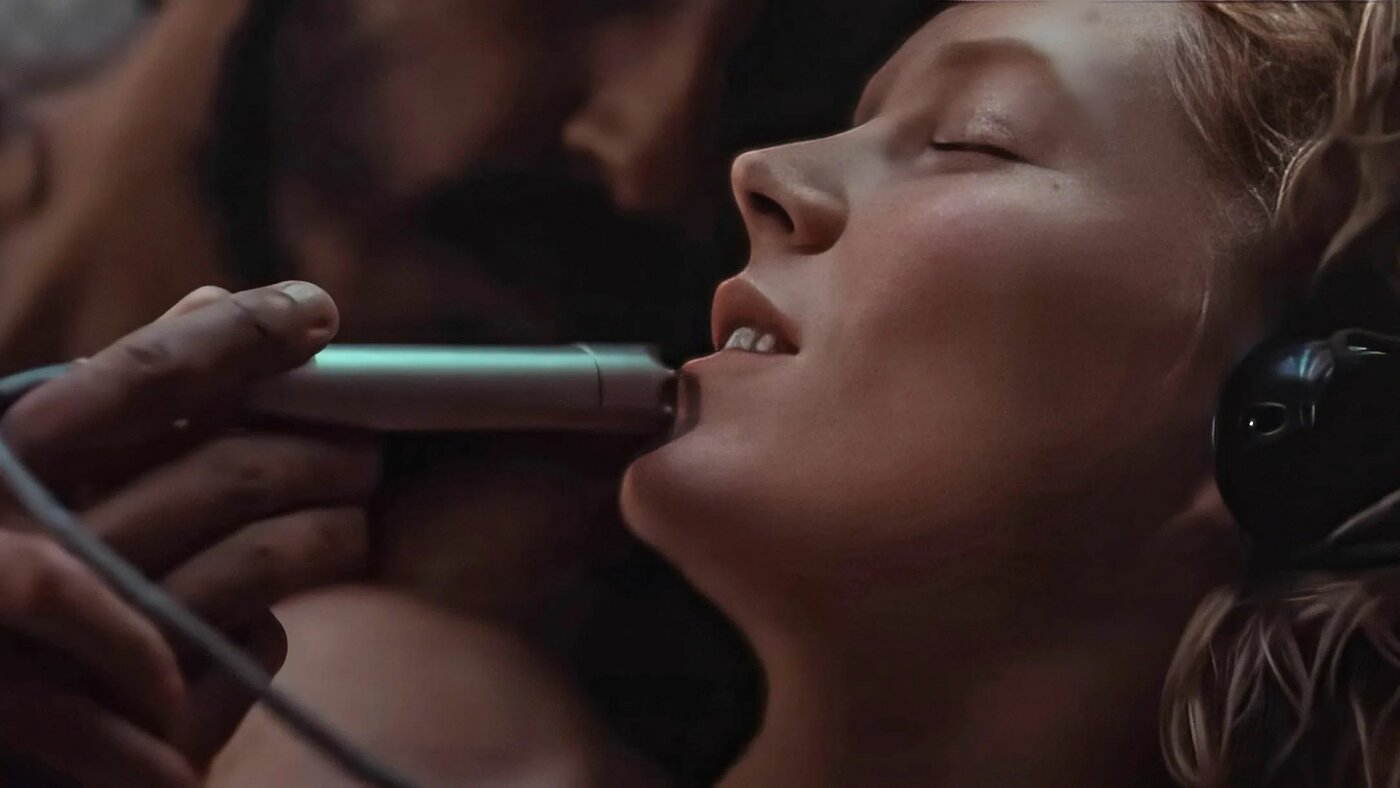
*Rabbit Trap *(Bryn Chainey, 2025).
“With your eyes you enter the world; with your ears the world enters you,” murmurs stymied electronic music composer Daphne Davenport (Rosy McEwen) in Bryn Chainey’s folk horror film Rabbit Trap. It could be a manifesto for this weird film as a whole—even for cinema as such in 2025. Rarely has sound seemed so sensual, so fleshly. We watch Davenport’s partner, Darcy (Dev Patel), slowly caressing his wife’s body with a Sennheiser shotgun microphone. Her skin thrums like rushing water; the hairs in her armpits sound like the ground crumbling away beneath your feet. Throughout the film, sound is related to touch, coarse and grainy, intimate and always close. The electronic score by Lucrecia Dalt is equally carnal—simultaneously viscous and friable, brittle and slippery. You can hear the physical action of Dalt’s hands manipulating tape as it flows through reel-to-reel machines, her voice encrusted with layers of analog effects.
Rabbit Trap is only Dalt’s third feature as a composer (after the body-horror science-fiction film The Seed in 2021 and last year’s Zambian drama-comedy On Becoming a Guinea Fowl). But the Colombian-born composer is highly celebrated as a recording artist, with ten solo records to her name, as well as several brilliant collaborations with Aaron Dilloway, cofounder of the Ann Arbor noise group Wolf Eyes (who contributed some additional tape loops to Rabbit Trap). In 2022, her album ¡Ay! made the number one spot in The Wire’s end-of-year best albums list, praised by Rob Turner for its “direct and visceral” approach. It’s one of several films this year in which artists from outside the world of traditional film scoring have been able to push the art into unusual and intriguing territories.

*My Father’s Shadow *(Akinola Davies Jr., 2025).
The tender and moving Nigerian drama My Father’s Shadow is likewise a film concerned as much with the sense of touch as those of sound and vision. Akinola Davies Jr. trains his camera close up on skin and fabric, bubbling oil and dusty streets. The music, by CJ Mirra and Duval Timothy, is just as tactile and textural as Dalt’s score for Rabbit Trap, but it does not amplify and exaggerate its sounds to the point of noise and distortion; rather, the music slinks through the picture, coating every scene in a shimmering haze of memory and nostalgia. Composed predominantly for piano, with percussion, electronics, vocals, and double bass, the music feels small-scale and intimate, yet also open and full of wonder—appropriate to the narrative’s child’s-eye view of an adventure into the big city. The piano here is not a rich and sonorous concert grand, made big with the natural reverb of a symphony hall, but a clunky, crunchy old domestic upright, miked close to pick up every idiosyncrasy of its hammers and strings.
Of the two credited composers, Mirra is the old hand, with a list of credits stretching back into the mid-2010s. Timothy is a first-time film composer, albeit with a string of albums to his name as artist and composer, feted by Pitchfork and The Quietus for his deft traversal of the worlds of contemporary composition, jazz, R&B, glitch, field recording, and hip-hop aesthetics. His work on My Father’s Shadow is polymorphous and omnivorous, one minute ruminative and sweetly melodic, the next exploratory and free-form. There’s an elusive quality to it, as if the whole soundtrack might slip through your fingers at any minute, as fragile as the threads of memory that hold together the film’s story.

*To Use a Mountain *(Casey Carter, 2025).
Kara-Lis Coverdale’s music for To Use a Mountain gives the lie to any notion that ambient music might only function as a soothing background, a kind of soporific balm for the ears. On the contrary, her roving and fluctuating electronic tones prove profoundly unsettling. Without distortion or dissonance, the sound nonetheless lends an uncanny base note to the picture’s rural, at times bucolic imagery. It’s an apt fit. After all, these are no ordinary forests, canyons, and cornfields. Casey Carter’s documentary visits six of the sites chosen by the Department of Energy for the disposal of some of the roughly 77 million gallons of radioactive waste left over from the production and testing of nuclear weapons. The music Coverdale has produced to accompany this imagery sounds positively alive. It has an inner effervescence which mixes seamlessly with archive recordings of ticking Geiger counters and the crackle of old magnetic soundtracks. Carter and Jared Paolini’s sound design pulls in a rich stew of field recordings, Foley, and music, including several ominous and crumbly tracks by experimental Dutch techno artist Boris Bunnik, all blended together into a potent sonic soup. But Coverdale’s music is the rich, hearty broth in which all those other ingredients come together to bubble away contentedly.
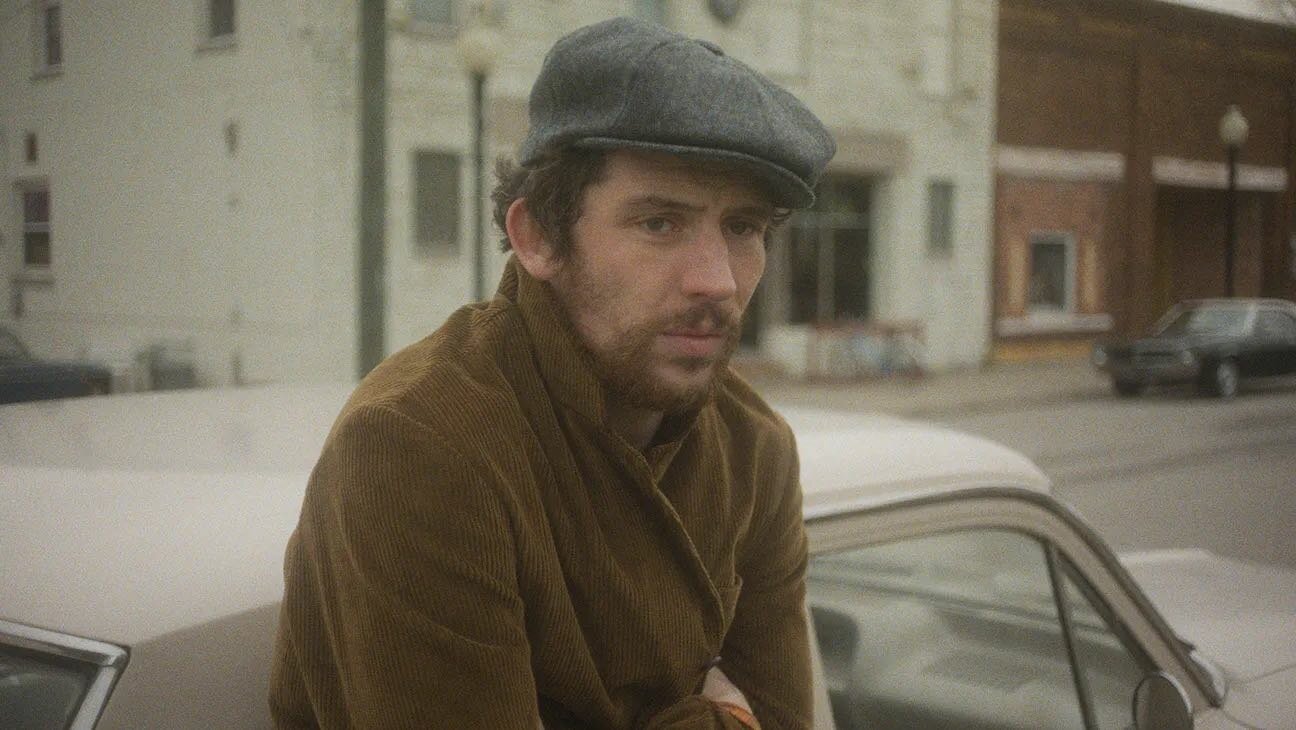
*The Mastermind *(Kelly Reichardt, 2025).
A mainstay of Chicago’s experimental music scene for more than two decades now, Rob Mazurek has never before worked in film. His score for The Mastermind recalls classic midcentury jazz soundtracks, like Miles Davis’s music for *Elevator to the Gallows *(1958) or Shorty Rogers’s bits in *The Man with the Golden Arm *(1955), with its bruised horns and rambunctious, tumbling rhythms. It’s heady, smoky music that lends a noir-ish tinge to Kelly Reichardt’s low-key tale of an art heist and its aftermath. At key moments of narrative tension, the score strips back to Mazurek’s Chicago Underground Duo bandmate, drummer Chad Taylor, playing especially loose and free, in a manner recalling the off-kilter rhythms of fellow Windy City musicians such as Jack DeJohnette and Famoudou Don Moye (of the Art Ensemble of Chicago). But it’s the wispy, almost ethereal sound of Mazurek’s cornet, with its breathy, gauzy tone, that carries the heart of the movie, especially in its forlorn final act.
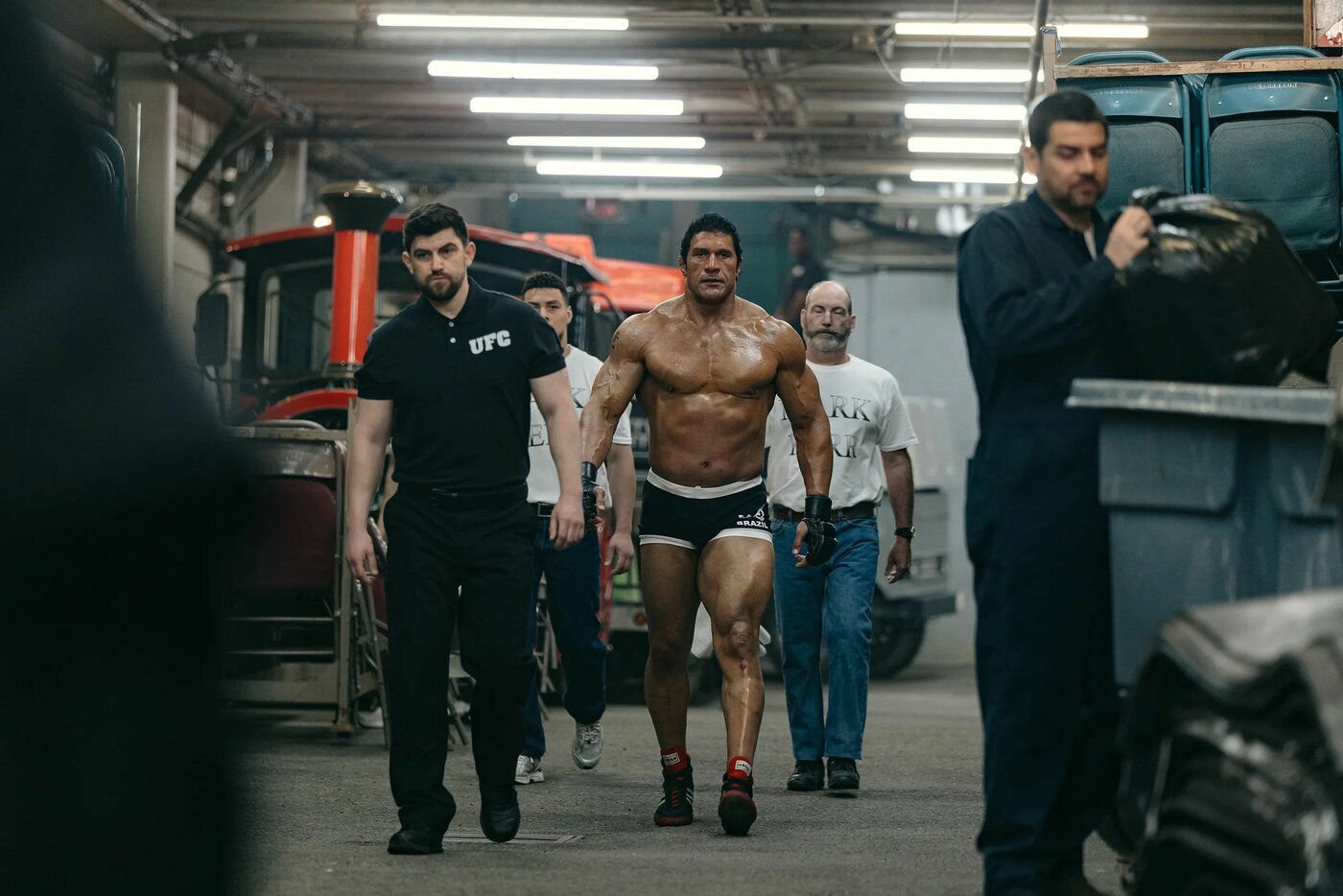
*The Smashing Machine *(Benny Safdie, 2025).
Another great jazz-influenced soundtrack this year was Nala Sinephro’s music for The Smashing Machine. The Belgian-born harpist and composer, noted for a brace of heady albums on Warp Records, actually appears in one scene in the film, playing a woozy rendition of the American national anthem immediately before the protagonist’s crucial final fight. All too often, a movie’s music is something of an afterthought, the last piece of the puzzle to be slotted in. Sinephro’s cameo in this key scene suggests she was involved much earlier in the process. It’s easy to imagine her slinky and sinuous music informing the rhythm of Benny Safdie’s shooting and even Dwayne Johnson’s characterization of the ill-starred mixed-martial-arts fighter Mark Kerr. Johnson plays Kerr with a light touch, speaking in soft tones with something of a poetic bent—a man possessed by a desire to watch the sunset through airplane windows and by an appreciation of Japanese kintsugi pottery, not to mention an addiction to prescription painkillers. The music captures this opiated dreaminess perfectly. Synthesizers swirl and throb, Sinephro’s harp fluttering lepidopterously in between, with florid saxophone lines played by Nubya Garcia drifting to and fro as if floating on a cloud. But for all its reverb and echo-drenched spaciness, there’s still an intense physicality to the music. As with Dalt’s electronic score for Rabbit Trap, you can hear the clacking and cluttering of fingers on string and metal, the purr of breath through pipes. Again, it’s the materiality of the instruments that comes through, matching the very physical nature of the film itself.
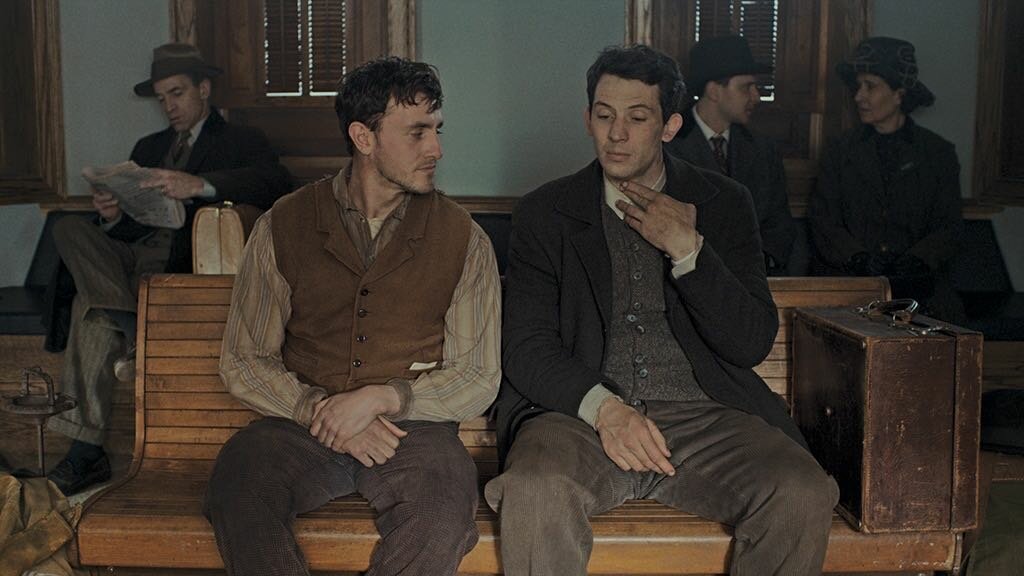
*The History of Sound *(Oliver Hermanus, 2025).
No less than Rabbit Trap, Oliver Hermanus’s The History of Sound is a film with music at its very heart. The story concerns two men (Paul Mescal and Josh O’Connor) who meet at the Boston Conservatory and discover a shared passion for folk song. In and around the traditional ballads sung and recorded by the characters in the film, nondiegetic music comes courtesy of Oliver Coates, an artist who is certainly no stranger to Cafe Oto, having collaborated there with the likes of composer Laurie Tompkins, improvising violinist Angharad Davies, and visual artist Lawrence Lek, among others. Coates was also responsible for the spellbinding music in Charlotte Wells’s 2022 film, Aftersun (also starring Mescal). What here starts out as run-of-the-mill romance movie music, the soundtrack to the burgeoning love story between the two leads, soon develops into something much stranger, keening and thrumming with all sorts of unkempt energies. Coates is a good enough composer to know that what makes folk music so thrilling is not so much the notes on the score as all the grit and dust and noise in between. He responds to the songs collected by the film’s characters with taut cello harmonics and subtle electronics which bring out the earthy materiality of his instrument. It’s as if you could hear every ridge and bump of the catgut strings, every grain of the wood in the body. As Mescal’s character explains to a boy while they prepare to record him with their phonograph device, “Sound is invisible, but it can be physical. It can touch something.” It’s not all so visceral. Much of the film’s music is gossamer light, as if it might blow away and disintegrate at the slightest gust. But even here, in these tender little melodic fragments dancing on the wind, there remains something unsettled and a little wayward, a certain bite.
Film scores have long provided a conduit for avant-garde sounds to reach relatively mainstream audiences. Many composers of the classical Hollywood Golden Age, including Leonard Rosenman and Oscar Levant, had studied with the radical Austrian modernist Arnold Schoenberg, notorious emancipator of the dissonance. Later, in the 1950s and ’60s, pioneers of electronic music, such as Oskar Sala and Louis and Bebe Barron, found work in cinema (notably on The Birds, 1963, and Forbidden Planet, 1956, respectively) long before they were accepted into the concert hall. Later on, in the late ’60s and into the ’70s, composers associated with the radical Darmstadt School for New Music in Germany, such as Karlheinz Stockhausen, Iannis Xenakis, and Luciano Berio, found their music turning up in films by directors such as Nicolas Roeg (Walkabout, 1971), Henri-Georges Clouzot (Woman in Chains, 1968), and Stanley Kubrick (2001: A Space Odyssey, 1968). But as the role of film score composer became more established and professionalized, a degree of standardization crept in.
Today, there are signs of a new wave crashing through cinema speakers. Collecting his Academy Award in March, Blumberg paid tribute to the “group of hard-working, radical musicians who’ve been making uncompromising music for many years” before collaborating on his score. It’s exciting to hear musicians like that not only acknowledged on such a big stage, but right up there on the big screen.

Continue reading Notebook’s 2025 Year in Review.