It is impossible, even for the most casual observer, to miss the changes taking place in Poland today. The high-rises and new residential neighborhoods in most cities go hand in hand with rising rents; new, daring architectural designs shine next to Soviet-style buildings, a palpable reminder of the socialist regime that governed the country from the end of World War II until 1989. Effort and investment are pouring into the modernization of the country’s transportation, communication and banking infrastructure.
Poland is now one of the 20 or so countries in the world that can boast a nominal gross domestic product of more than $1 trillion. For years, it has experienced the highest rate of growth in the European Union: 2.9% in 2024, and a projected 3.4% in 2025. For comparison, the …
It is impossible, even for the most casual observer, to miss the changes taking place in Poland today. The high-rises and new residential neighborhoods in most cities go hand in hand with rising rents; new, daring architectural designs shine next to Soviet-style buildings, a palpable reminder of the socialist regime that governed the country from the end of World War II until 1989. Effort and investment are pouring into the modernization of the country’s transportation, communication and banking infrastructure.
Poland is now one of the 20 or so countries in the world that can boast a nominal gross domestic product of more than $1 trillion. For years, it has experienced the highest rate of growth in the European Union: 2.9% in 2024, and a projected 3.4% in 2025. For comparison, the average rate for the rest of the EU was 1% in 2024. On Jan. 1, 2025, Poland’s minimum wage (the equivalent of $7.35 per hour) became higher than the U.S. federal minimum wage ($7.25 per hour).
Among these dramatic structural transformations, it is easy to overlook a cultural phenomenon that may not be as visible or measurable but which directly affects the daily lives of Poles: shifts in their food culture. The streets of Warsaw, Krakow, Gdansk and other major Polish cities abound with eateries, bars, cafes, bakeries, and food and wine shops. These establishments run the gamut from tourist traps and mom-and-pop joints to hip wine bars and high-end restaurants with one or two Michelin stars, which many Polish food professionals have welcomed as a long-awaited acknowledgement by a foreign — and as such reputable and seemingly indisputable — authority of the advances in the local culinary scene.
But there is more here than meets the eye. As has already happened in other postindustrial societies, food in Poland has become an arena where new individual and collective identities can emerge. What’s happening around Polish tables, both at home and when eating out, tells us important stories about structural transformations, social aspirations and deep-seated anxieties. We found these dynamics so fascinating that we wrote a book about them: “The Pierogi Problem.” By “problem,” we mean that most foreigners recognize only pierogi — dumplings stuffed with meat, cabbage and mushrooms, potatoes and cottage cheese, or fruit, which are ubiquitous in Poland — and maybe kielbasa sausage as Polish food, causing intense frustration for many Poles, particularly those in the food business. Believing that such an image of Polish cuisine is overly simplistic, stereotypical and even provincial, they have been trying to reshape it.
What’s behind this redesign of Polish cuisine?
How and what Poles eat has changed since the early 1990s. The first decades after the end of the socialist regime were marked, on the one hand, by growing access to and interest in foreign cuisines and Western forms of food production, distribution and consumption. While the affluent enjoyed risotto and lobster, pizza and kebabs first turned into a form of affordable exoticism for the working classes and then became mainstays. Foreign specialties — from hamburgers and Italian pasta to sushi, ramen and kimchi — have become trendy as more and more Poles travel, are exposed to international lifestyle media and have access to higher education. At the same time, supermarkets are now the norm, causing small stores, farmers markets and traditional forms of food procurement to decline. Mass-produced and hyperprocessed foods — both domestic and imported — can be found in the pantries of most Polish homes, offering convenience and affordability. The effects of globalization are visible in everybody’s fridges and shopping carts.
On the other hand, in the past 15 years or so, local, traditional and artisanal foods have been acquiring greater prestige and visibility. Ingredients, dishes and techniques like fermented vegetables and cabbage-and-meat stew (“bigos”) that until a decade ago were considered commonplace or uncomfortable leftovers from the past — too heavy, bland or unhealthy — are redesigned to meet new cosmopolitan preferences. These shifts reflect the rise of the Polish middle class and a new set of affluent elites with distinct sensibilities and lifestyles. In reality, those dishes had never disappeared but were often relegated to the domestic sphere: an expression of family ties and a source of comfort that were unworthy of sharing with outsiders, especially immigrants and tourists, or in the context of the food business.
Innumerable farmers and food providers around the country never stopped producing fresh cheese, pickled vegetables and smoked sausage, which remain central to the diet of many Poles. In fact, one could argue that they are the backbone of what Poland tastes like. But they lacked appeal for the younger, urban, upwardly mobile generations, whose families had worked hard to leave the countryside and its lower-class stigma behind. Those farmers and providers simply lacked the right language to make their products hip and cool; they didn’t know how to frame their food in terms of health, artisanal credentials, sustainability, agrobiodiversity and other values that are relevant to the growing ranks of newly minted foodies.
Recently, a new generation of Polish tastemakers, ranging from food producers to chefs and media personalities, have taken on the role of cultural intermediaries, bridging gaps between consumers and producers, city and countryside, Poland and the rest of the world. Over time, these tastemakers have developed strategies that take rhetorical techniques and visual features from the increasingly globalized foodie culture and localize them in forms that make sense in the Polish context. Without speaking English, any Pole can log in to Instagram or TikTok and see what is cool and trendy in other parts of the world, what a refined — but still local — dish should look like, or what details make a cocktail bar sophisticated. And as in other places, it has become a sign of distinction and connoisseurship to be aware not only of global cuisines, but also of what has always been in one’s backyard: a unique variety of sour cherry, or an almost disappearing breed of trout. It is not enough to be familiar with the products; a connoisseur also has to know how to discuss, combine and visually stage them.
Ingredients, techniques and recipes that were once considered ordinary or part of Poland’s uncomfortable past are thus being refashioned into cultural symbols that are worthy of respect and appreciation. Reflecting transformations in cultural hierarchies that place greater value on cosmopolitanism, local and traditional foods are moving from the cultural peripheries to the core of the culinary scene, where they are consumed in high-end contexts and assigned different meanings in terms of class and cultural capital. The ladies who make soft fresh “twarog” cheese, “zakwas buraczany” (fermented beetroot juice) or “ogorki kiszone” (fermented cucumbers) in their home kitchens and sell them on sidewalks are, strictly speaking, artisans, but not the kind that foodies tend to appreciate. For the up-and-coming tastemakers, these foods are invisible or lack interest until they “discover” and translate them into quaint, exciting and visually appealing “finds” with unique stories.
Knowing the origin, the history and, at times, the artisan behind a product satisfies cultural and aesthetic desires in a way that more readily available foodstuffs, although convenient, do not. Foodies from Warsaw or Poznan are likely to appreciate and be willing to pay a premium for the uniqueness, the sensory features and the stories behind artisanal or traditional products. Even when manufactured and enjoyed in a rural setting, local foods are pulled into the circulation of ideas, values and expectations that resonate more with people in faraway cities than with neighbors in the countryside.
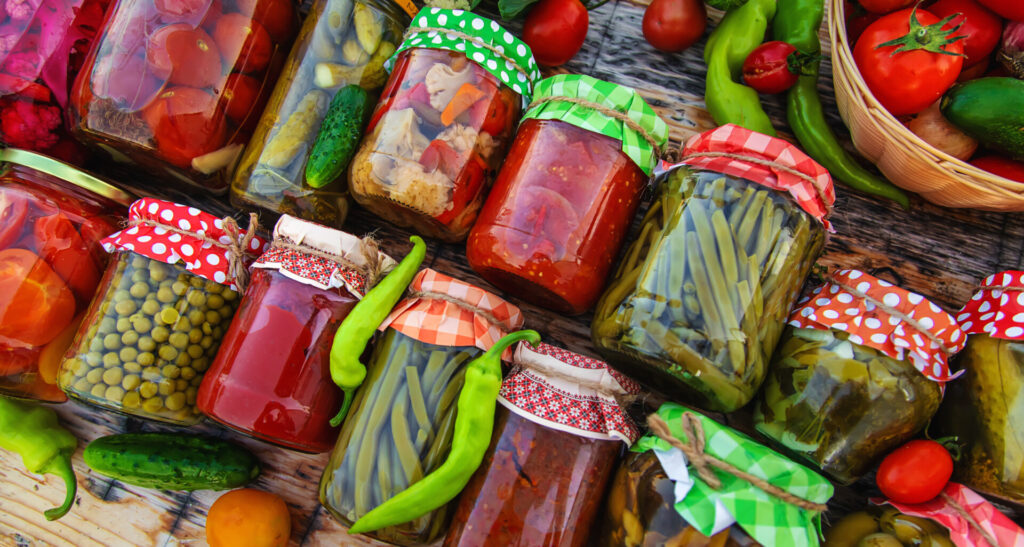 Traditional fermentation methods, which allowed Poles to preserve food during times of scarcity and political uncertainty, have become trendy. (Yana Tatevosian/Getty Images)
These dynamics are not without conflict. What individuals and families manage to put on the table and how they do it reflect economic and political relations. Shopping for one’s vegetables at a farmers market and procuring them at an organic store or roadside stall carry very different meanings, partly because they are also public performances of one’s cultural identity and purchasing power. Pierogi can be a family meal, affordable fare in a workplace dining hall or an opportunity for chefs to show off their skills and creativity by transforming the familiar into something exciting.
Because of food’s newly acquired centrality in Poland today, ambivalence and tensions about eating are more visible, expressing anxieties not only about social status, but also national identity and the country’s future. Ingredients, dishes or culinary traditions get entangled in “gastronativism,” the ideological use of food in politics to determine who belongs to a community and who doesn’t. Meat, for instance, has become the focus of heated debates between conservatives and progressives, between those who embrace it as a quintessential component of Polishness and those who instead point to its negative impact in terms of health, ethics and climate change. Granted, these conversations have become possible because meat is now affordable, marking a tangible break from the times when it was hard to get and readily available only to those with the right connections to those in power.
Against this background, practices such as preserving food and home production of cheese and cured meats were common during the socialist years but then waned after the end of the regime, as remnants of a traumatic past were reinterpreted and given new meaning. This is particularly interesting because that period, still fresh in the memory of Poles, is difficult to romanticize or ennoble through storytelling, unlike the more distant past. Glass jars (“słoiki*,” *pronounced swoEEkee) from one’s grandmother or from countryside relatives fall under this category. Packed with comfort foods like jams, cured meats, fermented vegetables or home-brewed liquors, they can be the object of profound ambivalence. Emotionally rich, they feel close to a rural life that urban Poles may consider caught up in the past and forgotten by modernity and progress. The word “słoiki” thus became a pejorative, class-tinged nickname for newcomers to Warsaw or other big cities who relied on food supplies from their families. Yet “słoiki” and the flavors connected with them are enjoying a certain renaissance, as growing numbers of food enthusiasts engage in jam-making, pickling and fermentation. In fact, the same name is now borne by a popular restaurant in Warsaw.
Little allotment gardens (“działki,” pronounced JAookee) in cities or in their immediate vicinities, whose origins predate socialism but which became especially popular during that period, have survived but have acquired different functions and significance. The vegetables and fruit grown in these tiny plots enriched the diets of many urban Poles during the scarcity that intermittently plagued the country. Older people now tend to the gardens as a form of social interaction and physical activity, while they provide calm and relaxation for the younger generations. They also indicate prestige and social connections, as they are notoriously difficult to secure. Foraging for wild herbs, mushrooms or berries is no longer practiced out of necessity, but it is still a common and beloved hobby among Poles. Foraged herbs, flowers and fruits can be macerated in sugar and alcohol and turned into “nalewki” (pronounced naLEfkee), a traditional spirit whose production often operates in the gray area between legality and bootlegging. Appreciated all over the country, its distribution tends to be limited to informal networks of production and exchange. Local and regional contests are now organized, however, so that categories of appreciation and standards of quality are slowly emerging, mostly as the result of discussions among practitioners.
These informal practices never disappeared. Rather, they were marginalized, scarcely acknowledged and mostly limited to “uncool” and “backward” segments of the population. Now they’re back in fashion. Through them, tastemakers and affluent consumers rediscover traditions, appreciate the uniqueness of local flavors and preserve agrobiodiversity. These practices are widespread, noncommercial and accessible to people of all social backgrounds and ages, at times thriving despite the lack of clear regulations. They embody a grassroots attempt to foster resilience, food security and sociocultural sustainability. It is intriguing how they have come to be appreciated by the middle classes as signs of distinction.
That said, Poles do not simply embrace socialist-era food practices. The reality is much more complex and ambivalent. Attitudes toward food production before 1989 reveal the paradoxes that emerge when personal stories meet history writ large. On the one hand, there is the almost cliched view of the socialist era as a time of political and economic instability that erased food culture and ushered in culinary barbarism — an opinion voiced mostly by food enthusiasts and echoed in the media. According to this perspective, socialism destroyed nearly all artisanal and independent food production, along with people’s culinary tastes. On the other hand, the personal stories of those engaged in the food business are full of fond memories of homemade dishes from that period. Some became foodies or food professionals precisely because of their early exposure to obligatory food work — something they now recall with nostalgia as a formative “school of taste” that allowed them to acquire cooking skills.
Many Poles still eagerly eat in old-fashioned milk bars — simple, inexpensive eateries serving homemade-style food, which were frequently portrayed in popular narratives, sometimes mockingly, as a symbol of socialism. A shop like the “Butcher from the Polish People’s Republic” (“Rzeznik z PRL-u”) blends irony with nostalgia and appeals to craftsmanship, even though it stands in contrast to the historical reality of poor-quality foodstuffs, chronic shortages and restricted access to meat products. Even mass-produced food from state-owned, modernization-driven factories can be experienced as culinary heritage. A striking example is “paprykarz szczecinski” (pronounced pah-pree-karzh shcheh-CHEEN-skee), a cheap canned fish spread with rice and paprika, first produced in Szczecin in the 1960s*.* Today, it appears both as a restaurant dish and as a tongue-in-cheek urban monument in the city of Szczecin. It seems that the culinary legacy of socialism remains open to interpretation, its evaluation still up for grabs.
Despite Poland’s status as the region’s largest economy and most populous country, and its staunch alliance with the United States, it has too often been discounted by the rest of the world as inconsequential or uninteresting — unless your family ancestry has its roots there.
Just as Polish dishes can be refashioned, however, so can the country’s image. Its fast-paced socioeconomic development, the widening inequalities between haves and have-nots and its national politics — constantly oscillating between conservative populism and pro-European centrism — are worth observing, not least because they can prefigure trends and events in other countries in the area. Food provides a useful prism through which to assess these transformations. It is profoundly entangled with social, economic and power dynamics — forces that determine which products are available, where they come from and how they get to consumers. In many ways, food makes the political personal.
Sign up to our mailing list to receive our stories in your inbox.