Other Skies, Other Stories* *is a collection of 20 short stories written by Sara Rai. These short stories were originally written in Hindi, translated by Ira Pande and the author herself. In the author’s note, Rai begins by mentioning that the stories in this collection have been written over three decades and ponders whether “this explains why they have no unifying thread.”
As one reads through the book, the unifying thread becomes quite obvious – the fact that Rai’s stories are born out of an astute understanding of the everyday. What’s more is that this understanding does not come off as analytical or distanced throughout her various narratives. Whether you meet Nab…
Other Skies, Other Stories* *is a collection of 20 short stories written by Sara Rai. These short stories were originally written in Hindi, translated by Ira Pande and the author herself. In the author’s note, Rai begins by mentioning that the stories in this collection have been written over three decades and ponders whether “this explains why they have no unifying thread.”
As one reads through the book, the unifying thread becomes quite obvious – the fact that Rai’s stories are born out of an astute understanding of the everyday. What’s more is that this understanding does not come off as analytical or distanced throughout her various narratives. Whether you meet Nabila* for the first time, or see Bari Dadi’s flustered face in “Mortar and Pestle” or observe ants in “Atacama”,* Rai grounds her readers amongst these characters and the readers become a part of the story Rai writes.
Inviting the reader
By situating the readers within the story, Rai breaks the fourth wall. Her compelling descriptions of the world she weaves ensure that the readers feel surrounded by it, rather than being mere spectators of the story. For instance, when the readers are introduced to Nabila* *or the gardener at Khusrao Bagh, it is not an immediate occurrence despite carrying the disconnectedness of a collection.
The beginnings are nebulous and abrupt, as all stories go; however, readers are slowly settled into the world around them through the narrator’s observations about the things that surround the characters – the bagh for the gardener, and Mehta uncle and aunty for Nabila. These observations are themselves very captivating – they are not difficult to imagine, yet the texture of the description feels almost as if the reader is seeing it for the first time.
For example, in “Nabila”*, *when the narrator describes the ripple made in the water by those frogs, it creates an image in the head that is borrowed from a pre-existing experience of the reader but reproduced in an entirely new context. Similarly, one can really see the gardens of Khusrao Bag, or the way leaves resemble butterflies in “Catching Butterflies”.
Through such immersive writing, Rai creates aesthetically rich stories of characters that appear to exist on the margins of society. These stories end abruptly: “We dropped the photo on the floor and ran outside” (in “Mortar and Pestle”)* *or “In watching the grasshopper, we forgot that Nabila had gone away” (in “Nabila”). The narrator’s distraction is abrupt, often resulting in a sense of dissatisfaction in the reader. But this feeling is a testament to a belief that the story goes on, despite the departure of the narrator.
Reconciliation with loss
In “Mortar and Pestle”*, *the narrator attempts to recall their memories of long-deceased Bari Dadi after being reminded of her through an old hamam dasta (mortar and pestle). The hamam dasta, in this story, is a catalyst for the past and the present. But the intrigue of this story lies in the constant reaching but never arriving at the identity of Bari Dadi. By the end of the story, all that the readers know about her is from the narrator’s observation of those who have a relationship with her. Through these people, the narrator attempts to imagine who Bari Dadi might be, and fails.
Bari Dadi’s identity remains unclear till the very end. Rai’s narrator says, “But who *was *Bari Dadi? Did she have a name? Pratima? Pratima. I tried to match the face with her name but failed”, as if to conclude that the only way the narrator could have been sure of her identity was if he could get her own account of the story. But Bari Dadi is long gone; therefore, her identity remains a mystery. In admitting this failure, the narrator declares that the attempt to know her is inconclusive.
The narrator’s doubts about Bari Dadi echo within the readers. All the interactions mentioned in the story become inadmissible to the inquiry of who she is. In this backdrop of other characters characterising Bari Dadi, she herself remains silent. Perhaps, this silence is what Rai was drawing our attention to. Since we don’t have access to her own account, the narrator depends on their memories of her, as do the readers. The act of narration, which is rooted in this lack, then defines Bari Dadi.
Rai’s stories of Nabila and Bari Dadi ask questions that female writers often ask today: What do different forms of narration do to an identity? And what happens to those who remain unrecorded or only partially seen? Rai offers no easy answers. Instead, she traces the edges of lives that rarely enter dominant narratives, allowing their silences to speak as loudly as their actions. In doing so, *Other Skies, Other Stories *becomes a compelling reminder that the everyday is full of stories we notice only when a writer like Rai guides our gaze to what we might otherwise miss – and how to listen for the voices that never quite arrive.
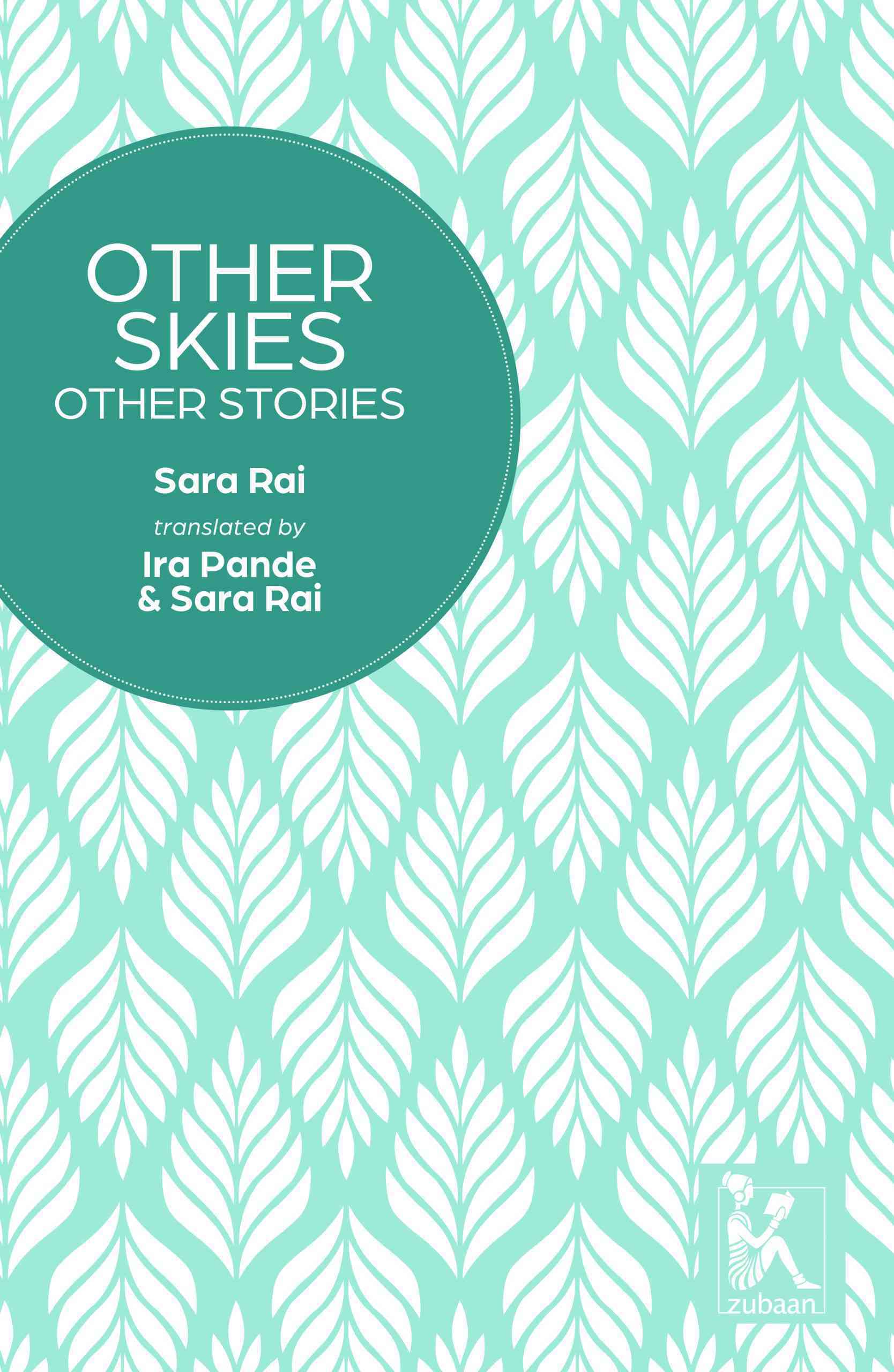
**Other Skies, Other Stories, Sara Rai, translated from the Hindi by Ira Pande and the author, Zubaan Books.