“Every single man I did get to know filled me with but one desire: to lift my hand and bring it smashing down on his face. But because I am a woman I have never had the courage to lift my hand.”
Egyptian writer, activist, and physician Nawal El Sadawi’s 1977 novel Woman at Point Zero raises many pertinent questions that feminists still struggle to answer – the most prominent of which might be the legitimacy of sex work. While it is the most exploitative industry of all, the other side of the story, as Sadawi’s novel shows, is a shot at financial stability and independence for many socially disadvantaged women.
The novel, which can also be categorised as creative nonfiction, was written after Sadawi’s encounter with…
“Every single man I did get to know filled me with but one desire: to lift my hand and bring it smashing down on his face. But because I am a woman I have never had the courage to lift my hand.”
Egyptian writer, activist, and physician Nawal El Sadawi’s 1977 novel Woman at Point Zero raises many pertinent questions that feminists still struggle to answer – the most prominent of which might be the legitimacy of sex work. While it is the most exploitative industry of all, the other side of the story, as Sadawi’s novel shows, is a shot at financial stability and independence for many socially disadvantaged women.
The novel, which can also be categorised as creative nonfiction, was written after Sadawi’s encounter with Firdaus, a woman prisoner in Qanatir Prison, awaiting a death sentence. Like Firdaus, Sadawi too would be imprisoned in 1981, along with 1,035 others, for defying the then-president of Egypt, Anwar El-Sadat.
However, unlike Sadawi and her compatriots, Firdaus has been sentenced to death for murdering a man. The story eventually reveals that he was her pimp. The possible illegal nature of his work or his sure hand in dehumanising Firdaus is overlooked – taking a life is unpardonable and Firdaus must pay for it with her own. And yet, this is not an act of mindless violence, nor can it be judged as a moment of insanity – as Firdaus relates her story, it becomes evident that this is the inevitable outcome of being pushed to the edge since the very start of her existence.
A definitive life of violence
The tale begins with her childhood, where Firdaus witnesses her father freely abusing her mother despite being a staunch practitioner of Islam. Very early on, she learns that being a woman is of little value – she’s subjected to genital mutilation and, before long, stopped from going out. No longer than she reaches puberty, her uncle begins to abuse her sexually.
The untimely death of her parents forces her to move in with her uncle, who, after a few years of education, takes a bride. The couple is unkind to Firdaus and marries her off to an old widower. There’s no trousseau for her, and Firdaus is told to make do with the dead woman’s belongings. Herein begins a definitive life of violence – beginning with slaps and thrashings and leading to rape. When matters become simply intolerable, Firdaus escapes home in search of employment.
For a barely educated and lower-class woman, prostitution seems like the only way to earn a living. She is able to create a reputation for herself, offering her services at a high price. For the first time, the money and the independence it brings allow her to “eat well” and “sleep deeply.” She has a room to herself, books, a clean toilet, and a full pocket, which grants her the freedom to say no.
A brush with a male journalist upturns her world. He brings up the matter of “respectability” in a profession. When Firdaus likens herself to a doctor, the man laughs in her face. She abruptly quits her work and settles for a poorly paid job at an office. This place of “respectability” proves to be a minefield – every male employee, from the lowly bearer to the top brass, lusts after the female employees and harasses them. Sexual favours are traded in exchange for promotions and continued employment. Firdaus cannot stomach the hypocrisy but stands firm on her ground – she wards off the men by saying they’d never be able to afford her.
No country for women
But what of progressive men? Those who believed in equality and liberty for all? Life brings her Ibrahim, a fire-spitting leftist revolutionary. Firdaus falls in love with him and sleeps with him by her own choice – but Firdaus makes it clear that he wants nothing to do with someone like her, and rejects her when she longs for something more stable between them. This heartbreak is unlike anything she has ever experienced, and her pursuit of respectability feels pointless. “My virtue, like the virtue of all those who are poor, could never be considered a quality, or an asset, but rather was looked upon as a kind of stupidity, or simple-mindedness, to be despised even more than depravity or vice,” she says.
“A successful prostitute was better than a misled saint,” she decides, and returns to the life which allowed her some modicum of agency.
It is obvious why Sadawi’s novel created such an uproar when it was first published. It is, of course, highly critical of the misogynistic Egyptian society but it also takes an unkind view of liberal feminism. This was like the time when Western feminism was being imported to the global south, erasing nuances that were unique to the host society. Sex work then – as it is now – was uncritically looked down upon and sex workers were accused of facilitating gender violence. And yet, stories like Firdaus’s complicate our understanding of choice-based feminism – when a woman has nothing, can she really *choose *a life of respectability? Firdaus did try out the acceptable modes of employment, but they proved equally dangerous. When almost every institution is controlled by violent men, how much choice does a woman have to live freely and decide her fate? Almost none, as Firdaus tells us and as we ourselves see time and again.
All her life, Sadawi has been a serious critic of the patriarchy – she opposed female genital mutilation, derided feminism that did not take into account the harmful effects of capitalism, and did not have romantic notions of religion. Everything she stood for and against, serendipitously, culminates in Firdaus’s story, who too, as it turns out, was the victim of the very forces that Sadawi campaigned against. This true story of a woman sentenced to death and of an activist fighting for women’s liberation bears witness that the fate of every woman is entwined with each other’s.
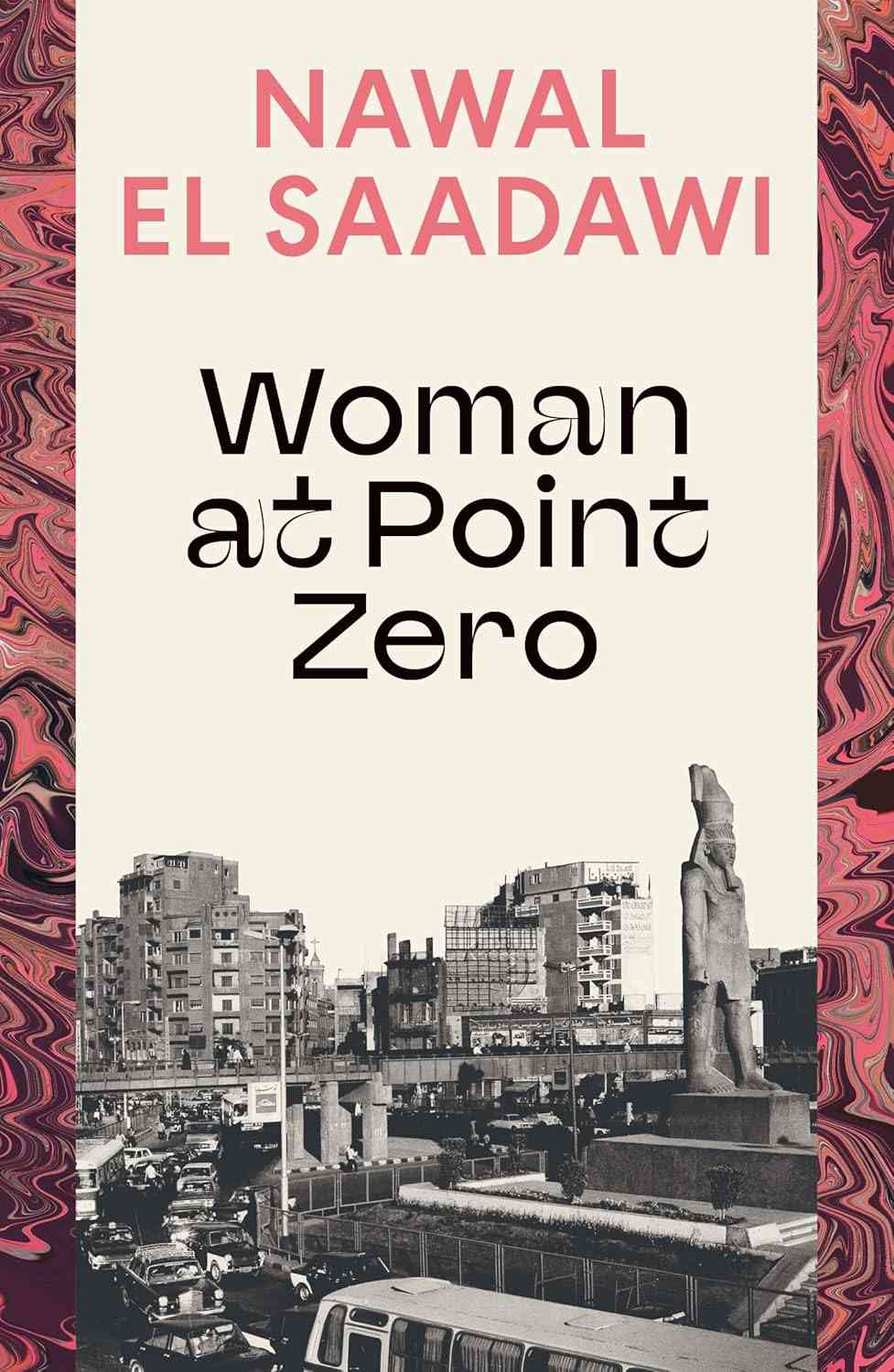
Woman at Point Zero, Nawal El Sadawi, translated from the Arabic by Sherif Hetata, Bloomsbury.
- We welcome your comments at letters@scroll.in. *
 Get the app