A pivotal shift in Ontario’s relationship with natural gas seems to be underway, with Waterloo Region becoming the second municipality to resist renewing a contract that allows Enbridge Gas to build pipelines on public land for free.
Guelph took a similar stance a year ago, ultimately deciding not to sign the contract. It would have locked the city in for another two decades of offering free land to the company that sells natural gas, which is largely made up of methane, a potent greenhouse gas that traps heat in the atmosphere.
As scientists urge a shift away from gas and other fossil fuels, agreements like this continue to absolve Enbridge Gas of responsibility for removing outdated pipelines, leaving the costs…
A pivotal shift in Ontario’s relationship with natural gas seems to be underway, with Waterloo Region becoming the second municipality to resist renewing a contract that allows Enbridge Gas to build pipelines on public land for free.
Guelph took a similar stance a year ago, ultimately deciding not to sign the contract. It would have locked the city in for another two decades of offering free land to the company that sells natural gas, which is largely made up of methane, a potent greenhouse gas that traps heat in the atmosphere.
As scientists urge a shift away from gas and other fossil fuels, agreements like this continue to absolve Enbridge Gas of responsibility for removing outdated pipelines, leaving the costs and labour of doing so with cash-strapped municipalities.
Since 2000, Waterloo Region, Guelph and around 340 other Ontario municipalities have made such agreements with Enbridge Gas — a unique arrangement in Canada. In provinces like British Columbia and Alberta, where pipelines are built in greater numbers, municipalities can charge gas companies that want to build pipelines on their lands.
So when councillors at the Waterloo Regional Municipality, which includes the cities of Waterloo, Kitchener and Cambridge, learned their agreement with Enbridge Gas was set to expire in May 2026, they hit pause. In a Nov. 19 meeting, councillors instructed staff to make some big changes to the agreement.
“We have a for-profit enterprise that uses public property and generates a profit from that,” Waterloo Regional Councillor Matt Rodrigues told The Narwhal. “That’s concerning.”
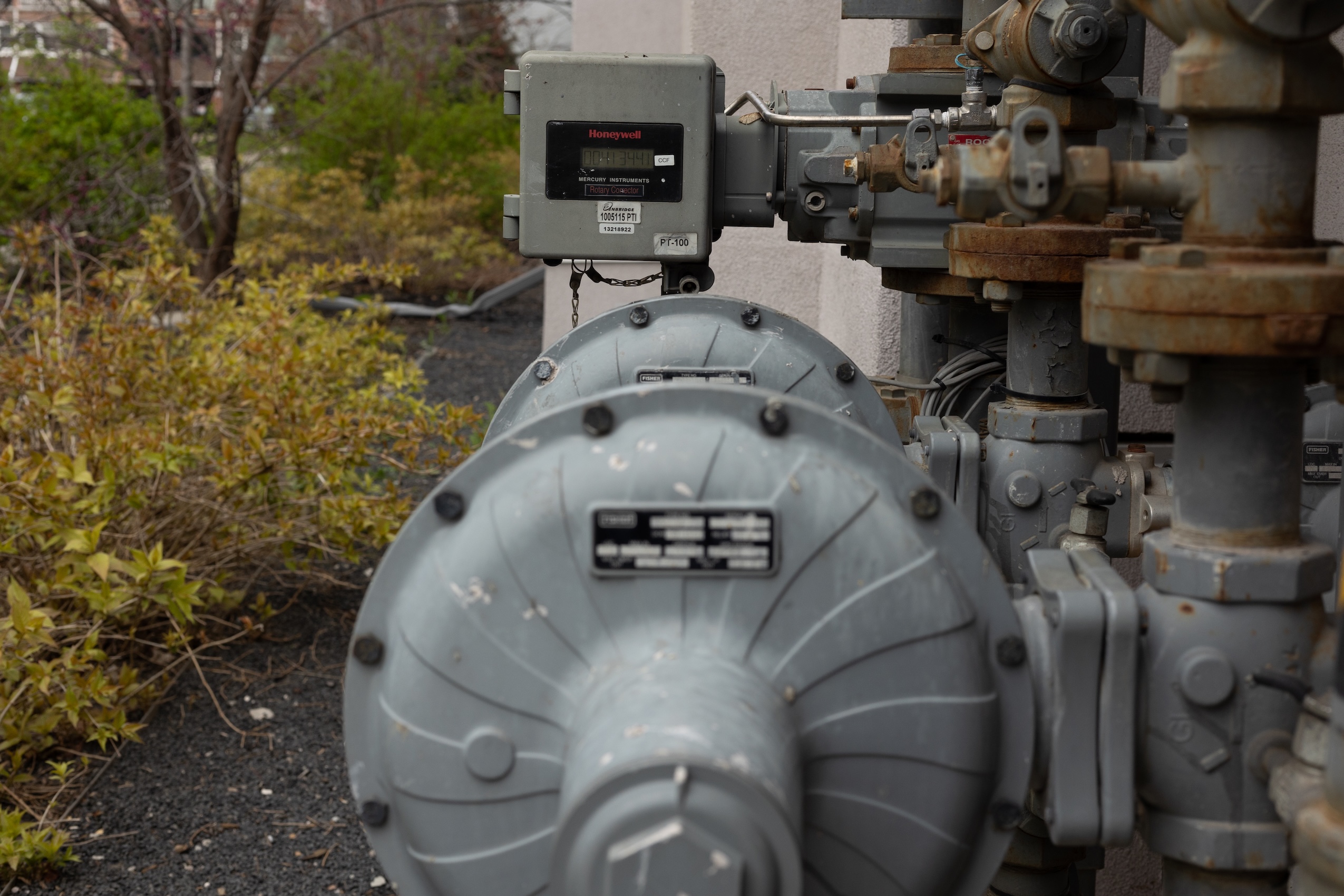 Enbridge Gas is fighting the City of Guelph over its refusal to sign a new contract giving the company free access to right of ways to build natural gas pipelines. Mayor Cam Guthrie said residents have more choice over how to heat their homes than they used to, and so it no longer makes sense for municipalities to lock in decades-long contracts with fossil fuel companies. Photo: Carrie Davis / The Narwhal
Enbridge Gas did not respond to The Narwhal’s questions by publication time.
Both Waterloo Region and Guelph have argued they are not entirely opposed to Enbridge Gas building pipelines, but that they want to be paid for any use of their lands as the pressure on local coffers increases.
Both municipalities have also argued for the choice to stop subsidizing natural gas infrastructure if needed, to make way for other, cleaner forms of energy that weren’t as abundant or cost-effective when these agreements were last signed. Locking into a new 20-year agreement would limit municipalities’ ability to respond to climate change and reach net-zero emissions by 2050, they say.
“It just made sense not to sign on the dotted line just because it was slid across the table,” Cam Guthrie, mayor of Guelph, told The Narwhal. “In today’s world, there’s choice. Twenty years ago, there weren’t heat pumps, but now today, there are. So our residents can choose what kind of infrastructure they want their homes and businesses to be connected to.”
“We live in a world with technology and changing innovation, which, to me, makes it more valid that we don’t have to lock into such contracts for such a long time.”
But provincial law requires municipalities to sign these agreements. So Enbridge Gas is taking Guelph to the Ontario Energy Board, a non-partisan regulator, to compel the city to sign that dotted line. Meanwhile, city councils in both Ottawa and Toronto have also asked the province to change their agreements, and the board has announced a full review of them in 2026. It will be the first review since 1999, and is intended to “examine the need to update certain provisions” of the agreement, a board spokesperson told The Narwhal.
As Guelph and Waterloo Region, with a combined population of almost 900,000 people, challenge an energy giant, the next 20 years for municipalities across Ontario hinge on what happens next.
Here’s everything you need to know about the agreements and the brewing local fight to change them.
So how does Enbridge Gas get free access to build its pipelines, exactly?
The technical term for these contracts are model franchise agreements. Broadly, they serve as agreements between Ontario municipalities and utilities that set the terms under which certain industries can build under public roadways and surrounding lands. These include natural gas, electricity and telecommunications, all three of which are identified as a public good and therefore granted free access to public land.
At the time these agreements were formed, Enbridge Gas was a Crown corporation, known then as Consumers’ Gas Company. It became a for-profit company in the late 1990s and gained a near-monopoly on natural gas distribution in Ontario. The latest version of the agreement was written in 2000 and, even without Guelph and Waterloo Region, Enbridge Gas still holds this contract with roughly 34o of Ontario’s 444 municipalities, according to its public statements, locking each into a 20-year contract allowing the company to build pipelines on public land without any charge.
That means Enbridge Gas can build a pipeline along municipal roadways, technically known as a right of way, without paying any rent or land-based fee.
The Narwhal spoke to ten people, including local elected officials, energy lawyers and environmental advocates, all of whom described these agreements as a subsidy for a fossil fuel giant at a time when many cities are looking to reduce their emissions.
When these agreements were made, “gas was considered a transition fuel from coal, and it was still considered a public good,” Kent Elson, an energy lawyer, told The Narwhal. “We’re now at a stage where it’s very clearly inconsistent with a net-zero future. So we’re subsidizing something that’s not a public good anymore.”
If you’re not sure, ask your elected officials or contact the municipality. And let us know: [email protected]
These agreements also don’t mandate gas utilities to pay to remove old or abandoned pipelines. (For comparison, telecommunication utilities are required to cover the cost of removing old equipment under federal law.) And if the pipeline needs to be moved to widen a sewer system, for example, municipalities have to pay 35 per cent of the cost — a huge expense.
Until now, municipalities have “signed these agreements like zombies because we have been led to believe we must,” Leanne Caron, a Guelph city councillor, told The Narwhal. “But it’s a kind of historical hangover from a past era where the utility was actually public, and it made no sense to charge a public utility for the public right of way.”
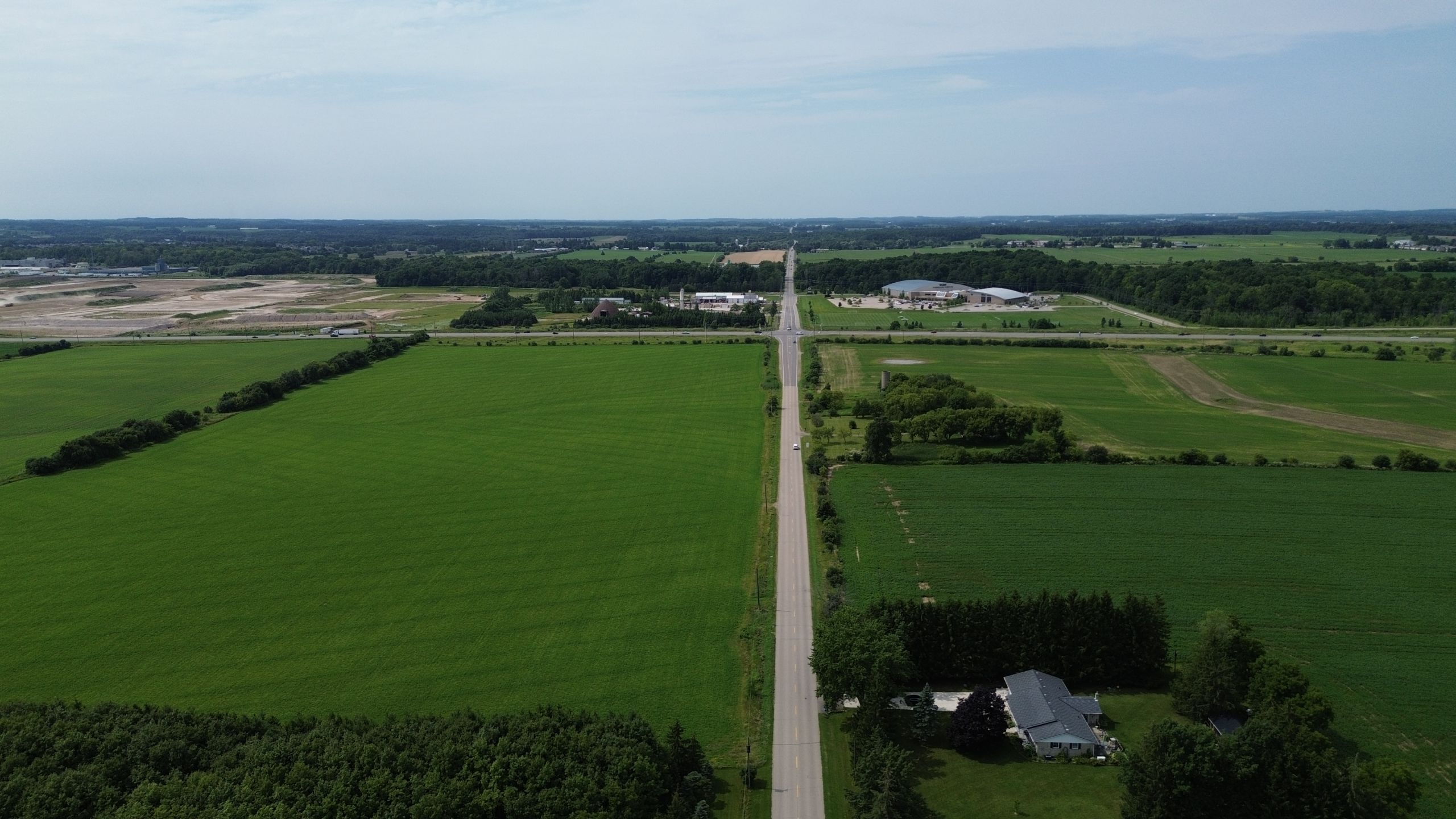 Waterloo Region includes cities such as Kitchener and Cambridge and towns such as Wilmot, seen here. The region wants the ability to negotiate fees from utilities like Enbridge Gas to build under its roadways. Photo: Carrie Davis / The Narwhal
Why do Guelph and Waterloo Region want to change their agreements with Enbridge Gas?
For three reasons.
First: money. Both municipalities want the ability to negotiate fees for using their land. This could generate much-needed revenue for local emissions-reduction and energy conservation efforts. Both also want Enbridge Gas to be 100 per cent responsible for the costs of removing or replacing pipelines, a real concern as cities move away from gas and the pipelines that deliver it.
Second: climate change. Both municipalities are concerned these agreements create an unfair playing field for lower-emissions forms of energy, such as heat pumps. “This is about fairness and challenging the status quo,” Caron said.
These model franchise agreements between Ontario municipalities and Enbridge Gas were written before a climate emergency was declared. They were written before broad recommendations to shift away from fossil fuels to ward off the impacts of global warming, which include an increasing number of severe storms, floods and wildfires — all of which Ontario and Canada have faced in recent years.
Lastly: independence. Both municipalities want more control over their lands, their energy supply and the agreements that manage both.
Since the agreements were first written, Ontario municipalities have faced massive growth, doubling in population since 1971. That has resulted in increased demand for local infrastructure to support more housing. Today, competition for underground space is fierce, as cities look to install more fibre optic cables to ensure access to fast internet, upgrade stormwater systems to handle flooding and more sewage intake, bury transmission lines to protect them from extreme weather and build transit.
Local governments are arguing it no longer makes sense that Enbridge Gas — a for-profit company — gets to use this much-needed space for free, while almost everyone else has to pay.
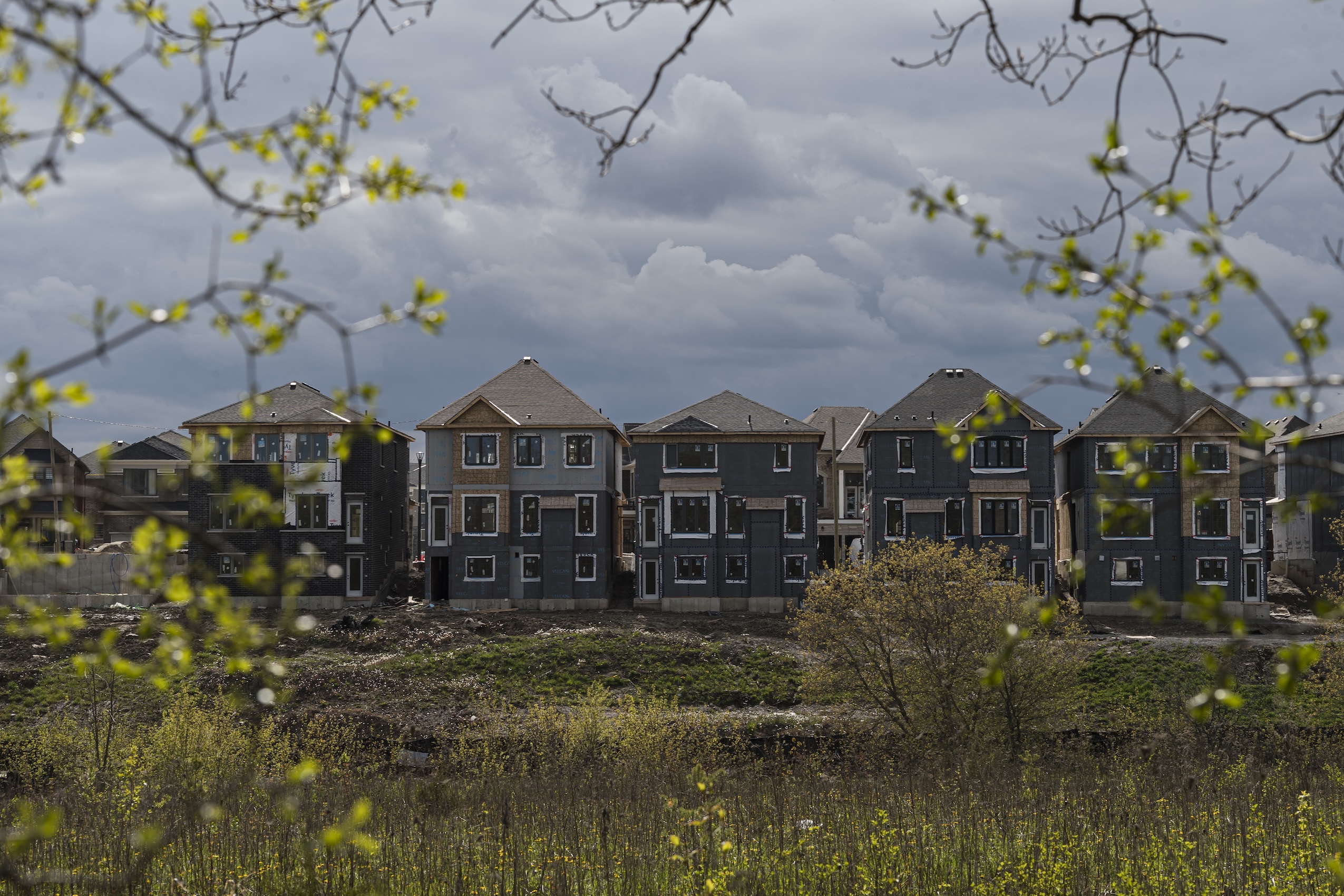 Municipalities use the space under roadways for infrastructure such as fibre optic cables and stormwater facilities. Competition for that space is becoming fierce as cities grow, leading some to question why Enbridge Gas, a for-profit company, has free access to it, while others have to pay. Photo: Christopher Katsarov Luna / The Narwhal
So, what’s stopping Guelph and Waterloo Region from just negotiating new agreements with Enbridge Gas?
Well, the law.
Provincial regulation doesn’t allow municipalities to charge fees to build utilities under roadways. Both Guelph and Waterloo Region have asked the Doug Ford government to change the regulation, but neither council has received an official response yet.
As has been the case since June 2024, no one from the premier’s office or the ministries of Energy or Municipal Affairs responded to questions from The Narwhal.
Both municipalities could appeal to the Ontario Energy Board, but the independent energy regulator is also mandated to uphold provincial law.
Not signing is the only option at present. In the event the regulation changes, it means these two municipalities won’t be locked into a 20-year agreement to provide free access to their lands. In the interim, the agreement continues as is on a month-by-month basis.
Do municipalities outside Ontario allow fossil fuel companies to build on public land for free?
Not really.
British Columbia, Alberta, Saskatchewan, Manitoba and Nova Scotia allow municipalities to charge utilities to build on their land, which has raised tens of millions for certain cities.
For example, per Ottawa’s letter to the government, Edmonton has been charging gas utilities access fees since 1915. There, Enbridge Gas pays 32.9 per cent of delivery charge revenues to the municipalities to use their right of way. If the Edmonton approach were applied in a city a little bigger than Guelph and Waterloo Region combined, the annual compensation would be approximately $66 million, according to calculations from the City of Ottawa.
In Calgary, the city’s website says revenue collected from similar fees “contribute to keeping property taxes low” and also “invested into new facilities and other amenities” that “are carefully designed to benefit Calgarians directly.”
Are there any other municipalities considering not renewing their agreements with Enbridge Gas?
Not that we know of, but both Ottawa and Toronto have expressed concerns.
In March 2024, Toronto City Council — whose agreement looks slightly different from others across the province — asked the Ontario government to change the regulation around its agreement to allow it to charge for-profit gas utilities for using public land. City staff noted, “A key difference between the use of the right of way for natural gas and all other uses is that natural gas is a fossil fuel that causes climate change.”
In 2022, Ottawa asked the government for something similar, noting the 20-year contract is misaligned with pledges to lower emissions by 2050. In its letter, the city asks the board to consider allowing municipalities to recoup five per cent of gas revenues from Enbridge Gas.
Guelph’s Mayor Guthrie said other Ontario mayors are “poking and prodding” on this issue “because these types of contracts are applicable across almost every municipality.”
“So we’ll see how it goes, and we’ll see what happens next in both the Ontario Energy Board general review and with the specific review of the city of Guelph and Enbridge.”
Enbridge Gas is taking Guelph to the Ontario Energy Board. Why — and what can the board do?
Enbridge Gas wants Guelph to sign the franchise agreement as is and has also told Waterloo Region council to do the same.
In a public presentation, Enbridge Gas representatives told Waterloo council that the board has “regularly denied” municipal proposals to amend the agreement, and that signing one “does not obligate customers to continue using natural gas.”
In a filing with the board, the company has said it “does not support” any of Guelph’s proposed amendments and asks the board to compel the city to follow the law and renew. In the same filing, the company states it would be “inappropriate” for the board to consider Guelph’s suggestions as it “could have cascading implications” on other municipalities. A decision from the board is expected in spring 2026.
Looming above all of these future board reviews and deliberations is the outcome of Enbridge Gas’s last big case at the Ontario Energy Board. In early 2024, the Ford government overruled the regulator’s decision that Enbridge Gas should pay the cost of new gas infrastructure upfront, or put it on developers, rather than continuing to pass it down to homeowners on their bills.
“It is always the prerogative of governments to make policy and seek to pass laws,” Tom Miller, a board spokesperson, told The Narwhal in an email. “Our approach has not changed.”
This next decision could be even more significant. If Guelph and Waterloo Region are successful in changing the terms of their agreements — with numerous other municipalities potentially following suit — it could mean a future where pipelines no longer create a void in government coffers, and instead make space across Ontario’s energy landscape for green technology.
Dec. 17, 2025 11 min. read
Both municipalities are holding out on renewing contracts that give Enbridge Gas free access underground....
218 requests: another year in the fight for government transparency
Dec. 16, 2025 3 min. read
Governments don’t make it easy to access documents they’d prefer to keep out of the...
‘Extremely offensive’: B.C. premier’s plans to change Indigenous Rights law met with frustration
If the Declaration Act was a milestone for reconciliation, how could Eby’s amendments change the...