[Editor’s note: Creative Forces is a new Tyee series that spotlights people in the community who are using their creativity as a force for good. A collaboration between the Tyee and Creative Mornings/Vancouver, Creative Forces is a monthly publication and event series that celebrates people in B.C. who are using their creativity — original ideas, innovation and imagination — to make a positive, tangible impact on those around them. Do you know someone who could be the subject of a Creative Forces profile? Nominations are open now.]
Eden Fineday is excited for the future…
[Editor’s note: Creative Forces is a new Tyee series that spotlights people in the community who are using their creativity as a force for good. A collaboration between the Tyee and Creative Mornings/Vancouver, Creative Forces is a monthly publication and event series that celebrates people in B.C. who are using their creativity — original ideas, innovation and imagination — to make a positive, tangible impact on those around them. Do you know someone who could be the subject of a Creative Forces profile? Nominations are open now.]
Eden Fineday is excited for the future of Indigenous-led media.
The award-winning Nêhiyaw (Cree) journalist from Sweetgrass First Nation in Treaty 6 territory is just wrapping up her first year as the publisher of IndigiNews, a national, non-profit, Indigenous-led news outlet that turned five in the spring. Fineday was first hired as IndigiNews’ managing editor in November 2021.
Originally part of Discourse Community Publishing, IndigiNews has been an independent and fully Indigenous-led outlet since January 2025.
The past year has been marked by other notable milestones. On Dec. 30, 2024, Fineday gathered with five First Nations women journalists to elect the interim leadership for the Indigenous Media Association of Canada, which was incorporated on Jan. 6, 2025. The association works to unify Indigenous media professionals and advocate for First Nations, Inuit and Métis storytellers.
Around the same time, Fineday co-founded tâpwêwin media, the Indigenous-led non-profit created specifically to acquire IndigiNews at the beginning of the year, ensuring that the outlet, too, would be led by Indigenous voices.
Fineday serves as tâpwêwin’s CEO, and three powerhouse Indigenous journalists make up the editorial board: Michelle Cyca, an award-winning journalist who is the Narwhal’s bureau chief of conservation and fellowships and the Asper Visiting Professor at the University of British Columbia’s school of journalism; Anna McKenzie, IndigiNews’ former Indigenous child welfare reporter; and kelsie kilawna, one of the founding storytellers of IndigiNews in 2020.
All told, Fineday has had a hectic year.
“We’ve been ‘Mach 5’ since then,” she said, referring to how 2025 was off like a shot with the founding of the Indigenous Media Association, tâpwêwin media and IndigiNews’ growth as an independent outlet. “It’s a lot,” she told the Tyee, laughing. She is IndigiNews’ only non-editorial staff, managing human resources, operations and audience development on her own.
As a visual artist, musician and author, Fineday is a true creative force. Her current role as publisher of IndigiNews speaks to a woman with a bold vision.
“My concern was always with the Indigenous staff at Indiginews. Are they heard? Are they protected? Are they safe here?” she said. “That’s the only thing I cared about: are Indigenous people safe in this company? In this room right now? And if not, what can I do?”
“I got hired here, so this is where I focused,” she said. “But that would have happened anywhere I went.”
This interview has been edited for context and clarity.
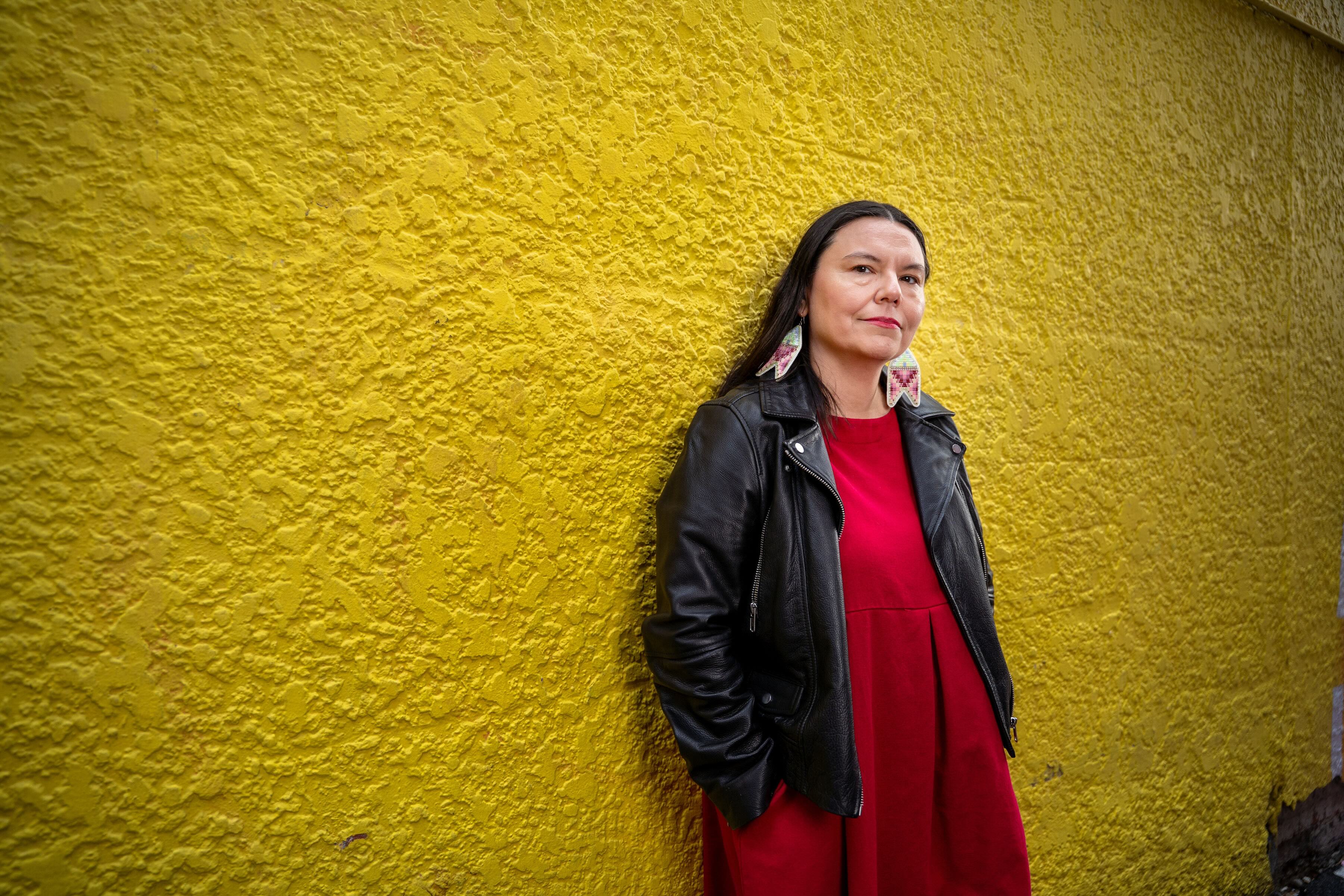 ‘The fact that we’re led by an Indigenous woman in the newsroom is why our journalism is as good as it is,’ Eden Fineday said of IndigiNews editorial director Cara McKenna. ‘She leads from her culture. It makes the newsroom a better place, and it makes our journalists better.’ Photo for The Tyee by Kayla Isomura.
**The Tyee: So you’re basically doing everything behind the scenes for IndigiNews. **
Eden Fineday: It’s been an insanely busy year, and it’s just starting to fall into place and start working. I’m very excited. We got a couple of grants, so I’m going to be able to hire two full-time people. I’m going to hire an operations manager and an audience engagement editor. I’m looking to 2026 like: yes. It’s gonna be a good year.
Tell me what IndigiNews looks like to you when it all falls into place and starts working.
The front end — I feel like IndigiNews is the face, and I’m the mess behind the face – has always been amazing. It’s Indigenous-led journalism. It makes a difference who has the power in an organization, and at our organization, Cara McKenna is the editorial director. She makes all the decisions in the newsroom. She decides what gets published. She touches every story.
Since 2020 when Indiginews was launched, we have either been named as a finalist or won 54 awards. For a newsroom of, like, five people, including me, that’s unheard of. We’ve won out over big organizations like the Globe or CBC multiple times. So the journalism we do is high-quality and it speaks for itself.
I think the fact that we’re led by an Indigenous woman in the newsroom is why our journalism is as good as it is. She’s got very high standards. She leads from her culture. It makes the newsroom a better place, and it makes our journalists better.
What is the overall mission of IndigiNews?
The mission is broadening. It started out as very specific geographical locations in British Columbia that we were serving, one of them being the Okanagan. Another one was Vancouver Island. They had five positions. And then after the first year, three of those positions got cut and they were left with two.
When I came on, there were only two full-time reporters. We wrote an application later and got another one back. When I applied for it the first year and it got rejected, I had called it Indigenous law. So the second year I applied, I called it Aboriginal law and I got approved.
**From an editorial perspective, having news that is written and edited by Indigenous people with an Indigenous editorial slant, I think is really important. **
Power matters. What we’ve done at IndigiNews is the opposite of what they do in other places, where it’s a white editor, white publisher, white executives, a white board, and they’ll hire some Indigenous reporters, usually junior reporters who don’t get a say on what they cover. They’re assigned stories, and then those stories are edited by white editors. I’ve spoken now to enough Indigenous reporters to know that that’s an incredibly violent dynamic.
At IndigiNews, we have an Indigenous publisher and an Indigenous editor. To us, that makes way more sense. Not only does it allow Indigenous people to have the editorial decision-making power in the organization, but Indigenous people are now able to share and train non-Indigenous people in our worldview and our protocols, to be culturally safe in communities, and that’s exciting, because that’s making more of a change to the whole ecosystem.
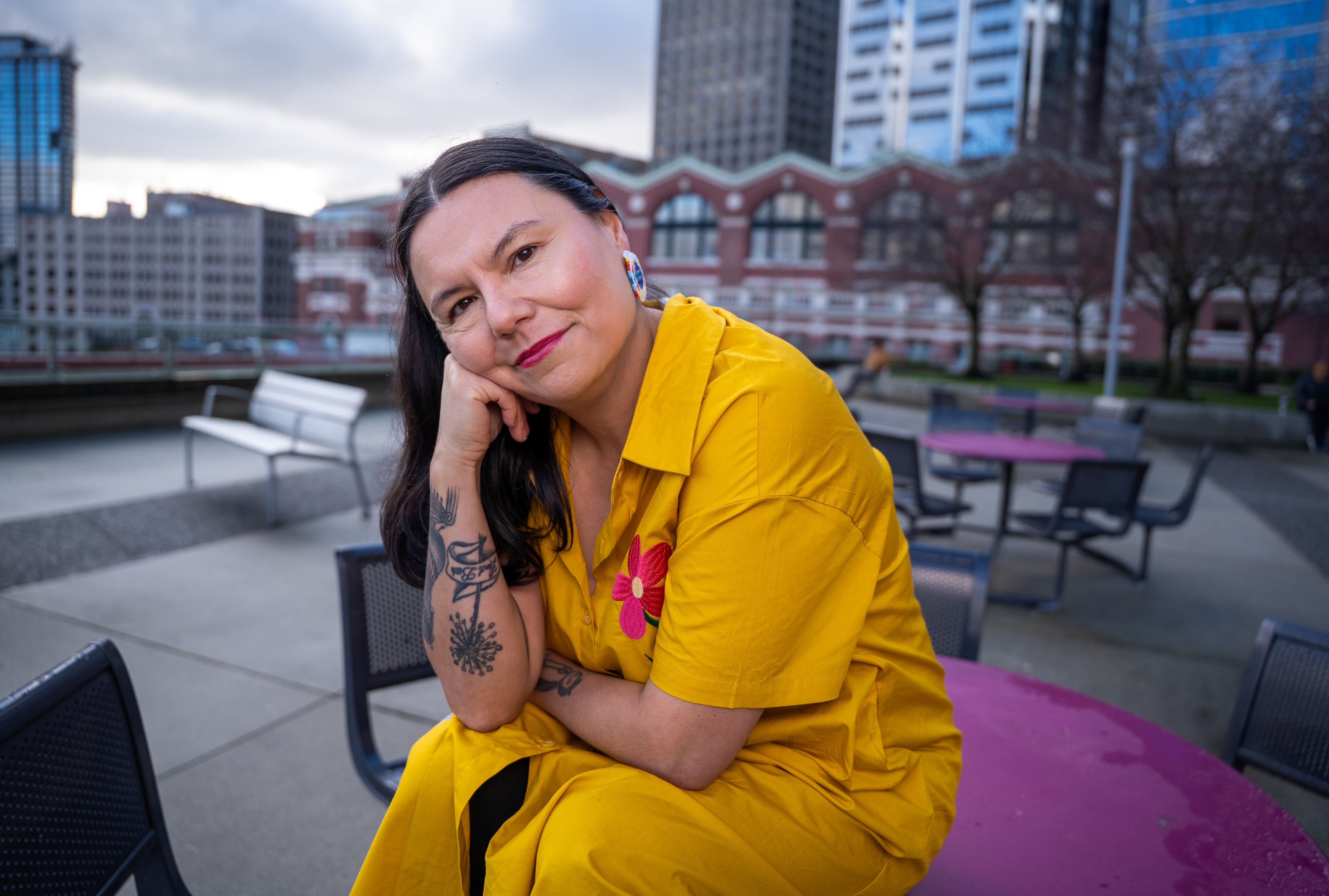 ‘Reconnecting with my Cree family on Sweetgrass, I learned firsthand that principle of non-interference that was at the heart of many Indigenous cultures in Canada,’ said Eden Fineday. Photo for The Tyee by Kayla Isomura.
**I’m thinking about, like, when you are about to publish a book, you get a sensitivity read. But oftentimes, as a racialized journalist, you write your story with a nuance and understanding that comes from being in community, and then you have to send it to your white editor. That kind of feels like the exact opposite. It’s like an insensitivity read. **
The other thing that Cara does that I really love is she lets the reporters decide what they report on. I think that’s so powerful. She might suggest whatever, if somebody wants to report on it, but she doesn’t assign stories. That’s pretty radical. It’s also a cultural value. I learned as a teenager, reconnecting with my Cree family on Sweetgrass, I learned firsthand that principle of non-interference that was at the heart of many Indigenous cultures in Canada, and I think Cara literally embodies that in our newsroom.
And I think that also improves our reporting, because people are able to lean into their passions, lean into where their skills are best, and then write from there.
As publisher, what does your day-to-day look like?
It’s keeping the roof over people’s heads. Keeping the website up. I do all of the fundraising — actually, Cara wrote a grant recently that we got for reporting a story we’re going to do next year. But I do most of the fundraising and that’s what I see as my job. And I also try to set some of the internal culture. I try to make a safe space in the newsroom.
kelsie kilawna used to call IndigiNews a storytelling lodge. And as I get deeper into studying and understanding my culture, I really understand that. First of all, stories are sacred. Telling the truth about what one has witnessed is a big responsibility.
It’s one of the natural laws in Cree culture, the idea of witnessing and having integrity in your storytelling, being able to faithfully recount what you witnessed to another group that wasn’t there. That has been in our culture since the beginning.
How else could we have stayed safe? We needed scouts. They would go up ahead, they would see what was happening. Then they’d come back and they’d report on that. There’s even a verb in Cree: to report. That’s what we’re trying to do here.
Something that’s culturally sacred, and my job is to stand with my arms around it, like, get the fuck away. I’m trying to protect that storytelling lodge. I’m trying to funnel resources into it.
At the risk of sounding nerdy, tell me more about this verb.
I’m going to send you a link to this dictionary where I look up all my Cree words. So I just did a search here, and if you scroll down, I think the verb we’re talking about is âcimow. But underneath that is tâpwêwin, which is the name of the non-profit that we launched in January.
Tâpwêwin means truth-telling. Like I said, it’s like a fundamental value of Cree culture. We weren’t trying to be a Cree-centric newsroom, but me and Cara are both Cree, and we needed to be truthful to ourselves.
That makes sense. Certainly, in running an Indigenous-centred news organization, you have to centre your lived experience.
Right. I’m Cree. Indigenous is a term that only exists in the context of colonialism. We are Indigenous people because there are colonizers here. But really, that’s not my culture. My culture is Nêhiyaw. One of my elders tells me that the word for us, Nêhiyaw, literally means exact-speaking peoples.
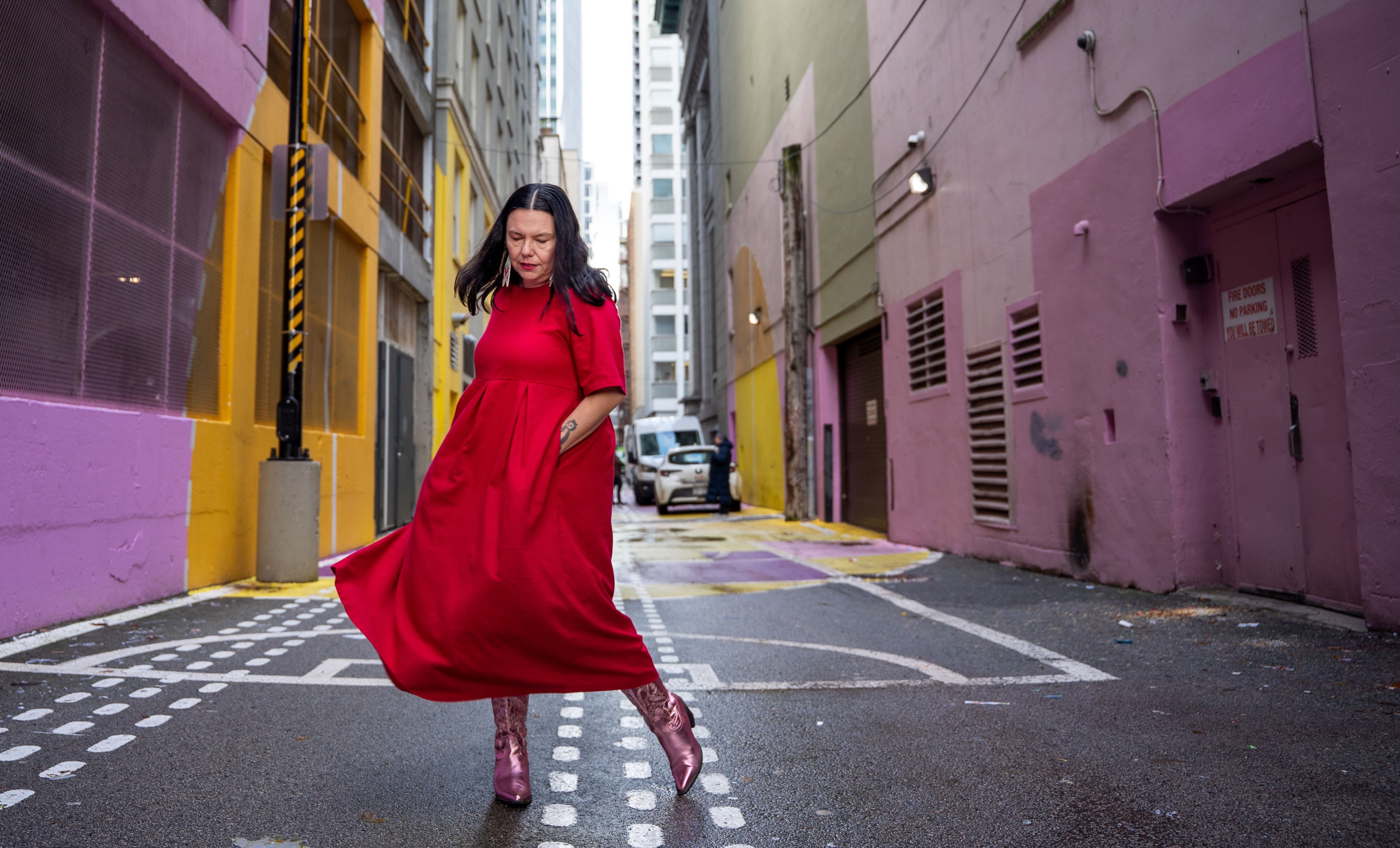 ‘My dream is to somehow translate my worldview so that non-Indigenous people can understand that, actually, our whole culture is around honesty and integrity,’ Eden Fineday said. Photo for The Tyee by Kayla Isomura.
**I like that as an inter-community reputation. Here come the very specific people. **
My dream is to somehow translate my worldview so that non-Indigenous people can understand that, actually, our whole culture is around honesty and integrity. It’s the total opposite of [colonizer] culture. When white folks came here and they did the treaty process, they were very deceptive. They had no regard for the word. If it wasn’t written down, it didn’t matter.
We’d be there for weeks meeting with these people. We believed that what we said mattered, and we also believed that when they spoke, they were telling us the truth. And then we had to take their word for it, that what they had written on the paper was what they had said. So we just put our Xs, because for us, the paper didn’t really matter. What did you say? I want Indigenous storytelling to be something that is trusted by non-Indigenous Canadians. Because I feel like integrity — that’s really all you have.
I suppose that’s part of the long-term vision for IndigiNews. What’s the rest of it?
We’re just getting started. I think launching as a non-profit this year and as an independent organization is the first step. We have an all-Indigenous board now, and we’re able for the first time to tell our story, and from the very top to the very bottom, it’s an Indigenous story. I want to see us grow. I want to do more reporting in other parts of the world, or at least across Canada. In my dream world, I want to see us replace, like, CBC Indigenous. Because there’s still white people at the tip top of that.
At the end of the day, you still have to go through your insensitivity read.
I would rather that IndigiNews grew and was able to reach more people, where even the reporters themselves felt held, seen, validated, supported, loved and understood. Indigenous people come with trauma. And then to add to that, the trauma of being edited by a white editor. I don’t believe that Indigenous people should have to do that anymore.
Do you know someone in your community who is using their creativity as a force for good? Nominate them for a Creative Forces profile in The Tyee that celebrates people across the region making a positive, tangible impact on those around them. Fill out a nomination form online. ![[Tyee]](https://thetyee.ca/design-article.thetyee.ca/ui/img/yellowblob.png)