Opinion
Health
Alberta
Science + Tech
When leaders mirror Stalin by promoting false dogma, we must defend evidence-based reason. Lives depend on it.
Stan Houston 23 Dec 2025The Tyee
Stan Houston is a physician and professor emeritus of medicine and public health at the University of Alberta.
This was the year when the president of the United States and the premier of Alberta further imposed ideology over evidence-based reason, endangering the lives of citizen…
Opinion
Health
Alberta
Science + Tech
When leaders mirror Stalin by promoting false dogma, we must defend evidence-based reason. Lives depend on it.
Stan Houston 23 Dec 2025The Tyee
Stan Houston is a physician and professor emeritus of medicine and public health at the University of Alberta.
This was the year when the president of the United States and the premier of Alberta further imposed ideology over evidence-based reason, endangering the lives of citizens. It’s as if, in setting policy in science and health, they asked themselves: What would Stalin do?
Starting in the 1920s a Soviet agricultural scientist, Trofim Lysenko, promoted a theory of heredity that rejected the then well-established principles of Mendelian genetics and Darwinian natural selection. He believed these to be inconsistent with Marxist-Leninist thought, promoting instead the idea that the environment alone shapes plants and animals.
To be clear, some influence of environmental factors on the expression of genes is known to occur through epigenetic mechanisms, but genes encoded by DNA are incontrovertibly the main mechanism by which characteristics are passed between generations. Lysenko, however, steadfastly denied the existence of genes, which he dismissed as a “bourgeois invention.” He also rejected standard experimental methods such as control groups and use of statistics, stating that mathematics had no place in biology.
He and his theories were strongly supported by Russian dictator Joseph Stalin with the result that they dominated Soviet agricultural science for decades. According to Atlantic writer Sam Kean, “Although it’s impossible to say for sure, Trofim Lysenko probably killed more human beings than any individual scientist in history.” In fact, Stalin’s agricultural policies featuring collectivization still deserve the bulk of the blame for the crop failures and famines that killed at least seven million people, but Lysenko’s practices prolonged and exacerbated the food shortages.
Lysenko claimed that implementing his theories would allow the growing of oranges in Siberia, increase food crop yields manyfold and, according to some sources, even change one species into another. The development of genetic research and agronomy in the Soviet Union suffered several lost decades while Lysenko’s theories prevailed. There was also spillover of negative impacts in other areas of science (but notably not nuclear physics) due to the promotion of “new Marxist sciences.”
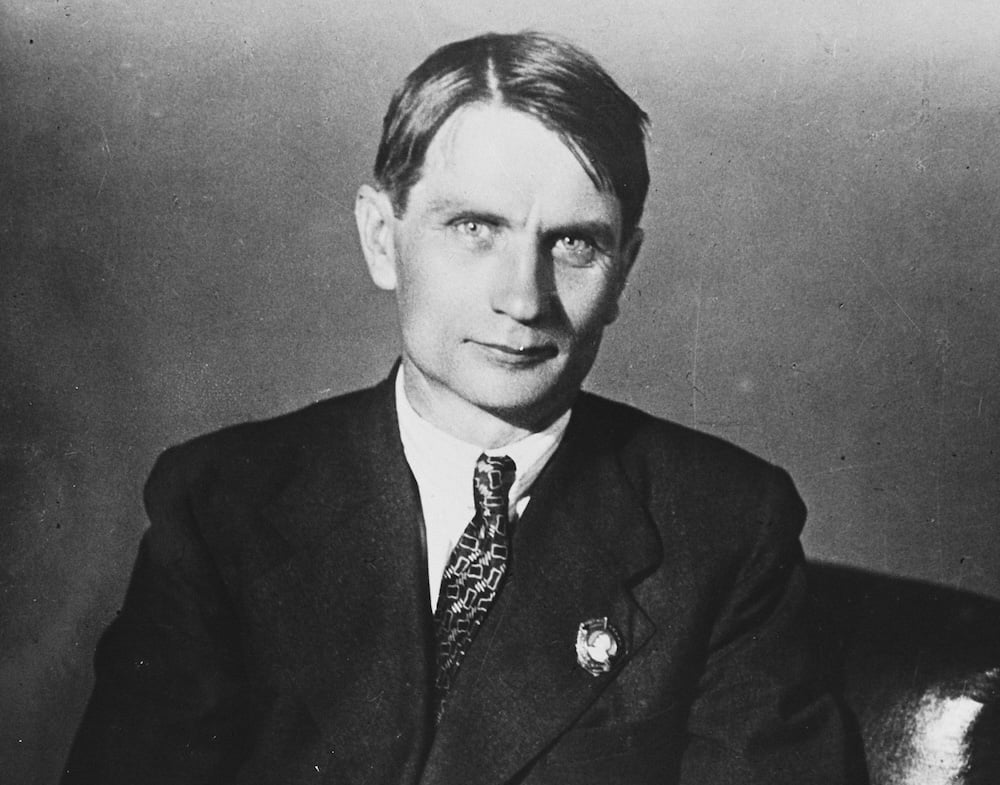 Russian agricultural scientist Trofim Lysenko’s errant theories fit well with Stalin’s propaganda but may have contributed to millions of deaths. Photo via Wikimedia.
With Stalin’s backing, Lysenko was made director of the Soviet Union’s Lenin All-Union Academy of Agricultural Sciences and director of genetics for the Academy of Sciences and received a Hero of Socialist Labour award. State media published enthusiastic articles describing wonderful results attributed to his methods.
Criticism of his theories became unacceptable, and critics were proclaimed “enemies of the people.” Literally thousands of scientists, including Lysenko’s former mentor, were demoted, imprisoned or even executed.
The V.I. Lenin Academy of Agricultural Sciences declared that Lysenkoism would be taught as the only correct theory. Lysenkoism became the official doctrine of other allied countries such as Poland, Czechoslovakia and China, with resulting adverse effects on their agriculture and food supply. Lysenko’s influence finally began to decline with the death of Stalin in 1953, roughly coincident with the discovery of DNA by James D. Watson and Francis Crick.
Today, incredibly, Lysenkoism is making a comeback in Vladimir Putin’s Russia, writes Kean, demonstrating that the literal life-and-death struggle between scientific reason and ideological mythmaking is never won.
Are elements of this story starting to sound familiar?
How about President Donald Trump choosing a secretary of health and human services with no qualifications except his established anti-science beliefs? The dismantling of world-leading institutions that provide scientific research and disease surveillance? Wholesale defunding of any fields of investigation dismissed as “woke”? Dismissal of expert committees, which are then replaced by ideologues? Vital scientific reports redacted or pulled if their topic or language is deemed inconsistent with MAGA beliefs?
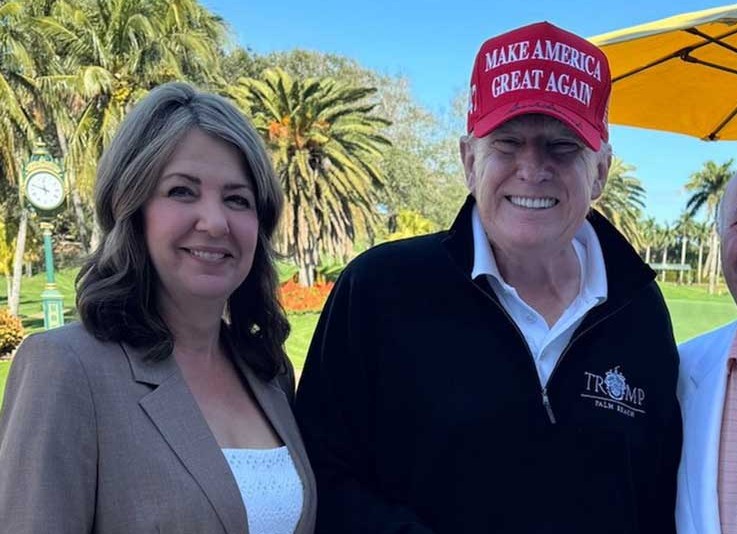 Alberta Premier Danielle Smith with US President Donald Trump, two leaders who have sown doubts about vaccines while endorsing unproven cures. Photo via Danielle Smith on X.
Closer to home, Alberta Premier Danielle Smith didn’t hesitate to recommend tropical disease medications for COVID in the absence of evidence or expert recommendation. Her government’s negative policies and messaging around vaccination have contributed to an explosive outbreak of measles that has taken us backward more than 25 years and set the stage for a winter of discontent in the province’s hospitals as respiratory virus season now strikes our undervaccinated population.
A critical need for better scientific literacy
Carl Sagan, the noted astronomer, said in 1995: “We’ve arranged a global civilization in which most crucial elements profoundly depend on science and technology. We have also arranged things so that almost no one understands science and technology.”
It seems that increasingly the scientific method is recognized not for its fundamental characteristic — as a process for getting to the truth — but simply as an alternative ideology that can be rejected at will. Where will this lead? Already, Canadian health experts are regularly harassed and denigrated online for simply explicating well-grounded findings.
The scientific community may have inadvertently contributed to this misunderstanding in the heat of the COVID moment by promoting certain measures as dogma — “follow the science” — rather than being more open about the great uncertainty that surrounded many COVID-related questions. The general underappreciation of how varying degrees of uncertainty are inescapable in addressing any scientific question reinforces the need for our education system to give students a better idea of what science is, what it isn’t and how it works.
Determining whether a drug is effective and whether its risks outweigh its benefits can legitimately be very difficult. In pursuing the best possible conclusion, we must indeed guard zealously against contaminating influences such as financial conflicts of interest, for example by large companies, as critics from across the political spectrum have stressed.
But it is clear that we need to be even more vigilant against the threat of replacing the scientific process with the ideologic determination of truth in the Stalinist tradition. Basing decisions on ideology rather than facts or evidence didn’t work well for the Soviet Union and it isn’t working well for us. ![[Tyee]](https://thetyee.ca/design-article.thetyee.ca/ui/img/yellowblob.png)
- Share:
- **
Get The Tyee’s Daily Catch, our free daily newsletter.
** The Barometer
What Do You Think of PM Carney’s First Months?
-
I’m still excited about PM Carney.
-
His shine has worn off for me.
-
I never liked the guy.
-
I don’t know.
-
Tell us more…