While December 5th isn’t the best-known international awareness day, it celebrates something foundational to our lives here on Earth: soil. To mark the occasion, we asked WWF-Canada’s ecosystem carbon expert, Cathal Doherty, and our resident botanist, Ryan Godfrey, for the dirt on why soil matters, how it’s affected by the plants we choose to grow, and what we can do to help keep soils and ecosystems healthy.
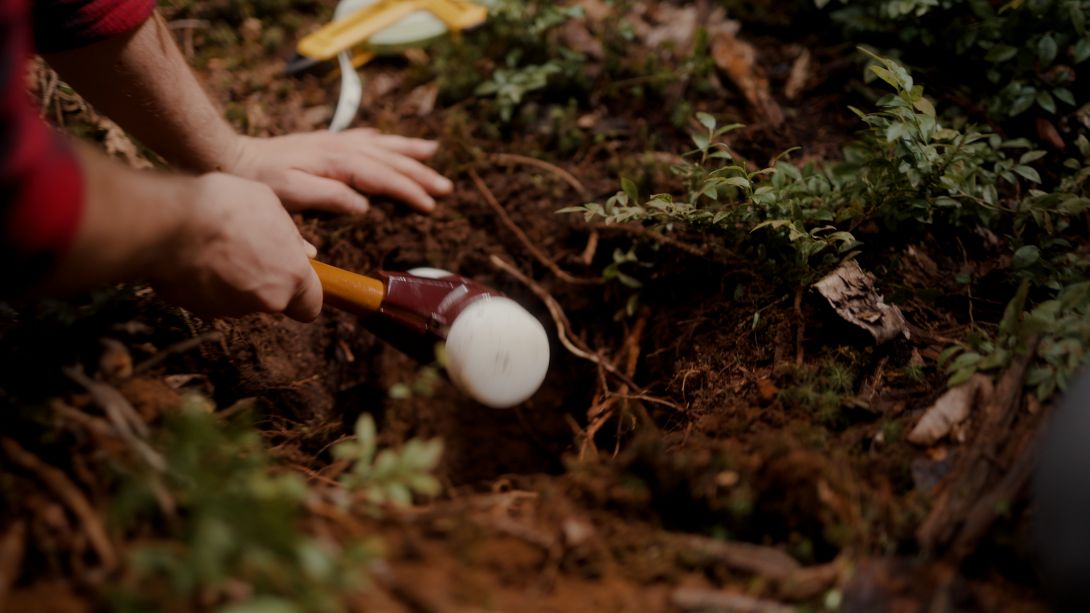 Soil pit technique for sampling and measuring carbon stock at different depths © Anchorview Media
First off, what is soil anyway?
Cathal Doherty: Soil is living and breathing. It’s bacteria, fungi, remnants of things that used to be living, a…
While December 5th isn’t the best-known international awareness day, it celebrates something foundational to our lives here on Earth: soil. To mark the occasion, we asked WWF-Canada’s ecosystem carbon expert, Cathal Doherty, and our resident botanist, Ryan Godfrey, for the dirt on why soil matters, how it’s affected by the plants we choose to grow, and what we can do to help keep soils and ecosystems healthy.
Soil pit technique for sampling and measuring carbon stock at different depths © Anchorview Media
First off, what is soil anyway?
Cathal Doherty: Soil is living and breathing. It’s bacteria, fungi, remnants of things that used to be living, and bits of broken-down rocks plus water and air — and now they’ve come together. The bacteria and fungi are what’s doing the breathing and feeding plants and getting fed by plants.
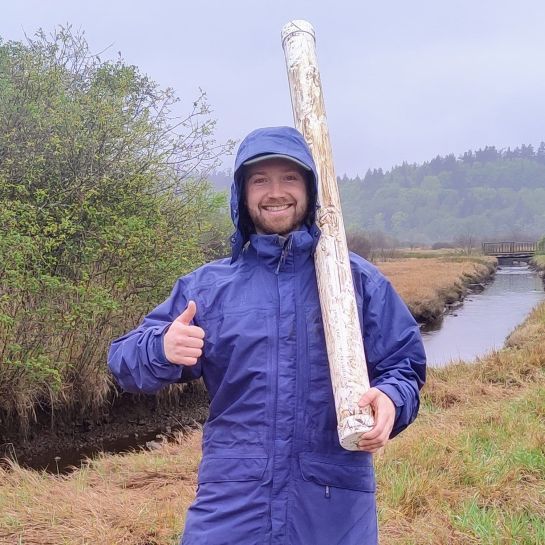 Cathal Doherty © Marianne Fish
Why does soil matter?
Doherty: It’s the foundation of terrestrial ecosystems. Most plants can’t grow without soil. They can find a crack in a rock, but in that crack, there has to be soil. Soil also supplies plants with nutrients. For people, growing plants is the best thing soil does.
Ryan Godfrey: If we had no soil, we’d essentially have a moonscape or mars-scape. It would just be rocks and maybe some water, but no place for plants to grow. It’d be pretty sci-fi, I would think.
What’s the connection between soil and climate?
Doherty: The soil holds, on average, 80 per cent of an ecosystem’s carbon in any one area. So, the majority of the long-term carbon sequestration — which is just capturing the carbon from the atmosphere and storing it which helps regulate the climate — is being done by the soil, not the plants. The plants are feeding it into the soil, but the soil is what’s harbouring the carbon. Even when a plant absorbs carbon, eventually that carbon will become part of the soil when the plant dies.
So, how do soils become unhealthy or degraded?
Doherty: Soil is made up of four parts: organic material — the things that are living or used to be living — minerals, water and air. And if anything disturbs one of those four things, you’re going to get a degraded soil. When you drain a wetland, you’re affecting the water in the soil. And if you turn a grassland into a road, you’re compressing all the air out of the soil.
So the four parts need to be in balance. Any process that helps that balance is promoting soil growth and anything that disturbs it is contributing to its degradation. Let’s say a pollutant enters the soil and kills the plants. Then the roots don’t grow, so erosion increases and floods the nutrients, which don’t feed the bacteria and they die. Then you don’t have a soil anymore, you don’t have a living thing. You just have a pile of leftover minerals and they can’t support plant growth.
Okay, then how does growing native plants help the soil?
 Ryan Godfrey © Ryan Godfrey
Godfrey: Native plants have evolved relationships with soil micro-organisms where they share some of their energy with those micro-organisms which, in turn, give the plants nutrients and help their roots access more water. So there’s a reciprocal relationship that has evolved over many millennia and generations. It works better for native plant species that have been in the same system for a really long time, and it works less well or less efficiently when new species are introduced into the system.
**Doherty: **Also, native plants typically have deep roots. They tend to have larger, more diverse fungal and bacterial relationships in the soil. All of that is promoting the structure and function of a healthy soil ecosystem. So native plants are promoting aeration, water and nutrients while limiting erosion because those deep roots are keeping that soil intact. Those deep root systems also have higher carbon content, and the way that they maintain the soil structure increases carbon storage as well, especially long-term carbon storage.
What else can we do to promote healthy soils?
Godfrey: It’s all about the balance of those four elements: the mineral component, the organic component, the water and the air. Just look at your garden and think about where things might be out of balance. Could you make the soil a little bit spongier if the soil has been compacted by machinery? Plants that have thick roots are able to go in there and aerate the soil.
My favorite, the evening primrose, has a really deep tap root that creates a space in the soil and then the plant dies. And if it’s very crumbly, minerally soil, then just leaving leaves on the soil or growing lots of plants (maybe plants that are good at growing in challenging places) will start to add in organics.
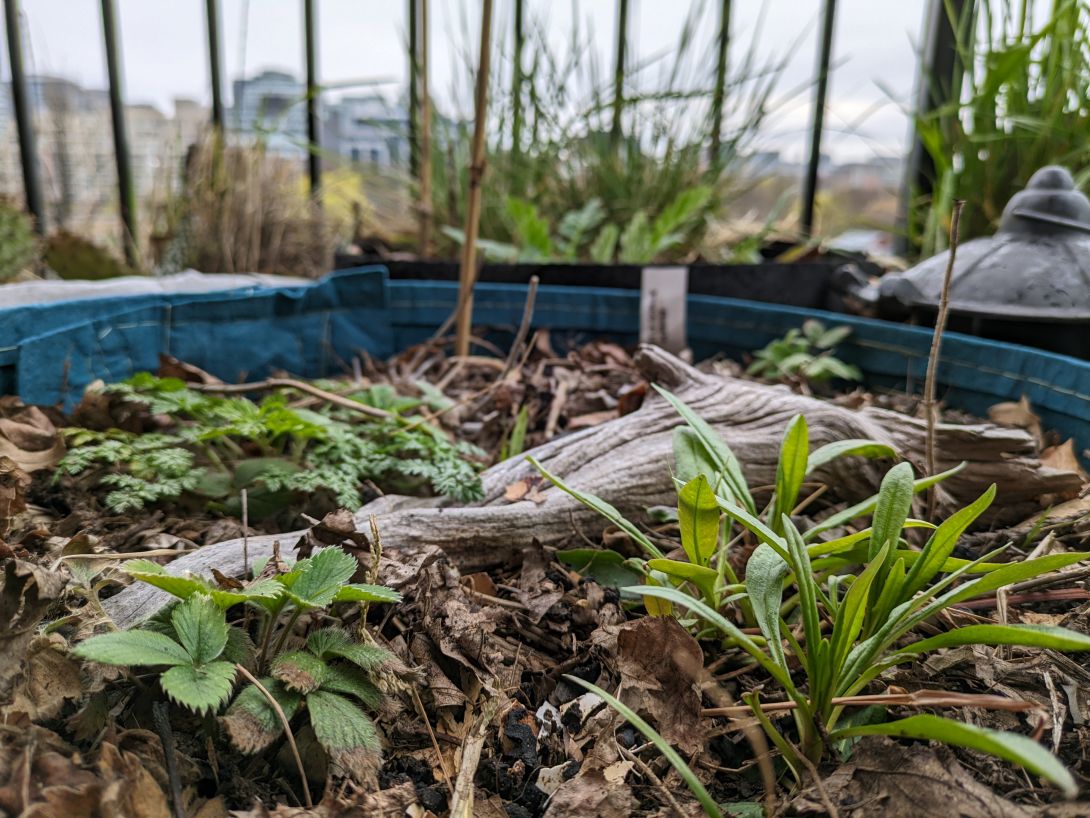 Native plants growing in a container of soil on a balcony in Ontario © Ryan Godfrey
Doherty: When I started studying soil science in university, I switched how I gardened. I realized that a healthy garden isn’t one where you’re focused on the plants, it’s actually when you’re growing a healthy soil. So when you water, a good habit is to not actually water the plants but water the soil around the plants because the water is going to go through the roots that are in the soil itself.
Soils are typically carbon limited, meaning they’re always looking for more carbon to eat. So that’s why you want to feed them leaves and other things. It’s like the soil is paying forward in nutrients and expecting this carbon in return. But if it doesn’t get it, it’s not going to be able to grow and provide as many nutrients back to the plants the next season.
Godfrey: Rather than ignoring the soil, it’s the thing that we should be focusing on more. One of the ways that I love to do that is to take a handful of dirt and sniff it. Everyone knows what good soil smells like — we’ve all been in a forest that smelled good and healthy. I have a courtyard garden where the soil used to just smell like rocks and chalk, but I grew native plants in it for five or six years and it smells like good soil now.