As 2025 draws to an end, we offer you our top 10 articles of the year. As a reflection of the debates characterising the European public sphere at the end of the first quartile of the 21st century, the list is necessarily impressionistic. It is certainly partial. But what it does truthfully represent, we think, is the quality and diversity of the European cultural journals sector. Crises tend to correlate with intense literary activity, but not necessarily with intellectual perspicacity. We believe clearsightedness is in abundance in the selection below – and indeed in all the articles Eurozine has had the privilege to publish in the past year. But you, dear reader, must be the judge of that.
Thank you for following Eurozine in 2025. Your intere…
As 2025 draws to an end, we offer you our top 10 articles of the year. As a reflection of the debates characterising the European public sphere at the end of the first quartile of the 21st century, the list is necessarily impressionistic. It is certainly partial. But what it does truthfully represent, we think, is the quality and diversity of the European cultural journals sector. Crises tend to correlate with intense literary activity, but not necessarily with intellectual perspicacity. We believe clearsightedness is in abundance in the selection below – and indeed in all the articles Eurozine has had the privilege to publish in the past year. But you, dear reader, must be the judge of that.
Thank you for following Eurozine in 2025. Your interest is proof of the importance of the kind of intercultural and multilingual publication endeavour that Eurozine represents. We look forward to providing you with the latest content from independent cultural journals across Europe and beyond in 2026. Until then, happy holidays!
The Eurozine editorsEncounters in the borderlands
Marci Shore| Eurozine We live in a world where the borders between one language and another, between reality and non-reality, between the human and the non-human, are being denied. As a reminder of difference and an openness to encounter, translation can be an antidote to the nihilism of borderlessness.

Against storytelling
Miriam Rasch| De Nederlandse Boekengids The glorification of storytelling to define who we are or save the planet induces aversion in some: philosopher Byung-Chul Han calls the obsession ‘story-selling’. Do digitally packaged stories restrict how we perceive our often rambling, fragmentary lives? Could alternatives be found in open, porous and incomplete narratives, even when confronting death.
Left alone to find one another
**Hazem Jamjoum **| Vikerkaar
For younger Palestinians, most of them diasporic, the heroics of the past are no compensation for the absence of an organized liberation movement. Abandoning the myths of statehood through negotiated settlement, they are defining the goals of liberation and return anew.
The future of remembering
Omri Boehm, Teresa Koloma Beck, Carola Lentz | Merkur
Provocative far-right calls for Germany to ‘move on’ from historical guilt miss the point: politics of memory and its practices may transition from contrition to responsible forgetting, but there is no end date to remembering that should accommodate diverse members of society.
Migration and citizenship in the 21st century
**Lea Ypi **| Institute for Human Sciences (IWM)
What happens to democracy when governments court the rich and highly skilled, offering citizenship as privilege, when those in need are turned away? This year’s Speech to Europe takes the concept of ‘good’ and ‘bad’ migrants to task
Becoming seeds: Active resistance and the afterlives of uprisings
**Chowra Makaremi **| Eurozine
Does humanity collapse under the weight of repeatedly inflicted cruelty, witnessed as routine, forcing endurance on women, the poor and others excluded from citizenship, as in Gaza? Or does resistance rest in the gestation of fragmented, suspended lives, the martyred dead and movements like ‘Woman, Life Freedom’?
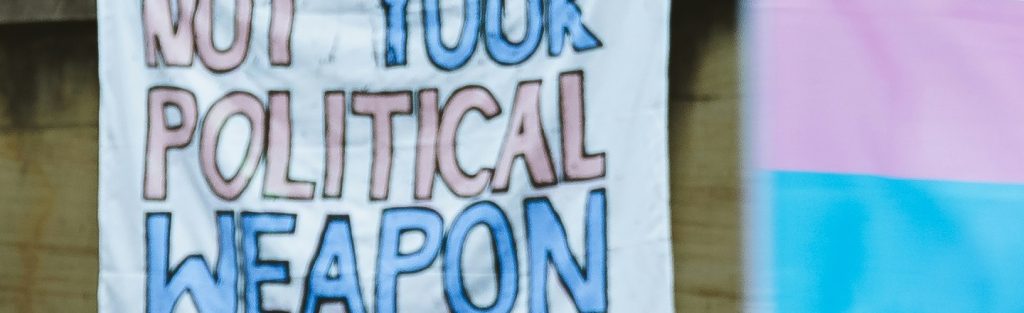 The joy of self-identification
M. Špoljar** **| VoxFeminae Authorities such as the UK Supreme Court see fit to erase trans people to satisfy retrograde opinions on gender diversity. But looking back at the life of American activist Lou Sullivan, profiled by Vox Feminae, is a timely reminder that being born a ‘biological woman’ isn’t a fixed definition.
Postcolonial laboratories
Agri Ismaïl** **| Glänta
The technological link between the rifle and the film camera, the medial links between the Gulf War and Star Wars, the colonial history of bombs – piecing together historical and contemporary fragments reveals an image of Kurdistan as a testing ground for military technology unleashed without responsibility for its consequences.
The Arab apocalypse
Hamit Bozarslan** **| Esprit The outbreak of the Lebanese civil war fifty years ago inaugurated an era of nation-state collapse in the Arab world. In failing to mediate, the international community carries responsibility for the sense of impotence felt in societies in which violence dominated everything.
 Democracies depend on reading
Miha Kovač****| **Razpotja **and Wespennest Growing reluctance to engage with books is endangering democracy and science. Deep reading boosts the human capacity for abstract and analytical thinking, protecting us from the corrosive effects of bias, prejudice and conspiracy theories.