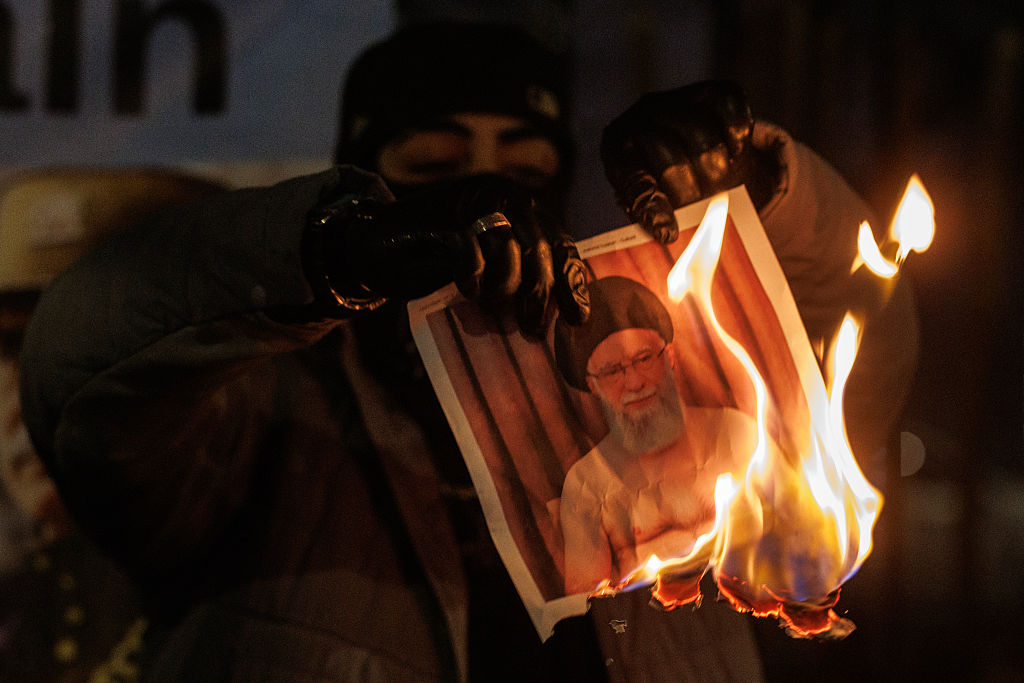
 (Photo by Dan Kitwood/Getty Images)
I come from a family that dreamed boldly, and fought relentlessly to turn those dreams into reality. My grandfather, Mohammad Reza Pahlavi, sought to build a modern and thriving Iran through sweeping reforms that would improve standard of living, expand education and women’s rights, and restore Iran’s standing among the world’s great nations. My father, Reza Pahlavi, has always hoped to see Iran’s people freely choose a democratic, secular, and prosperous future grounded in dignity and human rights.
For many years, I assumed those dreams would never be fulfilled. Experience teaches you that honour is often treated as a liability in a world where power is pursued witho…
(Photo by Dan Kitwood/Getty Images)
I come from a family that dreamed boldly, and fought relentlessly to turn those dreams into reality. My grandfather, Mohammad Reza Pahlavi, sought to build a modern and thriving Iran through sweeping reforms that would improve standard of living, expand education and women’s rights, and restore Iran’s standing among the world’s great nations. My father, Reza Pahlavi, has always hoped to see Iran’s people freely choose a democratic, secular, and prosperous future grounded in dignity and human rights.
For many years, I assumed those dreams would never be fulfilled. Experience teaches you that honour is often treated as a liability in a world where power is pursued without restraint, and I came to doubt that integrity could prevail.
The past weeks have changed that belief.
For 47 years, my father has stood for Iran in exile while entire regimes and powerful interests sought to weaken, erase, or discredit him. And yet, when the moment came, Iranians poured into the streets chanting, protesting, and demanding an end to tyranny. They were not only calling for change. They were naming their hope for tomorrow. It was my father.
New year, new read. Save 40% off an annual subscription this January.
Against decades of propaganda, intimidation, imprisonment and under the constant threat of death, the Iranian people saw clearly. They saw my father not through an imposed lens, but for who he is: a man of noble intent, defined by his love of country, willing to sacrifice everything to return Iran to its rightful place as a free, democratic, and sovereign nation.
For more than four decades, Iranians have lived under a system that does not represent their dignity, their aspirations, or their heritage. Yet repression has failed to extinguish something fundamental: the belief that Iran can once again take its legitimate place among the world’s free nations.
What remains uncertain is whether the international community will rise to the same standard, choosing principle over convenience and placing the will of the Iranian people above short-term interests. The question before us is no longer whether Iran will change, but how – and whether – the world will stand with the Iranian people as they decide what comes next.
A transition rooted in unity
My father has never sought power for its own sake. He has been clear and consistent: his role is to help guide Iran through a historic transition toward a system chosen freely by the Iranian people themselves.
In the years ahead, Iran will need steady, credible leadership capable of bridging generations, political ideologies, ethnicities, and faiths. Leadership that commands international respect while remaining accountable to Iranians at home.
This is not about restoring the past. It is about securing the future.
The danger of silence and extremes
History is unambiguous: when the international community ignores a society in transition, space is created for the most extreme actors to dominate the outcome.
We have seen legitimate democratic aspirations displaced by militant factions, cult-like movements, and violent separatism. Iran cannot afford that fate and neither can the rest of the world. Iranians are demanding a free, pluralistic, and united country, not one fractured by extremism, ideological monopolies, or territorial division.
Any future built on coercion, personality cults, or oppression will only repeat the tragedies of the past under a different flag.
Iran as a startup nation
I think of Iran as a startup waiting to launch. Every successful venture begins with risk, imagination, and commitment. It advances because people choose to build rather than merely observe. In this moment, Iranians everywhere are building that future: the young woman in Tehran who risks everything to speak freely; the engineer in Berlin designing tomorrow’s technologies for Iran; the teacher in Ahvaz protecting her students’ freedom of thought; the entrepreneur in Los Angeles investing in our collective future.
This is how nations are reborn, through participation rather than decree. A free Iran will not belong to a family, a party, or an ideology. It will belong to those who accept responsibility for building it.
What the world must understand
To the international community, I say this: the Iranian people are not asking the world to fight their battles. They are asking to be heard, and to have their choices respected.
This movement is rooted not in vengeance or ideology, but in love of country. In a desire to reclaim Iran’s dignity, its culture, its history, and its future. Iranians are not seeking to replace one form of domination with another. They are seeking the freedom to build a nation that reflects who they are, and to do so on their own terms.
What the world must do is simple, but consequential.
First, support a transition that is inclusive and Iranian-led. Second, reject extremism in all its forms, whether imposed from within or encouraged from outside. Third, champion a future shaped by citizens, not dictated by factions or external interests.
Standing with the Iranian people does not require interference. It requires moral clarity, restraint, and the willingness to let Iranians determine their own future.
A future worth building
The coming months will define Iran for generations, opening the door either to a peaceful transition grounded in unity and democratic choice, or to chaos, fragmentation, and new forms of authoritarianism, cloaked in the language of liberation.
Not every voice claiming progress seeks freedom. Some seek power, dressed up as reform. The difference lies not in rhetoric, but in intention, in restraint, and in a genuine commitment to building a free Iran that belongs to its people. I believe deeply in the first path. And I believe my father’s role, alongside civil society, youth leaders, and voices from every corner of Iran, can help guide our nation there as stewards of its rebirth.
The Iranian people are ready. The question is: will the world stand with them?
Noor Pahlavi is the daughter of Crown Prince Reza Pahlavi, the leader of the Iranian opposition. Noor is an advocate for a free Iran.
[Further reading: Iranians want their Shah back]
Related