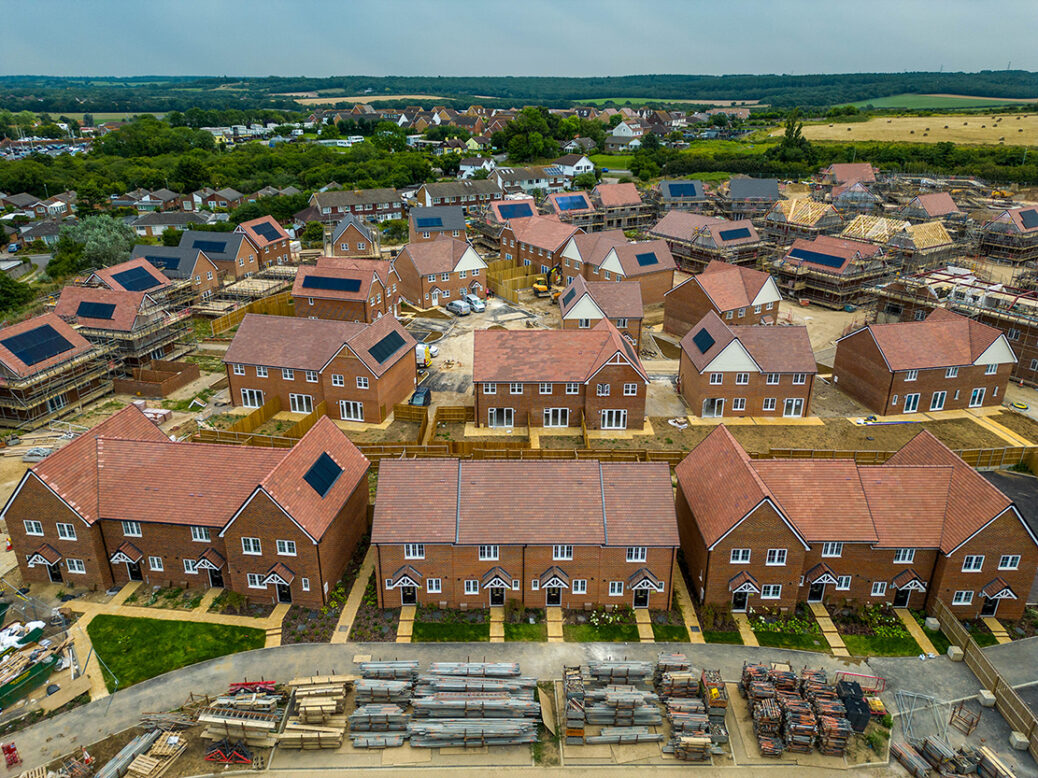
 Photo by Chris J. Ratcliffe/Bloomberg via Getty Images
My neighbours and I are currently celebrating our fifth anniversary of living on a building site. These celebrations mainly involve tutting, shaking our heads and a higher volume of angry-face emojis being posted in our estate WhatsApp chat. We’d scream with rage too, if our lungs weren’t so full of dust. No one would hear us above the drilling, anyway.
In 2021, the housing association that runs our block – a Sixties council estate long since abandoned by said council – sniffed an opportunity. It saw the sky above our heads and decided to sell it off. A developer began constructing two extra levels of flats on top of ours, in a process kno…
Photo by Chris J. Ratcliffe/Bloomberg via Getty Images
My neighbours and I are currently celebrating our fifth anniversary of living on a building site. These celebrations mainly involve tutting, shaking our heads and a higher volume of angry-face emojis being posted in our estate WhatsApp chat. We’d scream with rage too, if our lungs weren’t so full of dust. No one would hear us above the drilling, anyway.
In 2021, the housing association that runs our block – a Sixties council estate long since abandoned by said council – sniffed an opportunity. It saw the sky above our heads and decided to sell it off. A developer began constructing two extra levels of flats on top of ours, in a process known as building on “airspace”.
Our communal gardens have been locked up, their timber planters, sandpits and apple trees replaced with diggers and cranes. Scaffolding has encased our block in a Meccano mesh. Hunks of debris, once featuring an open Stanley knife, tumble randomly to the ground. The hornet drone of drilling has been the soundtrack to our lives – I’m sure there was a point when my toddler wouldn’t nap without drilling in the background.
But other than the plaintive coos of pigeons on the roof, there wasn’t much opposition to the construction. In 2020, the Boris Johnson-led government had loosened planning rules to include the right to extend two storeys up. And two years before that, under Theresa May, national planning policy was updated to encourage the use of “airspace above existing residential and commercial premises for new homes”. Rishi Sunak, too, announced plans to “expand homes upwards and outwards”. This was safe territory for Conservatives tinkering with the planning system. The most attractive location for this kind of development was in cities, where land is expensive and higher-density living is the norm. And cities, crudely, voted Labour. This was one solution to the housing shortage that didn’t dislodge the good wood pigeons of safe Tory England and its key marginal seats.
New year, new read. Save 40% off an annual subscription this January.
Calls for such projects are rising once more, as figures from the Greater London Authority report London housebuilding is at its lowest level since records began. Sales rates have also hit a low, mainly driven by a slump in demand for flats. Property prices are down; more sellers are making a loss. And this quiet crash is dominoing across the country. It turns out would-be first-time buyers have a limit, and they’ve reached it. Wage stagnation, high mortgage rates, monster deposits, crap newbuild quality and the leasehold con can only be tolerated for so long.
There are many theories behind Britain’s housing deficit – planning law, developer skulduggery, Nimbyism, Brexit, Margaret Thatcher – and this latest trend in London highlights another: a lack of “densification” policy. Across the political spectrum, there are calls to build on top and within. Let everyone add tasteful mansard roofs on to their Georgian and Victorian terraces, say housing experts on the right. Renew existing urban housing with “airspace” and “infill” (building on vacant or underused plots), say housing experts on the left.
Even from my position on the front line of a vanishing sky, I don’t disagree. But we can’t ignore that for years, planning policy has been moving in this direction anyway, from the mansard-roof approval clause to the ease with which landlords can now add two storeys. The government’s official agenda is already one of “gentle density”. But, as with housebuilding in general, it’s not happening often enough, or fast enough, to meet its target to build 1.5 million homes by 2029 (a figure so unlikely that Whitehall housing officials now laugh when I bring it up).
My own airspace experience gives me a few clues as to why. The project, supposed to take no longer than two years, is now in its fifth – and still unfinished. The original developer went bust, leaving the housing association with the bill. We have all had our flats flooded at some point, as our Sixties-relic pipes have rebelled against modern construction. For months at a time, as new gas and electricity infrastructure has been delayed, the site has been left deserted; thieves then make off with cables, tools, my baffled neighbour’s recycling bin.
All for 100-odd flats. It would have been quicker, and cheaper, to tear the whole thing down and build a brand-new block from scratch. Projects like this across London have suffered similar fates. The older flats suffer the strain of years of construction work – and having to share foundations, water supply and so much else with far more properties than originally designed. Their value plummets and they can become unsellable, as with some of the original flats in an Ealing development called Apex Court. In other projects, such as the View in Putney, the new flats on top were deemed unmortgageable by lenders with structural concerns. This further gums up the market.
The problem with these nifty ideas is that they encounter the same hurdles traditional builds do in England. Labour shortages, spiralling costs, exploitative developers, short-sighted targets, desperate councils, shoddy workmanship and poor inspection processes were all trends I found when reporting last year’s New Statesman cover story “The Housing Trap”.
Finally nearing completion, our new flats with their wallpaper of false brickwork – a sad attempt to mimic the original maisonettes – loom empty as they wait for their first residents. Judging by the state of the housing market, they will be waiting for some time.
[Further reading: Labour MPs relieved at Hillsborough Law delay]
Related