Ann Hermes knew her work as a photojournalist would take her to exotic places. And it has — to discover the food markets of Jerusalem, to see hammocks in Honduras and to witness the Arab Spring in Egypt.
But the work that’s closer to home reveals something Hermes is skilled at seeking out. It might look like nostalgia, that’s there for sure, but Hermes is really capturing something else — people and places on the brink of change.
She photographed [the last Morse code station](https://www.annhermespho…
Ann Hermes knew her work as a photojournalist would take her to exotic places. And it has — to discover the food markets of Jerusalem, to see hammocks in Honduras and to witness the Arab Spring in Egypt.
But the work that’s closer to home reveals something Hermes is skilled at seeking out. It might look like nostalgia, that’s there for sure, but Hermes is really capturing something else — people and places on the brink of change.
She photographed the last Morse code station in the United States, a JCPenney Portrait Studio, and, for several years now, small local newspaper newsrooms.
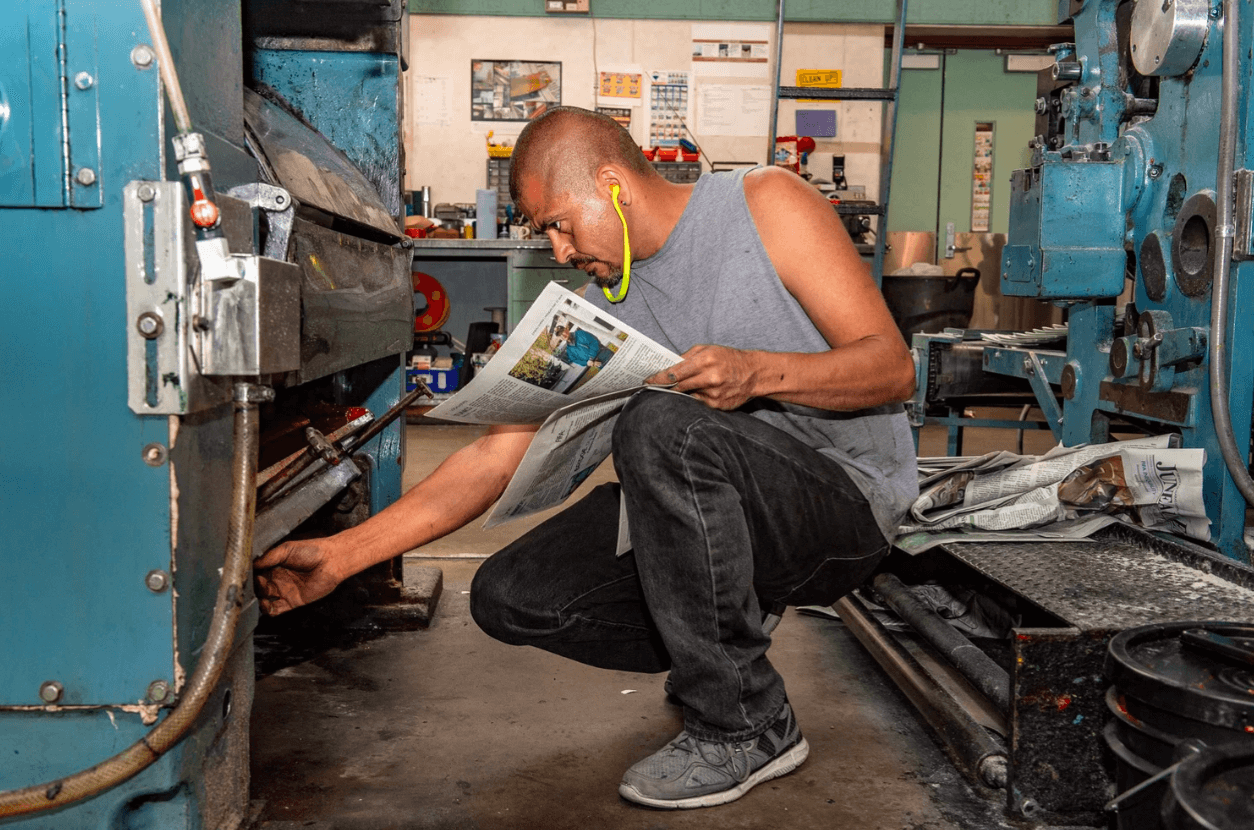
Cliff Tagaban, a circulation and distribution worker, checks the printers for the Juneau Empire at the printing plant adjacent to the newsroom on May 26, 2019, in Juneau, Alaska. The Juneau Empire has been “The Voice of Alaska’s Capital Since 1912.” After 36 years of operation, the printing press shut down in 2023. (Courtesy: Ann Hermes)
The idea first started percolating around 2016, as we all got painfully familiar with the term “fake news” and claims that journalists were all elitists.
“And for me, it was like, have you been in a local newsroom?” Hermes said. “At the local level, that couldn’t be further from the truth.”
The photographer, who worked at Christian Science Monitor, started her career in local newsrooms at the Northwest Arkansas Times in Fayetteville and The Eagle-Tribune on the outskirts of Boston.
Her idea for documenting local newspapers grew while visiting family in southern Illinois. The St. Louis Post-Dispatch was too thin, her family complained.
“And I walked into the newsroom for the first time, and I saw a sea of empty carpet with the outline of where the desks had been,” Hermes said.
She thought: “If I could show my family this scene, they would understand what they’re seeing in the newspaper.”
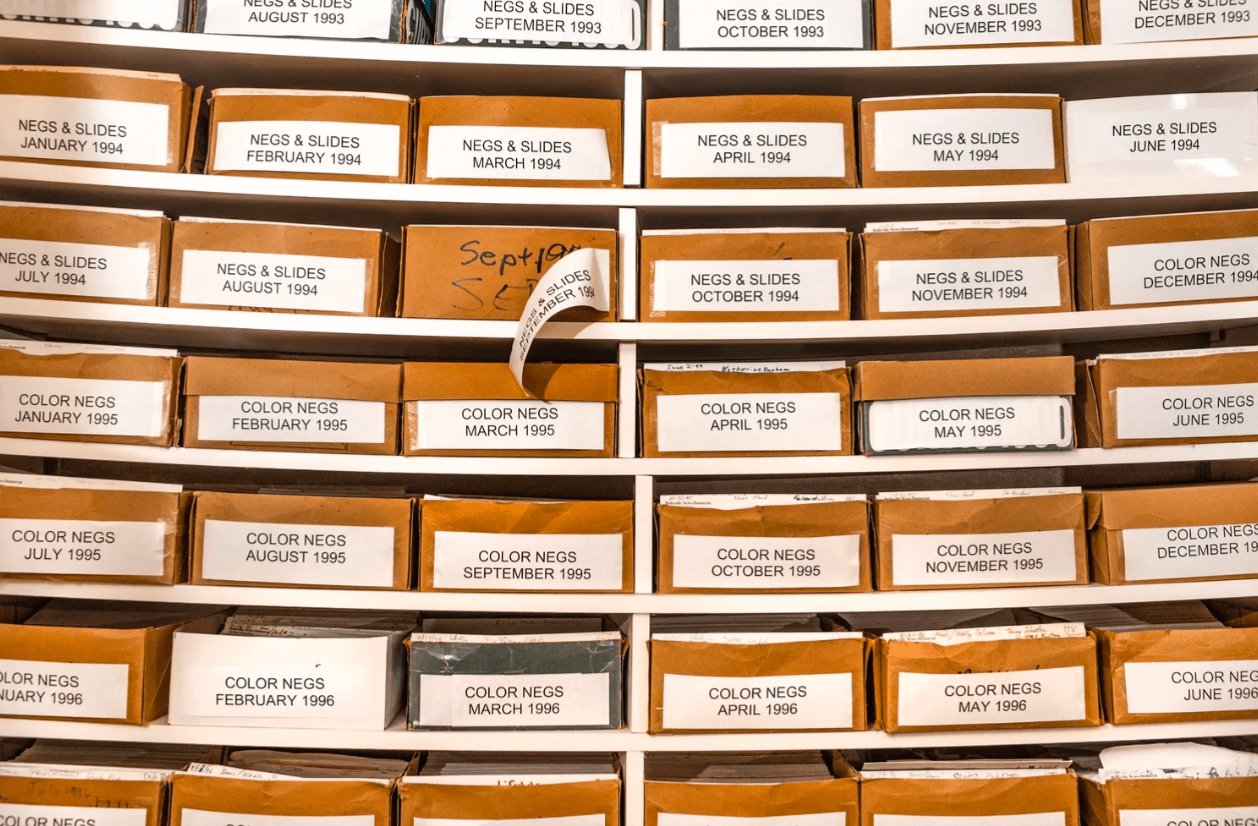
The photo morgue in The Belleville News-Democrat newsroom. The daily newspaper, founded in 1858, serves southwestern Illinois, across the Mississippi River from St. Louis. The paper was purchased by McClatchy, a national publishing company, in 2006. The Belleville News-Democrat runs an e-edition daily and a print edition twice a week. (Courtesy: Ann Hermes)
Hermes has visited more than 50 local newspapers since starting her project, which was highlighted last week in The New Yorker. She ruled out metro newspapers pretty quickly because of the response from corporate, and has mostly focused on family-owned papers, with a few online newsrooms in the project, too.
She uses news desert reports from Medill and the University of North Carolina to find the spots she should visit. And the locally-owned places welcome her.
“I did not have to explain what I was doing to them,” Hermes said. “They immediately opened up their doors.”

Reporter Stacey Adams and editor Bill Poindexter work at their desks in the newsroom of The Auburn Journal on July 10, 2023, in Auburn, Calif., northeast of Sacramento. The newspaper was founded in 1872 and is owned by Gold Country Media. The Auburn Journal covers Placer County, near two news desert counties. (Courtesy: Ann Hermes)
In the newsrooms she’s photographed, Hermes often sees familiar echoes: a police scanner, maps, newspaper morgues that no one has had time to digitize yet, tucked away in corners or basements. There’s often a stapler and the place where it belongs — editorial, photo desk, advertising — written and affixed on it in big bold letters.
People who read The New Yorker, and for sure people who read Poynter, will not be surprised by what they see. But Hermes doesn’t just mean for her project to be one about nostalgia.
“The communities that really need to see this work are the communities that haven’t thought about their local paper in a long time and what it would mean to lose their local paper,” she said.
She’d like to work with local institutions, maybe libraries, to display her images in the places where they were made and spark discussions about the newspapers and what they’re facing.
“This is for me a love letter to journalism,” Hermes said. “But I do want it to do more than that.”
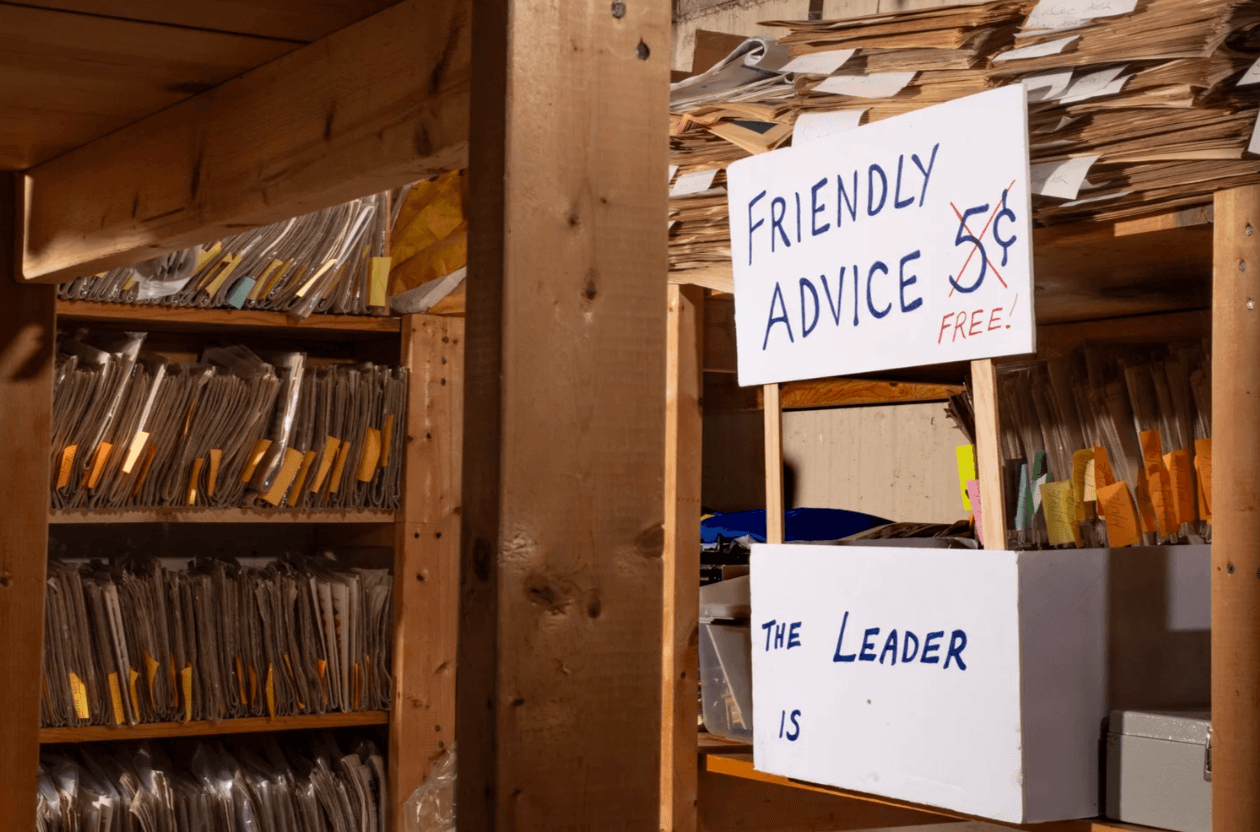
Leader Publications newspaper morgue in the basement of the newsroom in Festus, Missouri, on April 4, 2024. The advice booth is used for community events where newspaper staffers provide tech support to senior citizens in the area. (Courtesy: Ann Hermes)
One surprise for Hermes: She assumed that local newsrooms would be microcosms of national ones. That’s not what she found.
“There’s a much more nuanced dynamic going on in local newsrooms that I had not fully appreciated. They very much reflect their communities, whether their communities are purple or red-leaning or blue-leaning. I think that’s something that not everyone appreciates these days.”
Also not appreciated by people who aren’t journalists — these folks are doing a lot with a little.
“These are very dedicated people working on a shoestring budget trying to bring the news to their communities,” Hermes said. “I admire that, and I hope that comes through in the photos.”
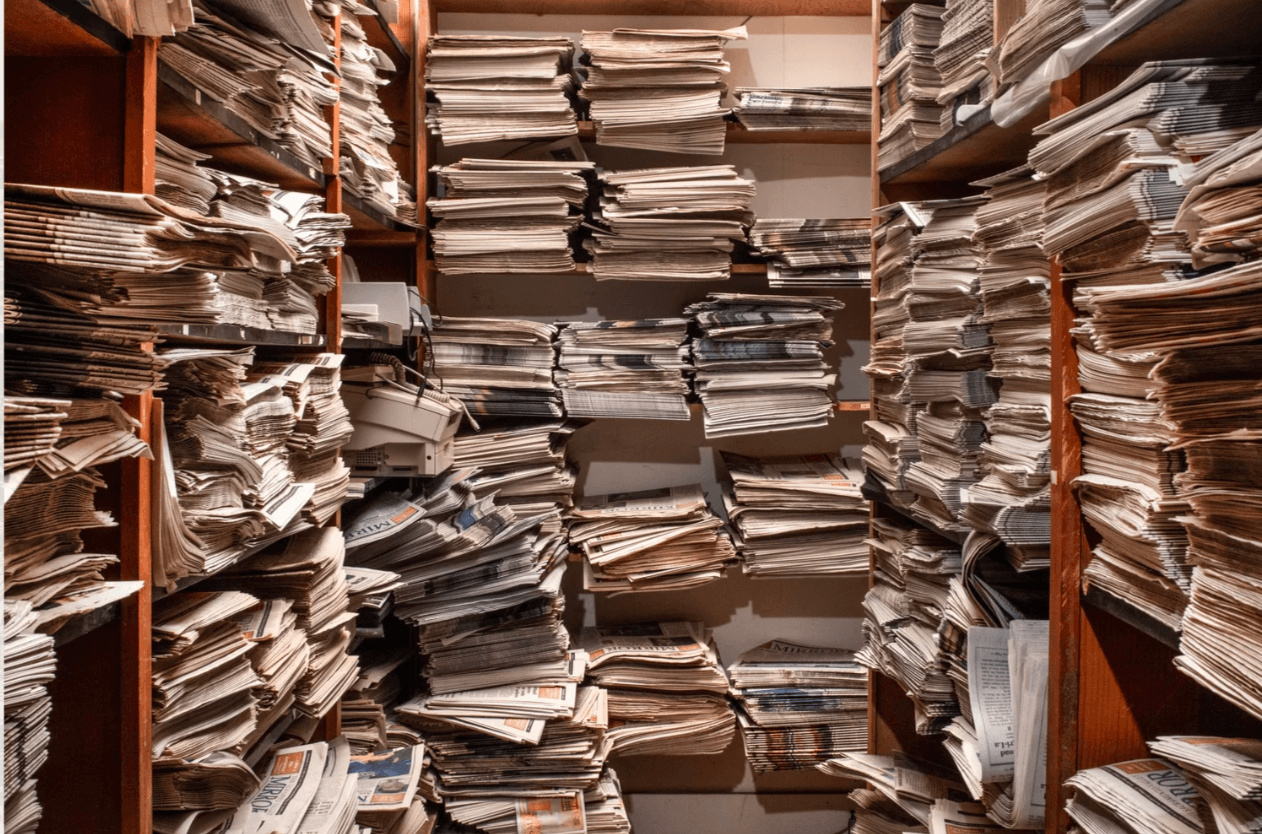
Stacks of print editions sit in the newspaper morgue at The Sacramento Valley Mirror in Willows, Calif., on July 13, 2023. Long-time editor and owner, Tim Crews, who was jailed for his protection of sources, passed away in 2020. His wife, Donna Settle, continues to run the paper. The paper is almost exclusively offline, with a small digital presence on Facebook. Glenn County, Calif., home of The Sacramento Valley Mirror, is listed as a news desert by Northwestern’s Medill School of Journalism. (Courtesy: Ann Hermes)
Hermes isn’t the only person documenting disappearing local newspaper newsrooms. And she’s not the only photojournalist to do that work, either. In 2023, I wrote about Jeremiah Ariaz’ work photographing local newspapers in Kansas. That piece led to a follow-up sharing people’s own early newsroom photos.
Hermes has also visited some digital newsrooms, including Berkeleyside and the Shasta Scout. She photographed newsrooms in Ukraine, where reporters have found themselves working as wartime correspondents. And with her local newsrooms project, she’d like to expand it to include public radio stations. If you’d like to suggest your newsroom, you should [reach out](mailto: ann@hermesphoto.com).
“The sliver of time is closing on this,” Hermes said. “It’s a window of opportunity that is closing and I’m kind of shocked that it hasn’t closed entirely.”
She’s not saying that local news is dying or that it’s dead. But the spaces those newsrooms have inhabited for generations are changing — due to remote work from the pandemic, shrinking staffs and costly downtown spaces.
The decline, the opportunities and the realities facing local newsrooms are well-documented, Hermes said.
But seeing it is something else.
Hermes has this knack for documenting people and places on the edge of change. Each of those projects have something else in common, too. The essence of what they’re doing needs to be transferred into something new before it’s lost for good.
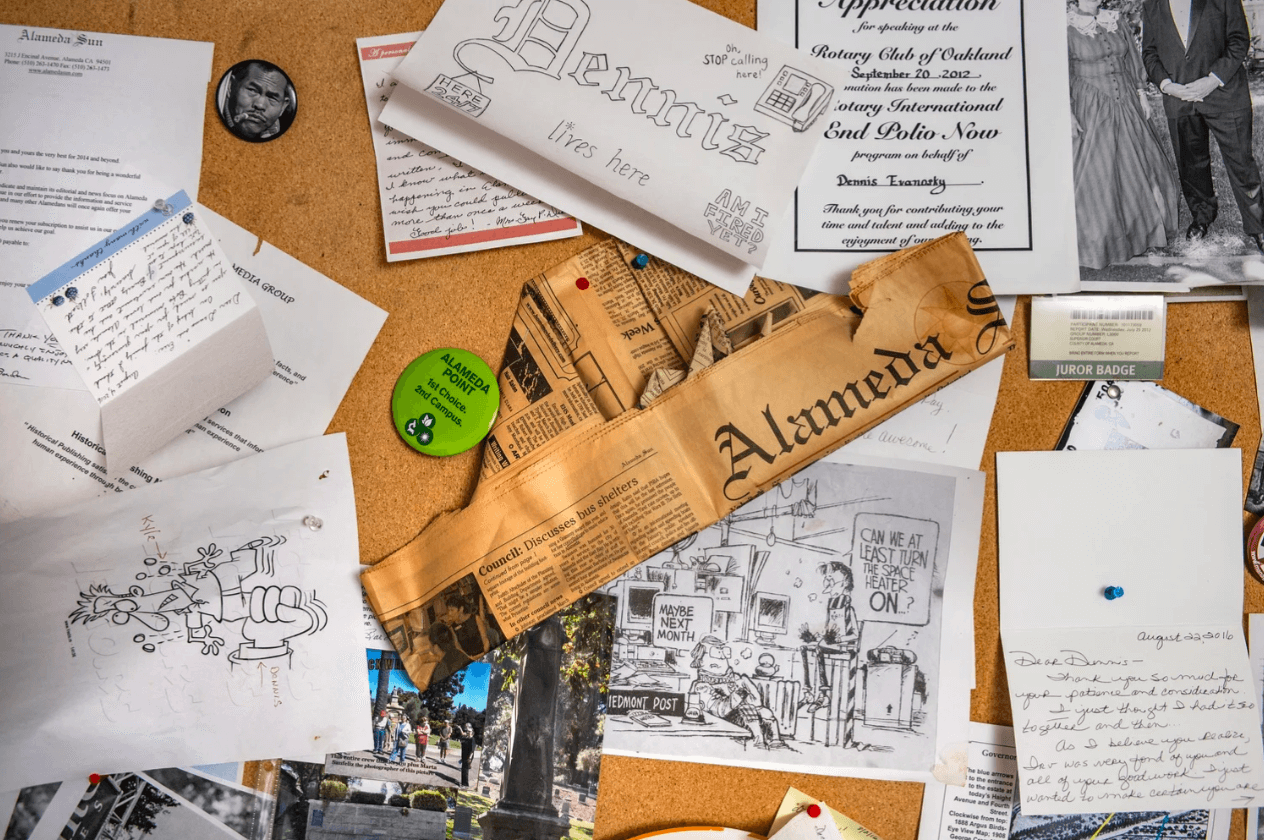
A corkboard in The Alameda Sun newsroom on October 30, 2019, in Alameda, Calif. The weekly newspaper closed in 2023. (Courtesy: Ann Hermes)