- When Indigenous activists in Samoa talk about healing the planet, what they are really talking about is healing the vā, the space between things and the invisible thread between people, land, ocean, ancestors and future generations, says Brianna Fruean, member of the Council of Elders for the Pacific Climate Warriors, or 350 Pacific.
- Fruean says many Indigenous knowledge systems, from the Pacific to the Amazon, already hold the principles of balance, reciprocity and care that our world needs.
- “We cannot solve this crisis with the same mindset that caused it,” she says in this opinion piece. “The path forward is not only paved with innovation, but with a return to watering and feeding our relationships.”
- *This commentary is part of the Voices from the Land series, a compil…
- When Indigenous activists in Samoa talk about healing the planet, what they are really talking about is healing the vā, the space between things and the invisible thread between people, land, ocean, ancestors and future generations, says Brianna Fruean, member of the Council of Elders for the Pacific Climate Warriors, or 350 Pacific.
- Fruean says many Indigenous knowledge systems, from the Pacific to the Amazon, already hold the principles of balance, reciprocity and care that our world needs.
- “We cannot solve this crisis with the same mindset that caused it,” she says in this opinion piece. “The path forward is not only paved with innovation, but with a return to watering and feeding our relationships.”
- This commentary is part of the Voices from the Land series, a compilation of Indigenous-led opinion pieces. The views expressed are those of the authors, not necessarily Mongabay.
This series, Voices from the Land, brings together opinion pieces led and written by Indigenous peoples from around the world. Through these commentaries, we share our lived realities and reflections on urgent issues shaping our time — environmental destruction, our relationship with nature, and systemic injustice. We write from the heart of our communities, where the impacts of these urgent crises are deeply felt, but also where solutions are rooted. Through this series, we speak from our territories, and ensure our truths are part of the global conversation.
While the world searches for solutions in carbon credits, experimental energy and piling on pledges, beneath all this noise a quieter truth has always existed. The answers to our planet’s issues already live within the wisdom of those who never forgot how to live in reciprocal harmony with the Earth and those who call her home.
Many Indigenous peoples across the world have been practicing sustainability since long before the word existed. Many of our elders’ teachings are rooted not in ownership, but in kinship. Not in dominance, but in care. For us in Samoa, this balance is guided by the sacred understanding of vā. What to us is the “space between.”
In Western thinking, space often separates. But in our world, space connects. The vā is the invisible thread between people, land, ocean, ancestors and future generations. It is the pulse of a relationship and our responsibility is to teu le vā, to tend to it with care.
When we talk about healing the planet, what we’re really talking about is healing the vā.
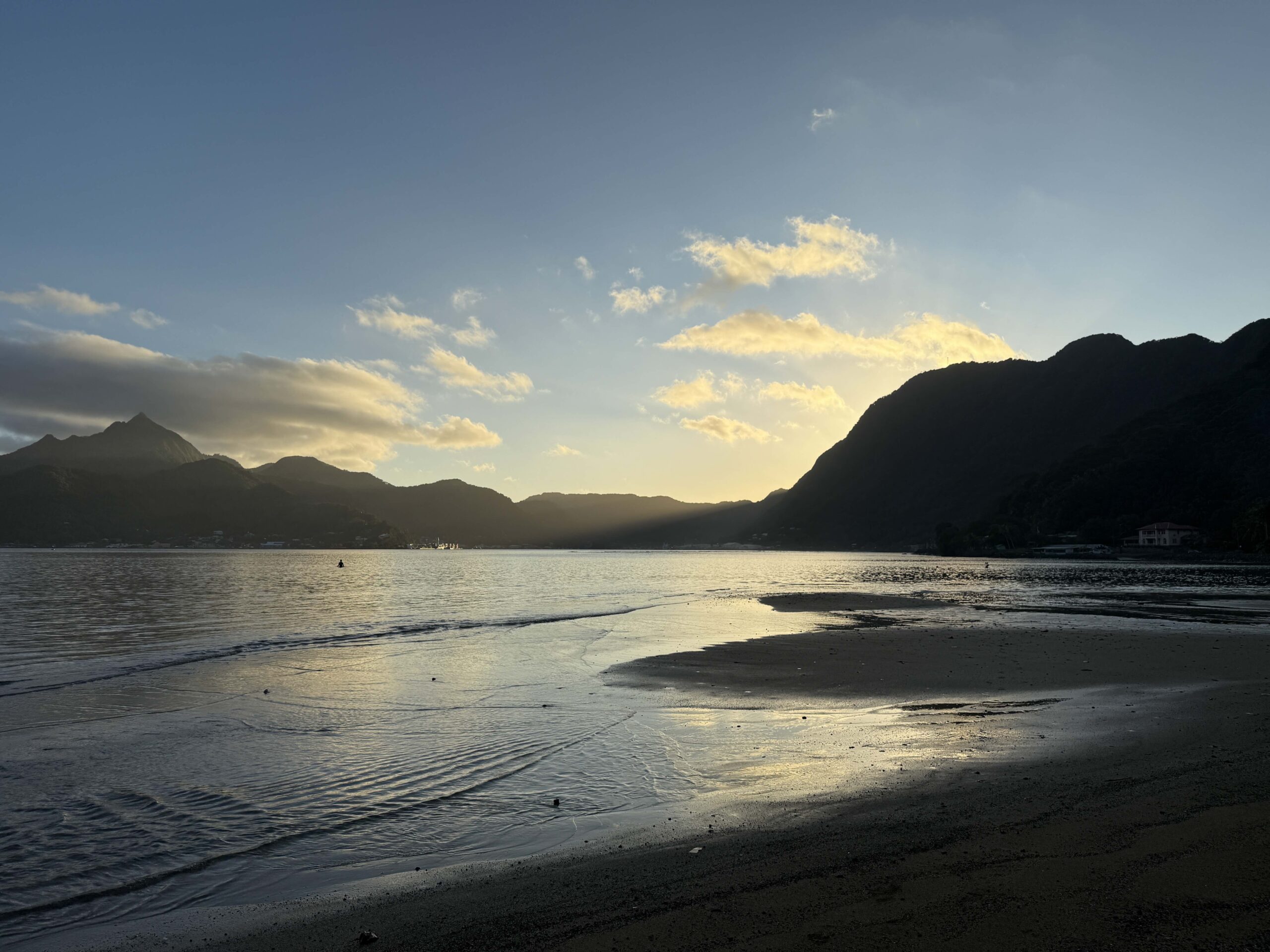 Many Indigenous knowledge systems, from the Pacific to the Amazon, already hold the principles of balance, reciprocity and care, writes Brianna Fruean. Image by Brianna Fruean.
The vā between humans
The first vā we are often taught about as children is the relationship with each other. The vā between human and human. We are taught to respect our elders, be kind to our peers and live in service to our community.
The first word I learned in Samoan was tulou, which means “excuse me.” I was taught to say this when walking in front of someone or invading another person’s personal space. Respect for others was taught to me by my culture in the little things. “Tulou” may seem small, but it symbolizes the consideration we should always have for others.
We’re living in a time where basic decency and morality for others is becoming harder to find. In this period of history, our devices are livestreaming some of the most graphic crimes against humanity, whether in Palestine or West Papua.
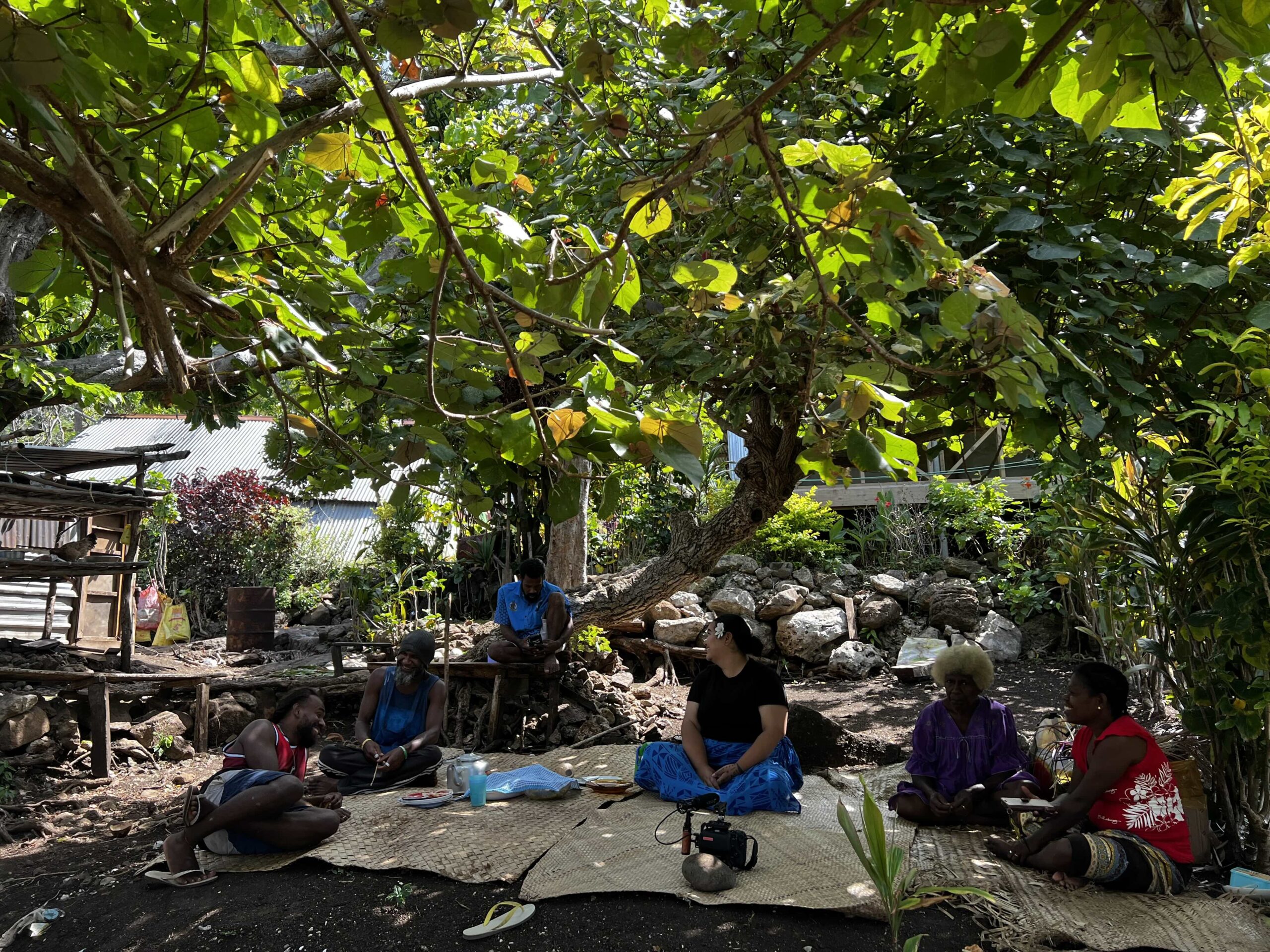 “The first vā we are often taught about as children is the relationship with each other,” writes Brianna Fruean. Image courtesy of Brianna Fruean.
This is the most heartbreaking example of a broken human-to-human vā. How do we begin to save our planet when our humanity is becoming as scarce as the resources that begin wars in the first place? Restoring the human-to-human vā means remembering that our peace is bound together.
The vā with nature
After our bond with each other, there is a living bond between us and the natural world.
In Samoa, we have a rich culture of traditional tattooing. The tatau (Samoan tattooing) is done by a master tattooist, called a tufuga, who inherits their skill through generations. Traditionally the ink used for tatau is made out of the soot of the lama nut (Aleurites moluccanus) grown in Samoa.
These traditional markings are literally embedding the land into our skin, both in pattern and in ink. When our time on Earth is done, we will return to the soil and the ink will return to the Earth that birthed it. This is one of the many ways we are connected through culture to our land.
Indigenous knowledge has safeguarded much of the world’s remaining biodiversity. We belong to land and ocean; therefore we feel a responsibility to them. When you love the Earth as kin, you act differently. As Robin Wall Kimmerer, professor of environmental biology at the SUNY College of Environmental Science and Forestry, reminds us: “Knowing that you love the Earth changes you, activates you to defend and protect and celebrate.”
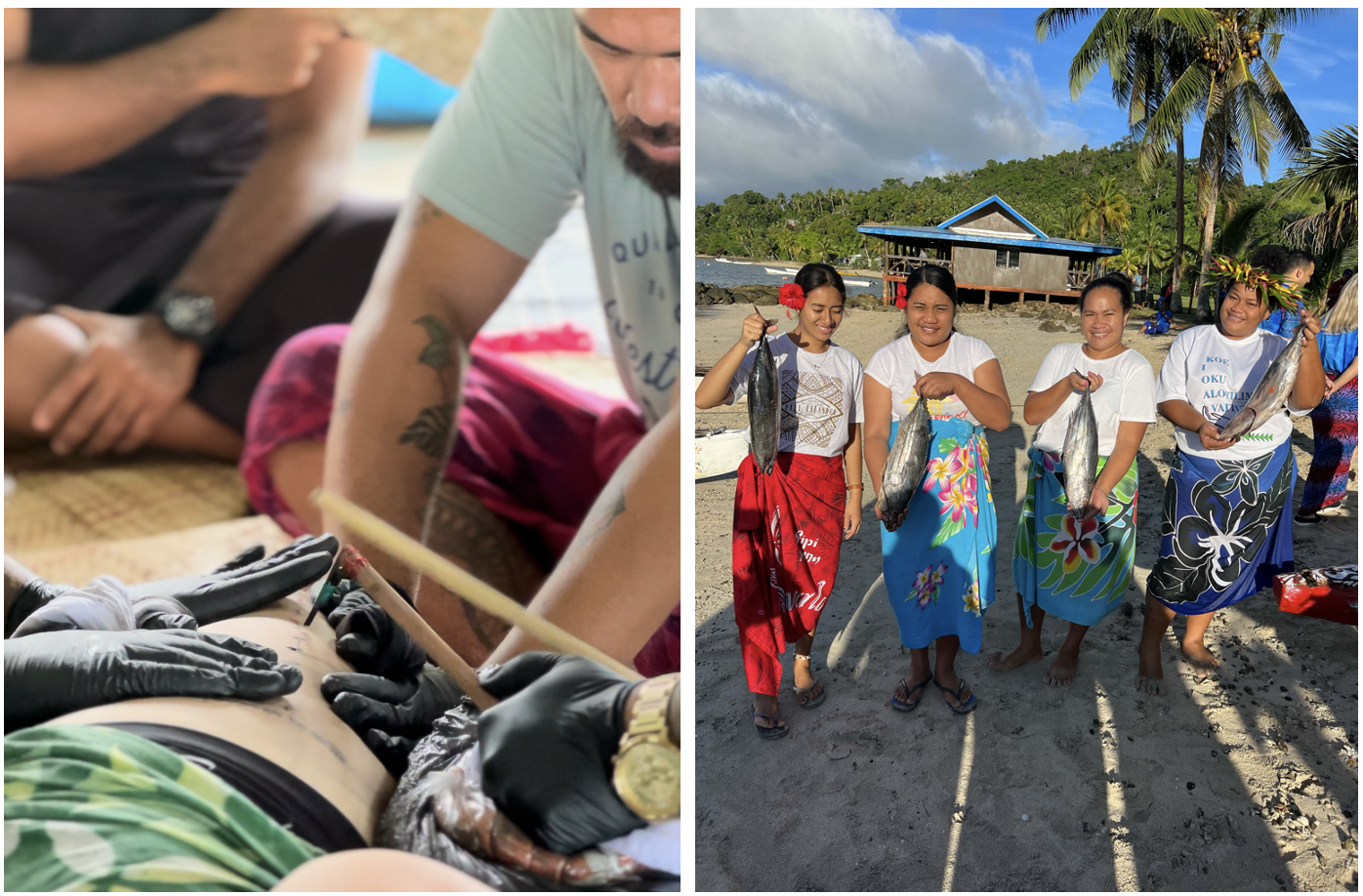 Traditional tattooing embeds the land into the skin, both in pattern and in ink. This is one of the many ways people are connected through culture to our land and ocean, writes Brianna Fruean. Image courtesy of Brianna Fruean.
This is what we all must remember: Climate change is not just a carbon problem. It is a relationship problem. We have forgotten how to be in the right relationship with the planet. Healing begins when we relearn how to listen, how to love and how to live in reciprocity again.
The vā with the cosmos
Then there is the vā between us humans and the cosmos.
Pacific navigators once crossed vast oceans guided only by the stars, waves and wind. They did not see themselves as conquering the sea, but as moving within it. Every decision was made in conversation with nature, the position of the stars, the language of the clouds and the spotting of birds in the sky.
To navigate was to be humble and recognize our smallness within something infinite. Today’s systems are built on domination. We extract from the deep sea, carve up mountains and pollute our skies, all in the name of ideals of “progress.” We have forgotten that the universe and higher powers do not revolve around us.
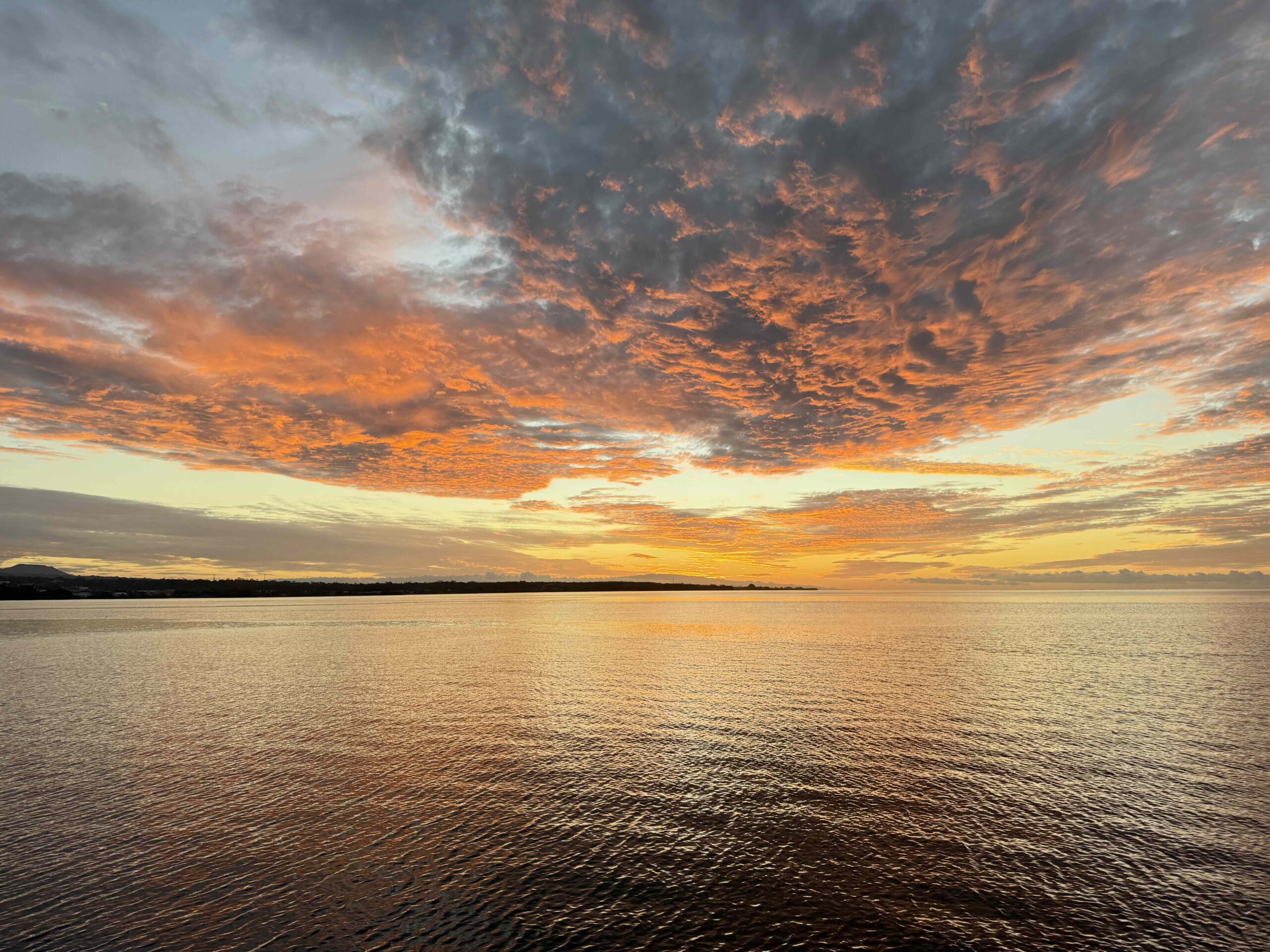 There is the vā between us humans and the cosmos, writes Brianna Fruean. Image by Brianna Fruean.
Relearning this vā between us and whatever higher power we believe in or look to means reclaiming humility. Understanding we are a part of creation and not the creator means honoring the rhythm of life rather than trying to control it. It means remembering that every act of care from planting a tree to teaching a child to respect the ocean ripples across the fabric of existence.
The vā with ourselves
And finally, there is the vā within ourselves. The relationship between ourselves and our sense of self.
The weight of the world is heavy. Many of us carry grief for what is lost and anxiety for what is to come. I was invited to a gathering this year that dealt with the theme “the only way out is in.” I’ve been reflecting on this sentence since I read it. It pushed me to remember that we can’t heal what’s around us if we are not grounded within ourselves.
If we lose that inner connection, our activism becomes hollow and reactive rather than rooted. When we nurture our spirit and bones, our work becomes an offering and not a burden. Healing ourselves is not selfish; in fact, it’s our only way out. A grounded heart can hold the world more gently.
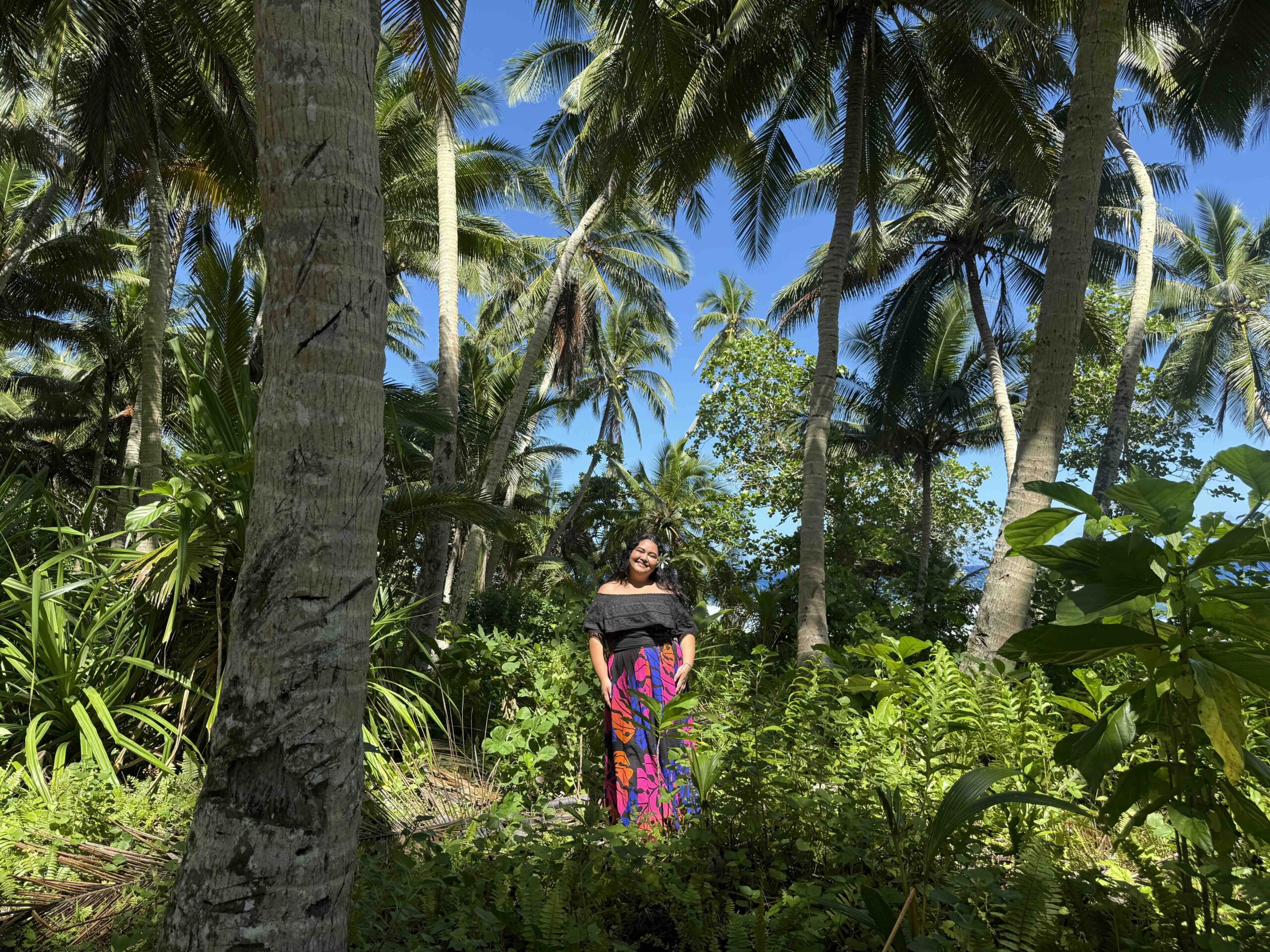 Climate change is not just a carbon problem, it is a relationship problem, writes Brianna Fruean. Image by Brianna Fruean.
The wisdom of vā reminds us that healing the Earth is not just about invention, but remembrance. Many Indigenous knowledge systems, from the Pacific to the Amazon, already hold the principles of balance, reciprocity and care that our world so desperately needs.
It has been said many times before, and I continue to echo it, that we cannot solve this crisis with the same mindset that caused it. The path forward is not only paved with innovation, but with a return to watering and feeding our relationships.
If the world can learn to teu le vā, to tend to the spaces between all living things, then perhaps we can restore what has been broken. When we care for those spaces, we protect the life that flows through them.
***Banner image: *Brianna Fruean is an advocate for climate justice and part of the Council of Elders for the Pacific Climate Warriors, or 350 Pacific. Image by Brianna Fruean.
Brianna Fruean is an advocate for climate justice and part of the Council of Elders for the Pacific Climate Warriors, or 350 Pacific.
The series is produced by the collective Passu Creativa, with the support of Earth Alliance, and published by Mongabay.
Women can help rebuild our relationship with lions: Voices from the land (commentary)
