The Dangers of Brand Over-Saturation

Image credits: © Templo, 2025
The creative decisions are well justified, and the proposal to make paper fun again is endearing and necessary, but the reactions were mostly skeptical. Some comments show concern about why the identity seems to be optimized for screens and digital spaces, since it shines quite a spotlight over motion graphics, when GF Smith is a paper company. Critiques will, and should always exist, but this reaction has opened a way bigger debate, specially for consumers that are part of these “New Generations” that ask themselves, is this what we are becoming?
Audiences are…
The Dangers of Brand Over-Saturation
Image credits: © Templo, 2025
The creative decisions are well justified, and the proposal to make paper fun again is endearing and necessary, but the reactions were mostly skeptical. Some comments show concern about why the identity seems to be optimized for screens and digital spaces, since it shines quite a spotlight over motion graphics, when GF Smith is a paper company. Critiques will, and should always exist, but this reaction has opened a way bigger debate, specially for consumers that are part of these “New Generations” that ask themselves, is this what we are becoming?
Audiences are more screen addicted than ever, and media seems to be in a constant fight for their time, creating techniques to grab their attention for as long as possible, like flashing a colorful toy in front of a baby. Maybe brands are inclined to act similarly, feeling like their identity needs to be in constant movement, displaying bold and expressive typography with loud colors that beg you to keep looking at them.
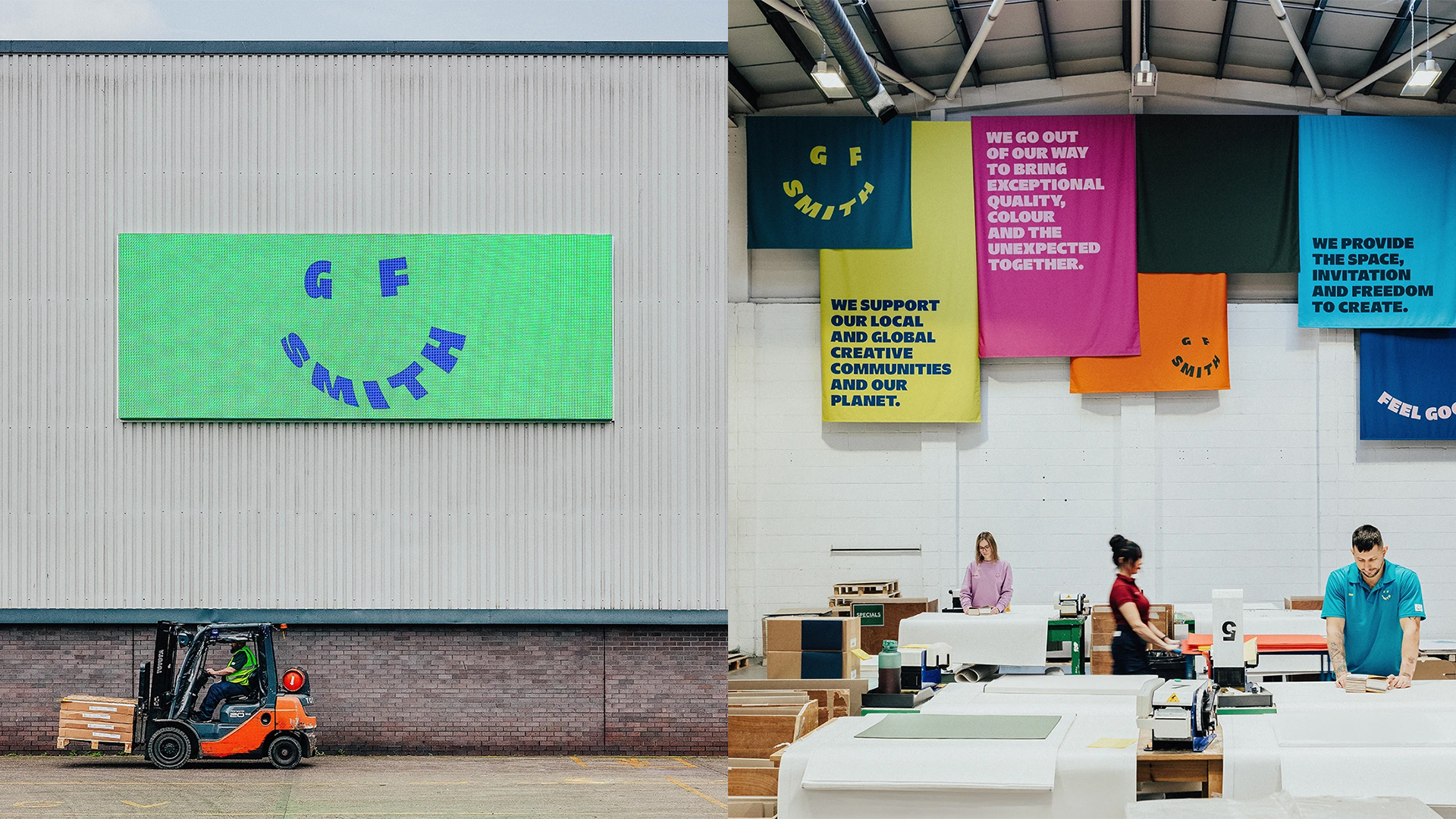
Image credits: © Templo, 2025
While these techniques may serve some brands (many of which seem to be more hyped about the idea of appearing on Pinterest boards rather than building a timeless look), audiences seem to be catching up to these visual tricks. Gen Z users are reaching a burnout, the rose-colored lens that brands want to force on them are not enough to hide the overconsumption that hides behind flashy vectors.