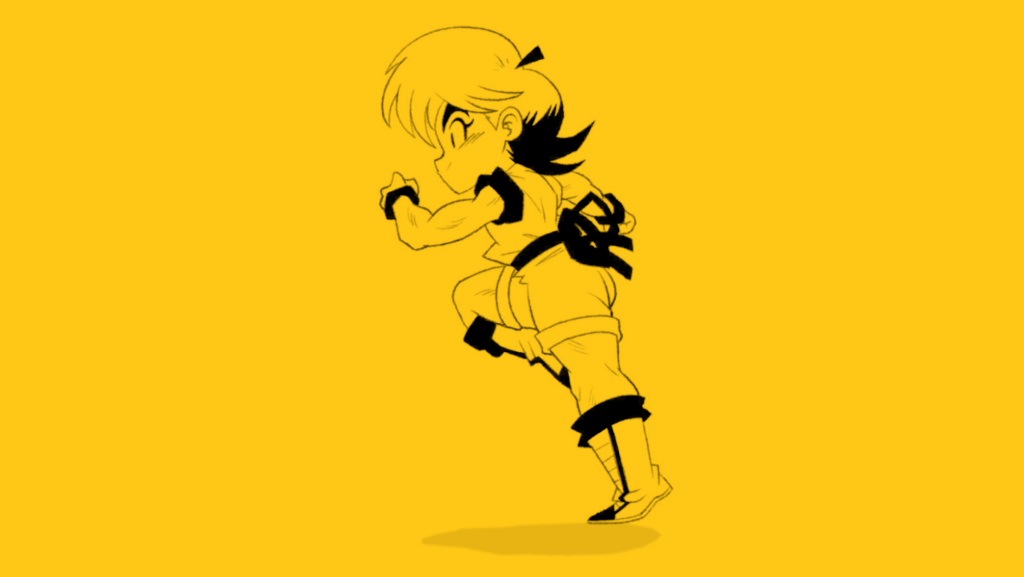
 Ringo is always charging ahead. Source: Author
A sure sign that I enjoyed an anime is when I find myself racing to the nearest search engine in hopes of discovering more of it to devour. It’s not always needed, and sometimes that hope turns into regret when it’s clear there was nowhere else to go story-wise, but that initial hunger for another episode is a reliable tell that something has resonated with me.
This is how I knew Wander Stars, an anime that you play rather than watch, had won me over with ease. My 20-plus hour playthrough exposed me to a fascinating world of words-based martial arts, 1980s and 90s anime humor, a jazzy a…
Ringo is always charging ahead. Source: Author
A sure sign that I enjoyed an anime is when I find myself racing to the nearest search engine in hopes of discovering more of it to devour. It’s not always needed, and sometimes that hope turns into regret when it’s clear there was nowhere else to go story-wise, but that initial hunger for another episode is a reliable tell that something has resonated with me.
This is how I knew Wander Stars, an anime that you play rather than watch, had won me over with ease. My 20-plus hour playthrough exposed me to a fascinating world of words-based martial arts, 1980s and 90s anime humor, a jazzy and electric soundtrack, and a diverse cast of characters to love over a 10-episode structure. As I mentioned in my review of the game for AV Club Games (formerly Endless Mode), it is a triumphant RPG that, while wearing its influences unabashedly, manages to tell a unique story and offer some captivating turn-based gameplay.
Now, considering that *Wander Stars *is a game and not an anime adapted from a manga, the usual routine of looking for signs of a next season, or any extra story at that, wouldn’t work. However, this didn’t kill any interest in learning more about how this balancing act came together, so I reached out to the development team Paper Castle for insight into how the game came together. Over email, the team shared where the idea for Wander Stars came from, how they decided what to keep versus leave behind from its influences, what it was like watching anime in 90s Latin America, what story content was left on the cutting room floor, and if there were any concerns about releasing “gay Dragon Ball” in today’s political climate. This interview was lightly edited for clarity.
 I learned very quickly why Jezabel is the captain of space pirates. Source: Author
Exalclaw: How did the idea of Wander Stars and its word-based combat system first come to be? And how has it changed over time?
**Paper Castle: **We keep a long list of crazy game ideas that we’ve come up with over the years. One of them in particular called out to us right after we released Underhero, the game we worked on before Wander Stars. At the time, it was just a short sentence: “Turn-based game where you use words and adjectives to attack your opponents.”
From that point on, Wander Stars – which at the time was called Superfighto – started taking shape pretty organically. The idea of fighting with words reminded us of anime characters and the way they sometimes call out their attacks, so it just clicked that this would be a game visually inspired by the anime shows we grew up with like Dragon Ball and Sailor Moon.
For the gameplay, classic Pokémon was our first source of inspiration. We tried to imagine how a Pokémon game would work if players were able to combine moves somehow. Then we had to set some hard rules before the system became too complicated, like sorting all the gameplay words into three categories; actions, modifiers, and elemental words. We soon realized that having more than 7 words per action was a bit too long, so we set that as the limit for all attacks pretty early on.
The RPG aspect and progression gradually came about as we fleshed out the word-based combat system. Players start out with a limit of 4 words to keep things simple at the beginning, but as they become familiar with the system they can get permanent upgrades on pretty much all the stats as the game progresses.
**Exalclaw: A particularly unique aspect of the game’s combat system is the option to peace out of fights once an enemy’s health falls within a specific range. How did your team come up with that feature? **
**Paper Castle: **In other RPGs, you usually have a set number of attacks that you pick from a list and the damage output is either rigid or increases as you level up. The goal is usually to inflict the highest amount of damage possible to kill your enemies, but something we noticed early on while testing the Wander Stars prototype was just how much control the player has when inflicting damage.
In Wander Stars, you have the freedom to choose your damage output depending on the words you use, so we thought it would be interesting if inflicting just the right amount of damage could weaken an enemy enough for them to yield, instead of just killing them.
This idea became the strategic core of the battles as we fleshed it out more, and it also gave shape to one of the most important aspects of Kiai – the martial art and magic system that we came up for the game – which is fighting with honor. So ending fights with PEACE became the most rewarding choice, both for gameplay and narrative wise.
And in true anime fashion, we thought it was only fitting that the enemies you defeat honorably go on to become your friends. These former rivals also have a role to fill gameplay wise – they give you words of encouragement we call “Pep Ups”, which are equipable, temporary bonuses that you can combine to gain passive effects like increasing your defense, word limits, etc.
Exalclaw: Wander Stars wears its inspirations on its sleeve (and arms, given half of the main cast wears sleeveless tops). Dragon Ball jumps out almost immediately as a huge influence. What’s the team’s relationship like with the show and larger series? And were there any other shows you pulled a lot of inspiration from?
**Paper Castle: **We grew up in 90s Latin America, where anime was usually more accessible than other foreign cartoons because it was broadcast on national television due to the fact that it was somehow cheaper to distribute and dub into Spanish than, say, American cartoons. It’s no exaggeration to say that Dragon Ball Z shaped an entire generation of Latin American kids from the mid to late 90s. The original Dragon Ball, which is actually from the 80s, was also just as influential for us because older anime shows were also rerun regularly at the time.
Other notable influences are Sailor Moon, Evangelion and Cowboy Bebop. Growing up with these shows pretty much changed our brain chemistry, and started a life-long appreciation for anime and Japanese culture in general. There was a strange resonance and depth in the quality of these stories that called out to us even as young kids. In the case of Dragon Ball, there was something that felt very real about the stakes, the graphic violence, and the relief of having someone like Goku to rely on to save the day when things are at their most dire. In spite of this, or perhaps because of this, Dragon Ball also served as a lesson in standing up to oppression and fighting for your friends. A lesson on tolerance, on learning how to work with people who are different from you – even from another planet – for the greater good. Needless to say, it was a very formative experience.
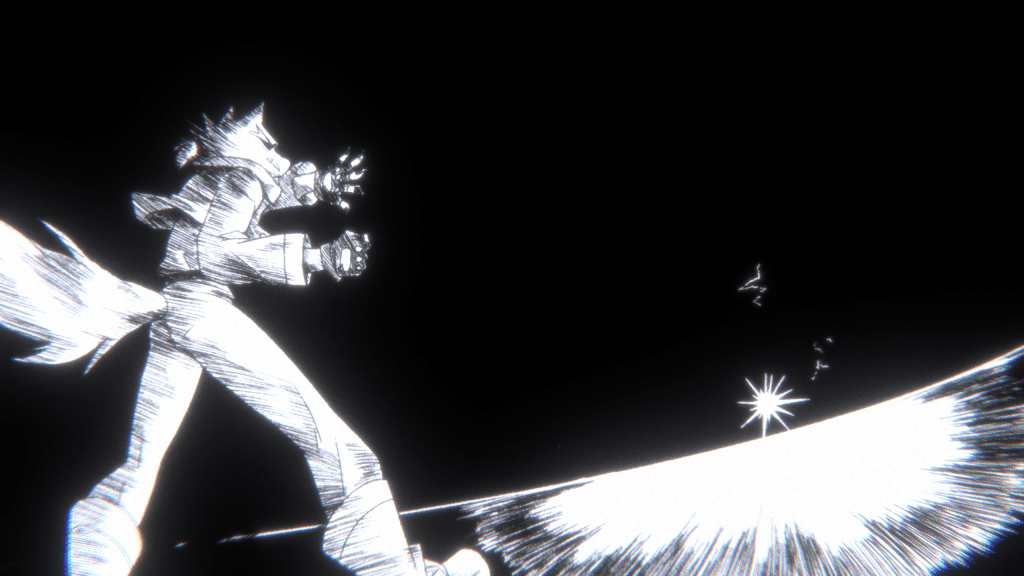 You know something’s seriously powerful when the screen goes black and white! Source: Author
Exalclaw: Your game successfully pulls off the balancing act of paying respect to its influences while ensuring a unique story still comes through. How did you decide what to take and leave out from your inspirations? Did developing this game change how you think about those inspirations at all?
**Paper Castle: **Thank you! Our main goal with the story and our influences was to make something that looked both distinct and nostalgic, like some kind of cult classic you might have heard of but didn’t catch while it was on the air, and now all that is left is a dusty VHS collection with fan subs edited on.
Deciding what to take and what to leave behind from our inspirations was actually pretty easy. We embarked on a rewatch journey for all our biggest influences, and even though we approached this with the utmost appreciation and respect, it was pretty immediate to notice certain differences in values that have become more apparent with the passage of time. Most of these value dissonances center around fanservice and the objectification of women, which is something we actively set out to counter.
There was one thing we did come to appreciate from all these influences while developing this game, which is the difficulty that most of these creators had while coming up with an overarching story originally meant for serialized manga (that would eventually be adapted into the anime shows we all know and love.)
The script for Wander Stars wasn’t locked down until the very last stages of production, and we had a lot of freedom to go back and forth to change things around. A lot of things that might seem as set ups or foreshadowing in early episodes of the game were actually added after the fact, which is the complete opposite approach that artists like Akira Toriyama had when working on their stories. Upon rewatch, the Cell arc from DBZ is almost comical in the way it keeps introducing villain after villain just because the editor wasn’t satisfied with the look of the main bad guy. All this iteration gave us a newfound appreciation for their hard work to keep stories fresh and engaging while also maintaining a sense of consistency.
Exalclaw: Wander Stars goes past just reimagining an older era of anime. From the episodic structure, to the title screens, to even a certain villain’s powers that I won’t spoil here, it’s clear that your team also wanted to replicate aspects of watching a TV show. Why did you want to bring the experience of watching television into this game?
**Paper Castle: **We watched a lot of TV growing up, and it’s something we’re genuinely nostalgic about. The world felt a lot simpler when you didn’t have much choice about what to watch. It also made us feel closer to those around us – all the kids would memorize the time our favorite shows were on the air, tune in for every new episode and then talk about it the next day in school. Now we don’t even have cable, and streaming has somehow become the worst of both worlds. It’s also harder to create a sense of community because anyone can watch anything at any time, so it’s harder to find someone who is watching the same thing you are at the same pace and then have a conversation about it.
For Wander Stars, it just felt like the right choice to craft the game around the experience of watching an actual TV show like we used to do back in the day. Gameplay-wise, the episodic structure seemed like the best way to reconcile the roguelite elements with the RPG progression. We consider each episode a “run” of gameplay, and a lot of different things can be randomized during each run, like different enemy combinations or changing maps and space layouts. Special events that act like “filler” episodes are also random, similar to the experience of turning on the TV and not knowing what will be on.
**Exalclaw: Were there any episode ideas left on the cutting room floor that you wish had made it into the game? **
**Paper Castle: **Definitely! We would have loved to have more breathing room in the first part of the game to develop Ringo and Wolfe’s relationship, and add more episodes in which they are just collecting map pieces while they avoid getting caught by the pirates with no relation to the overarching plot. We also wanted to make a “beach” episode set sometime after the ending of the game to give all the characters a well deserved vacation, and maybe hint at what their future adventures would look like, but at this point it’s hard to say if we’ll be able to work on any additional content or episodes for the base game.
Even though we would have loved to add more stuff, we planned the overarching story of Wander Stars as one season of an anime show. Having this restraint in place, and taking into account our own limitations and resources while developing this game, we knew going in that we wouldn’t have a lot of space to explore certain aspects of the premise, so we had to cut out a lot of things to make the most streamlined and satisfying experience that we could manage.
When we originally talked to our publisher, they asked us half-jokingly if the story Wander Stars was supposed to go on forever. They were probably referring to the way shone anime seems to go on and on for decades. We said no, of course, but we did our best to make a story that could go on forever, not necessarily by our hand, but in the player’s mind.
For all the things we were ultimately forced to cut, we hope that they will find a small space in the hearts of the people who played the game, and maybe they’ll wonder every now and then about the crazy adventures Ringo and her found family might be getting up to.
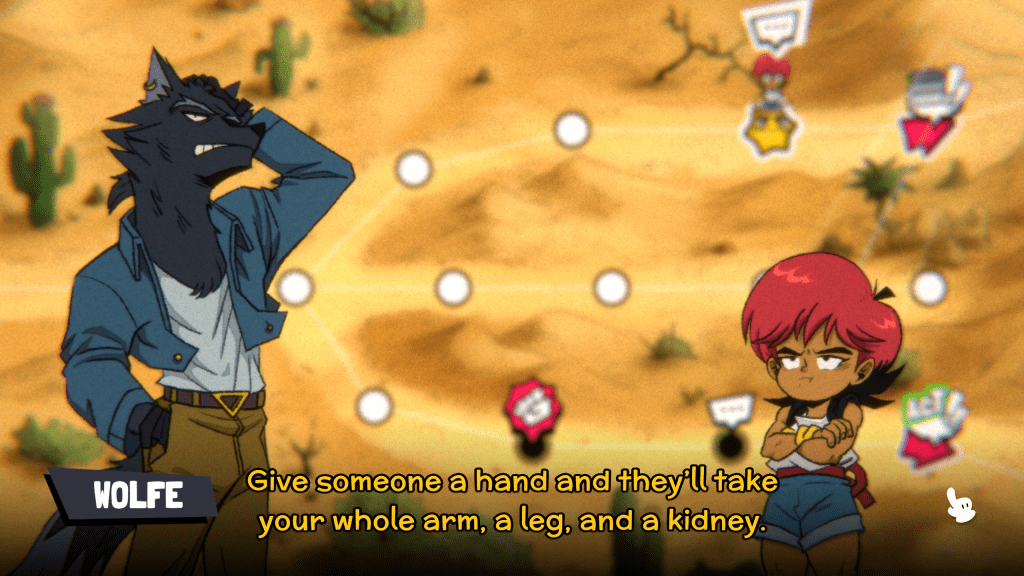 The desert episode was tough on Wolfe’s fur. Source: Author
Exalclaw: Lastly, as you hinted at in our earlier email correspondence, it’s quite the time to be launching a game that you described, I’d say accurately, as gay Dragon Ball. As developers, how has it felt releasing games like this in a climate that has seen increased hostility to LGBTQ+ art and representation? And did you ever have concerns about this aspect of the game as the launch date approached?
Paper Castle: The LGBTQ+ aspects of the game came about very organically, and honestly we originally thought that it wouldn’t be that big of a deal because we have this sense that society is supposed to move forward, not backward. This might have been a little naive – we used to think that by the time* Wander Stars* came out, it wouldn’t be anything extraordinary to have a gay couple front and center, or that it wouldn’t be noteworthy to have trans and nonbinary characters in the cast. A lot of the queer representation in the game is actually inspired by the shows we grew up watching in the 90s. For a lot of kids like us, anime was actually our first encounter with anything LGBTQ+ related. For a lot of kids like us – growing up in conservative Latin America, going to catholic school, being raised for conformity – anime served as a window to another world where things could be different, where people could be genuine, and where everyone could love freely. We couldn’t have made Wander Stars without including this.
Things have changed a lot since we first came up with the idea for Wander Stars in 2019, and sadly not for the better. We prepared ourselves for the backlash, and there has been a bit of that here and there, but generally speaking we’ve been mostly spared. It seems that those who are against a more inclusive world are able to identify that this might not be for them. But we think it could be, if only we could get people to open their minds and hearts. This is why we think it’s more important than ever to share stories like Wander Stars. Stories about love, reconciliation, and working together with people who are different from you. Stories that say: don’t be afraid, you’re not alone. Stories like the ones we grew up with.
Thanks for reading this article. If you enjoy Exalclaw’s work, subscribe below so the next post comes directly to you for free! And consider leaving a tip to support the site’s work: https://ko-fi.com/exalclaw.