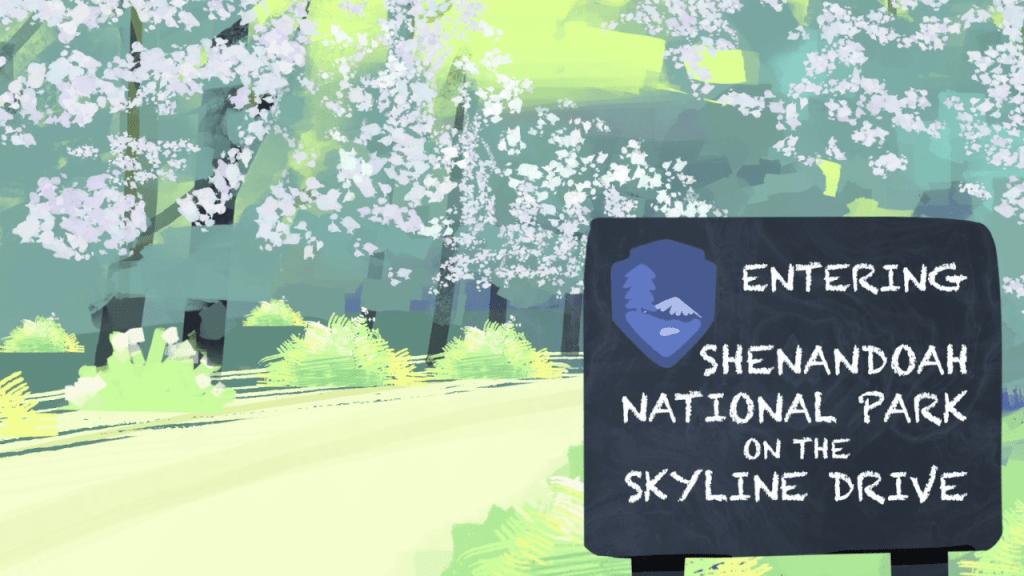
 This is the closest I’ve come to hiking the Appalachian Trail, at least for now. Source: Author
Tensed muscles, darting eyes, an accelerated heart rate, and a ferociously bopping head. These are the sensations and movements I usually expect when playing a rhythm game — adventures of pure adrenaline and focus that test my dexterity, responsiveness, and, past a certain difficulty level, patience. From *Muse Dash *to *Just Dance *to *Dance Dance Revolution *to even the demo of the upcoming Unbeatable,…
This is the closest I’ve come to hiking the Appalachian Trail, at least for now. Source: Author
Tensed muscles, darting eyes, an accelerated heart rate, and a ferociously bopping head. These are the sensations and movements I usually expect when playing a rhythm game — adventures of pure adrenaline and focus that test my dexterity, responsiveness, and, past a certain difficulty level, patience. From *Muse Dash *to *Just Dance *to *Dance Dance Revolution *to even the demo of the upcoming Unbeatable, timing beats to make a number go up or push a story forward often leaves me feeling like I pounded a bottomless energy drink.
So it took me a moment to recognize that the Bluegrass: Mindfulness Simulator* *demo, despite the absence of frantic keyboard clacks and huffed swears, was still a rhythm game. And it took me two moments to realize the demo was right to advise me about closing my eyes. It is the best way to enjoy this game’s unique offering.
*Bluegrass *has you follow the journey of Linda, a freshly laid off worker, as she treks the Appalachian Trail in search of peace. Along the way, she’ll unveil illustrations from her grandmother, who previously tackled the hike and inspired Linda to do the same. Heading toward Mount Katahdin, you experience this journey not by traversing a landscape with a controller or WASD, but instead using audio cues and the space bar to guide her pulse and progress the story. While a soft, almost intimate voice opens up the experience and instructs you on how to play, this journey offers a wealth of different sounds to create a spatial environment where wind whistles, book pages rustle, and voices lead you to the next scene.
I’ll admit that the ASMR space is one I know little about. It’s not completely foreign to me, as I’ve been met with the stray video on my social media feed of people performing scenarios. My partner has shown me a few ASMR creators in the past who specialize in creating stories that are equal parts absurd and captivating. I know there’s a thriving porn subsector for those looking for something a bit saucier in their ears. Personally, I’ve also put on my fair share of rain and nature ASMR videos when I want sound to fill my home but don’t feel like hearing music. Still, it’s mostly a space largely unexplored and infrequently experienced for me, so an ASMR-narrative game isn’t something I was confident about enjoying.
However, it’s clear that developer Oases.Quest is not only comfortable in the space, but also knows how to gently bring people into it. While, at first, skepticism kept my eyes open as a soft voice set the scene, bird whistles and the entrance of a second, more bard-like voice quickly began lowering my guard. Soon after, the soft voice returned with instructions on how to help Linda relax with deep inhales and exhales, and I suddenly found myself following the same breathing pattern. As someone who actually does use breathing to regulate himself when under duress, I was pleasantly surprised by the calmness welling up inside me. With this refreshing wave washing over me, I decided to trust what the soft voice had kindly said earlier and close my eyes.
It was here where the experience finally felt complete, as well as where I cursed myself for not listening earlier. The beauty of *Bluegrass *is that the intention poured into its atmosphere works the brain like any other rhythm game, but in a different direction. Instead of feeling supercharged by a flood of vibrant sound and visual prompts, the tranquility made space for my own imagination. I could paint ideas of what I heard on the dark of my eyelids, and still feel like I wasn’t doing extra work to force my enjoyment. To put it another way, nothing was demanded of me — I just stopped resisting the urge to participate.
In fact, I had gotten so engrossed that my eyes stayed closed well past the demo’s end. Despite the brief embarrassment I felt after realizing this, I consider it a testament to how much I leaned into the demo. It’s left me curious about what other sounds *Bluegrass *will have to further capture me later, as well as what this experience will feel like over a longer period of time. My previous brushes with mindfulness — some individual habits learned from therapy, some daily group exercises done in 8th grade yoga — have revealed getting a little too relaxed can lead to less grounding of self and more slipping into dreamland. In fairness, this might be an instance where a game putting you to sleep may actually be a point in its favor since, in many ways, mindfulness better helps you understand your own needs, and I’m of the mind that anyone falling asleep during an activity *needed *that slumber.
But I am also invested in seeing where Linda’s journey takes her and what her grandmother’s previous trek led to, so I’ll be doing my best to stay wide awake with my eyes shut. Spring 2026 is currently the planned time for the Bluegrass: Mindfulness Simulator’s launch, so it won’t be too long until I dive further into this ASMR adventure.
Thanks for reading this article. If you enjoy Exalclaw’s work, subscribe below so the next post comes directly to you for free! And consider leaving a tip to support the site’s work: https://ko-fi.com/exalclaw.