My interests in nature, ecology and society were deeply influenced by both my father and our next-door neighbour Irawati Karve. I was further drawn to exploring the relationship between nature and culture by my studies of sacred groves in the Western Ghats of southern Maharashtra in 1971. Sacred groves are among the few remaining stands of primeval vegetation of India.
While I was attracted to studying this vegetation as a student of biology, I quickly began exploring the cultural practices of nature conservation underlying their persistence. The society on these hills was relatively simple, composed of a small number of communities that had been living in the locality for several generations and had developed very specific relationships with the natural resource base. They were quit…
My interests in nature, ecology and society were deeply influenced by both my father and our next-door neighbour Irawati Karve. I was further drawn to exploring the relationship between nature and culture by my studies of sacred groves in the Western Ghats of southern Maharashtra in 1971. Sacred groves are among the few remaining stands of primeval vegetation of India.
While I was attracted to studying this vegetation as a student of biology, I quickly began exploring the cultural practices of nature conservation underlying their persistence. The society on these hills was relatively simple, composed of a small number of communities that had been living in the locality for several generations and had developed very specific relationships with the natural resource base. They were quite conscious of the fact that the sacred groves furnished them with a variety of ecosystem services such as securing water sources and refugia for their favourite prey animals. (Refugia is an area in which a certain population is inviolate.)
How might people have arrived at protecting refugia as a device for long-term conservation? I collaborated with my colleague Niranjan Joshi in exploring how people may have arrived at conserving good- sized patches of habitats as sacred groves, sacred ponds or sacred stretches of the river, as a consequence of experience, through trial- and-error experiments. Joshi had done a thesis in biophysics involving extensive computations and was adept at computing and modelling. We set up a model of people acting on simple, intuitive decision rules while exploiting a biological resource such as trees or fish or mammal populations.
We postulated that people will further step up the level of exploitation of a resource if an increase in harvesting effort has led to a larger harvest in the previous time interval and decrease the level of exploitation if an increase in harvesting effort has led to a lower harvest. Similarly, they will step up the level of exploitation of a resource if a decrease in harvesting effort has led to a lower harvest, and further, reduce the level of exploitation if a decrease in harvesting effort has led to a better harvest.
The system may operate in two different modes: either the entire available area of resources may be subjected to harvest, or certain areas, set aside as refugia, may be exempted from harvest. An exploration of the models showed that in the first case the resources will be invariably overharvested and exterminated; on the other hand, when certain areas are set aside as refugia, with the size of refugia increased or decreased as dictated by the decision rules stated above, then the resource populations are likely to be maintained at the level of optimum sustainable harvest.
There is considerable empirical evidence that while some pre-modern societies decimated their resource base, others did manage to exist in equilibrium with their environment. This was particularly true of sedentary, territorial groups in stable, productive environments such as tropical humid forests or coral reef islands.
Occasionally, such an equilibrium may have been reached because the demands of these human groups on the resource populations were too low to seriously affect them. However, there is evidence that human groups responded to depletion of resource populations by setting up restrictions on resource use, including conferring total protection to part of the resource population in refugia such as sacred groves, sacred ponds or sacred areas on the seacoast.
It is notable that such systems did not consist of just a few large refugia but rather of numerous, highly dispersed, relatively small elements. It is obvious that a firm prohibition against harvesting from a set of localities is easier to implement than a quantitative restriction on harvesting effort. This traditional system of plentiful patches of refugia is worth serious consideration for adoption in the present-day context since it has two major virtues: it brings the experience of wilderness to everyone’s doorsteps and combines conservation and sustainable use in a meaningful fashion.
By 1990 I had visited and met the people of most states in India, barring Jammu and Kashmir and the north-eastern states of Tripura, Nagaland, Manipur, Mizoram and Arunachal Pradesh and was keen to visit this biodiversity rich north-eastern region. An opportunity arose when I met Natabar Shyam Hemam, who was registered as a doctoral student with Mohan Reddy, a close associate of Kailash Malhotra at the Indian Statistical Institute in Kolkata. Natabar came from the Manipur valley which had been under the influence of Bengali culture from the time of the Vaishnava saint Chaitanya.
The hilly regions were socially and culturally very different, harbouring tribal communities who practised shifting cultivation along with extensive hunting and gathering. With his background in anthropology, Natabar was familiar with these tribal societies and had heard of people who had abandoned the earlier practices of nature conservation on conversion to Christianity only to re-adopt them when convinced of the value of ecosystem services associated with such practices. He readily agreed to the proposal of studying such a village, suggesting that we focus on some remote village of Churachandpur district, bordering China and Myanmar. He selected the village of Santing, inhabited by Gangtes belonging to the Kuki group of tribal people.
Natabar, Mohan and I landed one fine spring day of 1992 in the state capital Imphal. Asha Gupta at the botany department at Manipur University was an old friend, and after a couple of days visiting the countryside, we drove to Churachandpur, stayed there for a night and then drove on along narrow winding hill roads towards Santing. When the road ended, we trekked for about two hours uphill on footpaths and finally reached our destination in the late afternoon. The countryside had scattered tree and shrub growth since the larger trees had been exploited after commercial demand reached the state in the 1970s. Bereft of the trees, the shifting cultivation cycle had also shortened.
We were guests of the village chief who lived in a large, single-storey “house of bamboo”, like in the pop song, with a bamboo door and walls and roof, and even a bamboo floor. The chief was largely out of the house which was dominated by a formidable lady who was the mother of twelve, as advertised in the twelve baptism certificates framed on the wall. She spent most of the day weaving colourful cloth on a handloom while puffing away at a pipe. Over the kitchen stove were carcasses of birds, mostly of the size of sparrows and bulbuls, strung on a string and being smoked as the cooking went on.
On the way we had met with a villager who had promptly bagged a junglefowl which constituted our dinner. On the previous day, at the Churachandpur market, we had seen a large quantity of wild meat for sale and were told that the Wildlife Protection Act did not apply in Manipur. For dessert after dinner, we were offered some plant- sucking bugs full of sweet phloem liquid. They tasted pretty good.
As Natabar conversed with the village people in Manipuri, I could recognise only two words, sabun and paisa! Luckily for me, there were four members of the Border Security Force on vacation in the village and they were fluent in Hindi. Many of the elders vividly remembered the traditional system that had changed only about forty years ago in the 1950s. They reported that in the past, up to 30 per cent of land and water were fully protected as sacred sites. Certain valued resources such as bamboo and Aquilaria, with its fragrant wood, were harvested with great care.
Bamboo has manifold uses and young bamboo shoots are a favourite nourishing food for the people. But attached to each settlement were patches of good bamboo growth called muvahak from which bamboo was extracted only when needed for house construction or repairs.
When the British established control over this region in 1908 they assigned the ownership of all land to various tribal chiefs, reducing the rest of the populace to sharecroppers. Many of these chiefs forcibly liquidated the forests to make a quick buck. This was a revelation, for the belief prevalent all over India is that communities had remained in control all along and nevertheless had liquidated their resource base. Obviously, this was simply not true.
Even greater damage followed in the 1950s, when missionaries converted the entire tribal society of many of the north-eastern states to Christianity. Their hostility to ‘pagan’ beliefs led to the destruction of the large network of sacred groves and ponds. Significantly, the tiny Buddhist country of Bhutan, nestled in the Himalayas next to India’s northeast, never came under colonial rule or missionary influence and still harbours a network of sacred groves that is estimated to cover 20 per cent of its land surface.
As the sacred groves were cleared, however, people began to realise that they had fulfilled a number of valued ecosystem services, in particular as firebreaks. The fires set to clear plots for shifting cultivation stopped when they reached these dense, drippy patches of rainforest. In consequence, a few years after the complete elimination of all the sacred groves, several villages revived protection to forest patches.
These refugia are no longer regarded inviolable as abodes of spiritual beings. Even so, the system of community-based vigilance and protection is identical to that of earlier times, and like the sacred groves of yore, they are still called gamkhap in the Gangte language. These findings strengthened my conviction that, despite spiritual beliefs giving way to secular ones, sacred groves could still survive or even be revived across the subcontinent if ecosystem services reached the people.
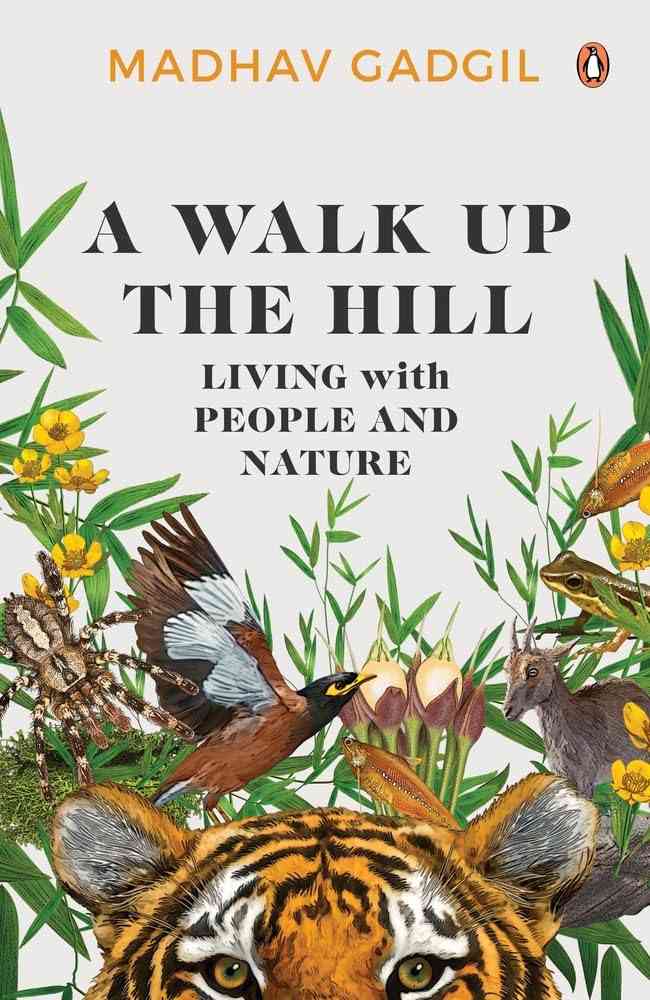
Excerpted with permission from A Walk Up The Hill: Living with People and Nature, Madhav Gadgil, Penguin Allen Lane
Also Read:
From the memoir: Ecologist Madhav Gadgil recalls his time at Harvard University as an MSc student
Ecologist Madhav Gadgil, leading voice on Western Ghats conservation, dies at 83
- We welcome your comments at letters@scroll.in. *
 Get the app