Egypt’s foreign policy will remain too little, too late in 2026Expert commentthilton.drupal
Amid security threats on its borders, Egypt is likely to accommodate Trump’s preferences on Gaza while deepening relations with Qatar and Turkey and focusing on reviving its struggling economy.
Egypt’s foreign policy will remain too little, too late in 2026Expert commentthilton.drupal
Amid security threats on its borders, Egypt is likely to accommodate Trump’s preferences on Gaza while deepening relations with Qatar and Turkey and focusing on reviving its struggling economy.
</div>
In the past two years, Egypt has played an active role on several fronts. It has mediated talks over Gaza and Iran’s nuclear programme, as well as working to de-escalate Israel’s military campaign in southern Lebanon. It has also backed the Sudanese Armed Forces (SAF) against the Rapid Support Forces (RSF) in the war in Sudan.
On the surface, this new activism could be seen as restoring Egypt’s relevance and boosting its status as a regional stabilizer. But in reality, the Gaza war and the subsequent regional turmoil have fostered a regional order in which Egypt has been somewhat sidelined as Washington prioritizes its relations with Israel and the Gulf states.
This partly reflects Egypt’s reactive and risk-averse approach to foreign policy, as well as its economic constraints that mean it is dependent on foreign investment.
Is Egypt back?
Egypt’s foreign policy has for a long time been narrowly focused on three objectives: fending off threats near its borders, maintaining regime survival and reviving its struggling economy. In 2025, Egypt adopted several measures to achieve these goals.
Egypt has moved closer to Qatar and Turkey, two countries with which it had historically strained relations, as well as Saudi Arabia. This partly reflects an alignment of regional interests in Gaza and Sudan. It is also influenced by the return to office of President Donald Trump, who is seen as having close relations with the Gulf.
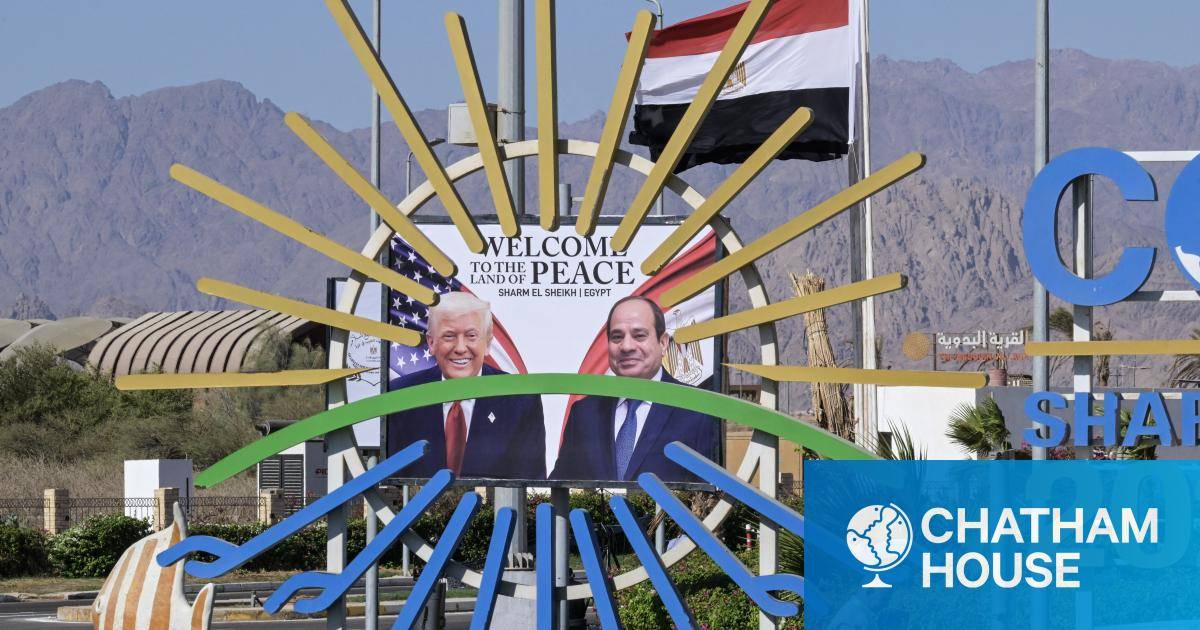
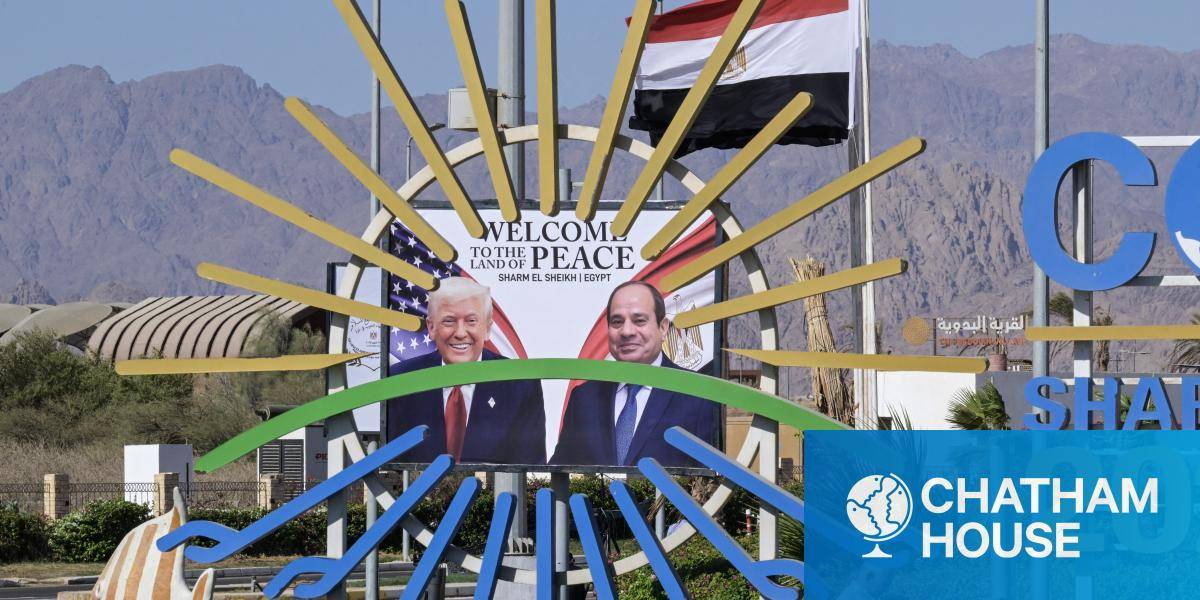
Cairo, Doha and Ankara have been the three main mediators working with the US to secure a ceasefire between Israel and Hamas in Gaza. Egypt has positioned itself as indispensable to the success of Trump’s Gaza peace plan. Crucially, unlike Trump’s previous ‘take over’ plan, the peace plan does not include the expulsion of Palestinians from Gaza, which Cairo has consistently opposed.
In Sudan, Egypt, Turkey and Saudi Arabia are again on the same side. They are supporting the SAF to prevent the UAE-backed RSF from assuming full control of the country. (The UAE denies backing the RSF.)
Egypt and Turkey are likewise aligned in opposing Ethiopia’s hegemonic ambitions by backing Somalia and Eritrea in the Horn of Africa.
They have also sought to maintain stability in the Eastern Mediterranean. Egypt and Turkey conducted their first joint naval drills in 13 years in September, marking a rising military partnership.
Securing foreign investment
However, Egypt’s regional strategy faces challenges, some of which are self-inflicted. It is constrained by persistent economic imbalances due to unsustainable public debts, economic mismanagement and a slow pace of reform at home, despite signs of recovery.
Egypt’s diversification of its foreign relations has been motivated in part by the search for new sources of foreign investment. Egypt’s revenue from the Suez Canal – a major source of foreign currency – was hit badly by the Houthis’ attacks on shipping vessels in the Red Sea. It plummeted from over $10 billion in 2023 to around $4 billion in 2024.
Cairo has managed to attract a series of investment and financing deals, potentially reflecting recognition of its mediating role. In February 2024, Egypt announced the $35 billion Ras El Hikma investment deal with the UAE. In March 2024, the IMF expanded its loan to Egypt to $8 billion.
And, as a notable outcome of its closer relations with Doha, Egypt recently signed an agreement valued at nearly $30 billion with Qatar to develop Alam Al-Roum on the North Coast, following an agreement to pursue a package of approximately $7.5 billion in direct Qatari investment.
But despite early proof of economic recovery, persistent structural challenges remain. Plummeting living standards have impacted social stability and resulted in the near obliteration of Egypt’s middle class. The military’s expansive economic footprint, the government’s expensive vanity projects and stagnant market reforms have contributed to capital flight from the private sector. This may entrench Egypt’s state-capitalist model and prevent the economy opening further.
Too little, too late
Aside from economic constraints, Egypt’s foreign policy is also hindered by being reactive. This has resulted in short-lived alignments and only temporary wins.
Egypt’s cautious regional posture is partially due to the risk-averse nature of its leadership, which presides over foreign policy. Since rising to power in 2014, President Sisi and his inner circle have largely avoided participating in intervention or de-escalation efforts in major conflicts far from Egypt’s borders. This reflects Sisi’s semi-isolationist ‘Egypt first’ foreign policy, calibrated to serve domestic economic priorities.
Cairo has aimed to avoid provoking the US, as well as Saudi Arabia and the UAE, who also provide important political and financial support to Egypt. In doing so, it has ceded a more proactive role to these powers. President Trump appears to prefer a new regional order centred on the Gulf and Israel, with Egypt a less important player, as seen in his high-profile tour of the Gulf and Prince Mohammed bin Salman’s subsequent visit to Washington.
Egypt’s foreign policy will likely continue to lack the long-term strategic planning required to significantly shape regional geopolitics in 2026.
</div>
Egypt’s reactive approach can have severe consequences.
In Sudan, Egypt reportedly hesitated in backing the SAF with sufficient military assistance during the early stages of the war. Since then, the RSF has made major gains, including taking El Fasher. While Egypt hinted this week that it could intervene military if its ‘red lines’ were crossed, including any division of Sudan, such an intervention would now be significantly more costly and dangerous than earlier on in the war.
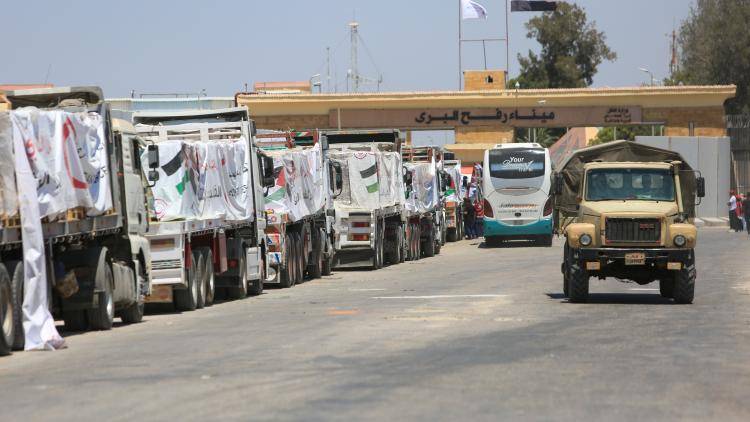
Similarly, the Egyptian/Arab plan for the reconstruction of Gaza only materialized in reaction to President Trump’s plans to ‘take over’ the Strip. The threat of Palestinians being displaced from Gaza has also not gone away; Israel’s recent announcement that the Rafah border crossing between Gaza and Egypt would be reopened in just one-direction was rejected by Egypt and other Arab states.
In the dispute over the Grand Ethiopian Renaissance Dam, Egypt has adopted a ‘too little, too late’ approach, failing to compel Ethiopia to sign a legally binding agreement on Nile water sharing. Egypt has effectively lost its historical unofficial veto power over Nile projects, leaving concerns over water security.
The year ahead
In 2026, Egypt is likely to utilise its open channel with the Trump administration as a mediator to seek to counter any renewed attempts to displace Palestinians from Gaza and to push for the difficult second phase of the ceasefire to be carried out.
Next year may also see deepening of the partnerships with Qatar, Turkey and Saudi Arabia. This could potentially create an emerging balancing front against Israel’s assertive regional role. However, Cairo will seek to maintain its peace treaty with Israel as its foremost strategic priority and is unlikely to take any measures that could jeopardize this treaty.