Uganda election: Museveni’s expected win will deepen succession and Gen-Z challenges
chathamhouse.org·3d
Preview
Report Post

Uganda election: Museveni’s expected win will deepen succession and Gen-Z challenges Expert comment thilton.drupal

Pressure to deliver economic improvement for young people – and questions over his succession – will define the president’s seventh term if he wins as expected.

Uganda election: Museveni’s expected win will deepen succession and Gen-Z challenges Expert comment thilton.drupal

Pressure to deliver economic improvement for young people – and questions over his succession – will define the president’s seventh term if he wins as expected.

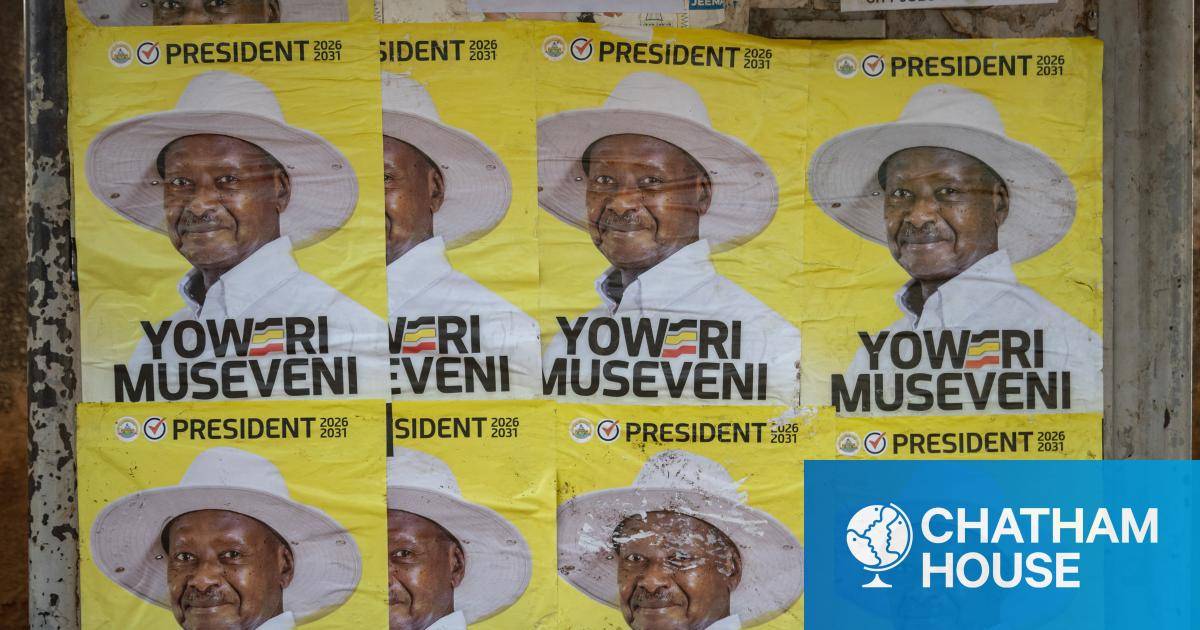
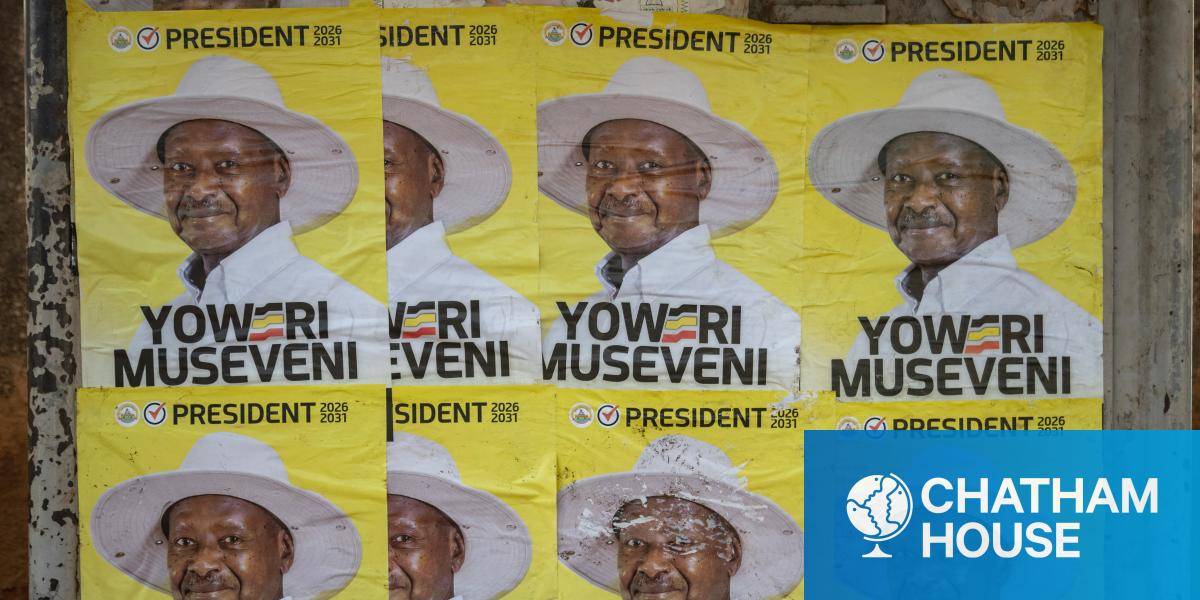
Posters showing Uganda's President Yoweri Museveni
        </div>

Ugandans will go to the polls on 15 January. Two weeks after election day will mark the 40th anniversary since incumbent president Yoweri Museveni first took power in 1986. The 81-year-old Museveni is widely expected to celebrate this milestone from inside State House as president again. 

Bidding for a seventh consecutive term in office, his ruling National Resistance Movement (NRM) is campaigning under the slogan ‘protecting the gains’. This defensive posturing captures not only the NRM’s familiar appeals to stability and legacy, which have helped to consolidate its primary support base in rural areas, but also its ability to use state machinery to protect its own authority by suppressing alternative centres of power.

As with the 2021 elections, supporters of Museveni’s leading challenger Robert Kyagulanyi (a musician-turned-politician widely known as Bobi Wine) have reported abductions, arbitrary detention and violence at the hands of security forces. Another opposition figurehead, Kizza Besigye, remains detained in a Ugandan prison on treason charges after his abduction in Nairobi in 2024.

Ahead of an expected new term for Museveni that could include major economic milestones, this election campaign has so far generated little fresh clarity on how the NRM will manage his succession, amid longstanding speculation over the positioning of his eldest son. Neither has it offered much for Uganda’s discontented young urban population, who have seen seismic demonstrations elsewhere in East Africa in recent years.

Opposition and the Gen-Z factor

Ugandans watched significant protest movements erupt in Kenya in 2024 and around Tanzania’s election in 2025. The protests were led by the ‘Gen-Z’ demographic that makes up around a third of the population in these countries.

Uganda does share some important conditions with these neighbours: a rapidly growing young urban population more instep with online influencers than narratives of liberation; a political climate in which opposition political leaders and activists face abduction and detention; and a sense of opportunity among young people borne out of solidarity with Gen-Z protesters elsewhere.

Yet other factors are different. Kenya’s protests were leaderless, renouncing the influence of the late Raila Odinga; and Tanzania’s erupted while polling stations were still open and the main opposition leader Tundu Lissu was in prison. In contrast, in Bobi Wine, young Ugandans have a genuine opposition figurehead present on the ballot. Unlike in Tanzania, where legal challenges to the election results were forbidden, the possibility of a court petition to challenge the results may act to dilute potential flashpoints in Uganda, even if it is highly unlikely to succeed.

Ugandan politics also remains heavily militarized. Protests in November 2020 saw 54 demonstrators killed by security services. Speaking last month about possible election demonstrations, President Museveni reminded citizens that ‘one soldier carries 120 bullets’.

Even if military intervention and illusory electoral institutions again combine to restrain widespread disorder in these elections, the conditions for potential unrest will remain. Many young urban Ugandans remain critical of the perceived lethargy of the NRM and repeated corruption scandals that sparked protests in 2024. 

Unless these issues are addressed over the next presidential term, there is the risk that they could manifest in unrest during a potentially difficult political succession. 

NRM renewal and succession

The longstanding question of Museveni’s succession remains dominated by his son, the chief of Uganda’s defence forces, General Muhoozi Kainerugaba. 

Muhoozi leads a civic movement, the Patriotic League of Uganda (PLU), which has been influential in the wider repositioning of ruling elites in the NRM and military. The PLU claims to hold an allied majority within the NRM’s central executive committee following internal party elections in 2025, which included high-profile upsets of established party figures at the hands of PLU-affiliated candidates.

Muhoozi has also partly tempered his famously provocative public outbursts in recent months, intensifying speculation over his next political move.
Similar Posts

Loading similar posts...

Keyboard Shortcuts

Navigation
Next / previous item
j/k
Open post
oorEnter
Preview post
v
Post Actions
Love post
a
Like post
l
Dislike post
d
Undo reaction
u
Recommendations
Add interest / feed
Enter
Not interested
x
Go to
Home
gh
Interests
gi
Feeds
gf
Likes
gl
History
gy
Changelog
gc
Settings
gs
Browse
gb
Search
/
General
Show this help
?
Submit feedback
!
Close modal / unfocus
Esc

Press ? anytime to show this help