<div class="teaser__image-container">
Western officials and Ukraine’s opposition had grown increasingly wary of Yermak, who wielded enormous power as the president’s gatekeeper and lead negotiator – and had a fierce rivalry with Budanov.
Budanov is untarnished by corruption scandals, positioning him as a credible figure for international diplomacy. Moreover, appointing a security official with real-battle experience will resonate well among exhausted frontline troops, who are frustrated by the lack of rotations and diplomatic progress.
Recent opinion polls place Budanov consistently in the top three most popular and trusted figures in the country. According to one survey, in a hypothetical election runoff (excluding Ukraine’s former Commander-in-Chief of the Armed Forces Valerii Zaluzhnyi), Budanov would likely defeat Zelenskyy.
By bringing this significant potential political challenger into his administration, Zelenskyy can neutralize him as an outside rival in case elections – consistently pushed for by Washington – go ahead. Significantly, this appointment will also allow Zelenskyy to share, even shift blame onto Budanov for any failure in peace talks – where he will now play a key role.
Fedorov will replace Denys Shmyhal as Defence Minister. Shmyhal will now lead the Ministry of Energy – perhaps the most difficult cabinet role, as Russia’s relentless strikes push Ukraine’s energy system to breaking point. This marks Shmyhal’s third major governmental position in less than a year, reflecting his role as Zelenskyy’s ‘trouble-shooter’ for the state’s most distressed sectors.
Attacks on major energy infrastructure in Ukraine’s central and eastern regions complicate efforts to reroute power from other regions, increasing the risk of a humanitarian emergency.
On 7 January in the Dnipropetrovsk region, over 1 million people were reportedly left without water or heating as temperatures dropped below freezing.
Malyuk’s demotion is controversial
As part of the reshuffle, Zelenskyy reportedly forced Vasyl Malyuk to resign as the Head of the Security Service of Ukraine (SBU). Some suspect that this was a retaliation following Malyuk’s refusal to interfere with the anti-corruption investigations that brought down Yermak.
This was a particularly controversial move. Malyuk is the brain behind Ukraine’s successful Spider Web operation, where small drones were smuggled into Russia and used to destroy Russian strategic aircraft. He also masterminded the strike campaign on oil refineries and weapons factories inside Russia.
Preparing for the worst
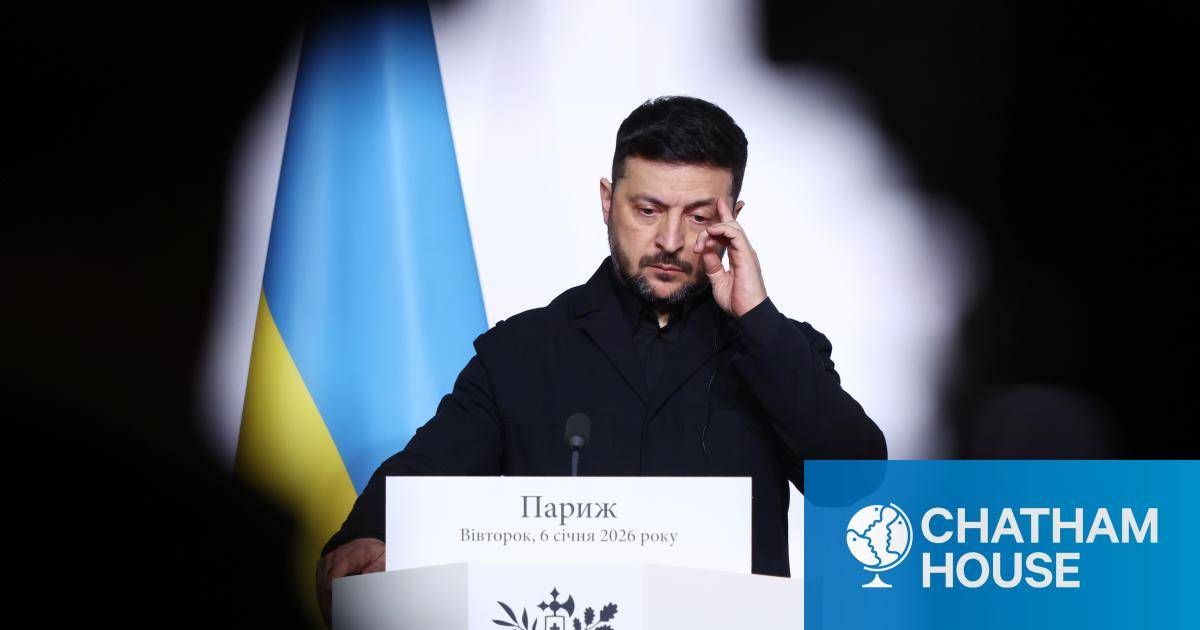
Ukraine’s new appointments come amid renewed pressure from the Trump administration to agree a peace deal. Leaders from the so-called ‘Coalition of the Willing’ met in Paris on 6 January to discuss security guarantees for Ukraine. The resulting declaration promises a multinational presence to regenerate Ukraine’s military, a US-led ceasefire oversight mechanism, long-term defence cooperation with Ukraine and ironclad guarantees against future Russian aggression.
However, beneath this show of unity, serious problems remain.
The size and mandate of the proposed multinational force is still not clear. The UK and French standing armies have been reduced to historical lows, shrinking the size of their deployable forces.