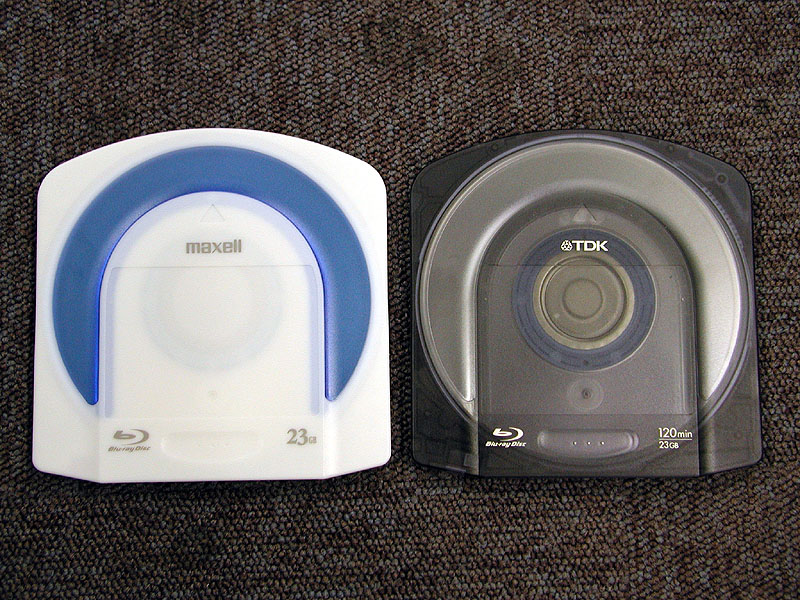
What if I told you that the Blu-ray you know and love was not the *original *Blu-ray? The Blu-ray that came onto the market almost 20 years ago in mid-2006 was, essentially, round-two for the technology which first launched as early as 2002-2003 in Japan, at around the time that HD-DVD (formerly Advanced Optical Disc) was being conceived. As the home of Sony, TDK and Pioneer, Japan often had the cutting edge when it came to optical disc technology with some of these never quite finding international success.
A Sheltered Life
It turns out that Blu-ray traces its heritage to around 1998 when the first viable blue-laser diodes became available and were looking for applications. For professional storage library applications, an extension of the Magneto-Optical style 130mm cartridges were made in the form of UDO and UDO2 (short for Ultra Density Optical).
But a second project produced what would become the predecessor to Blu-ray, DVR Blue. A prototype of DVR Blue was demonstrated in 2000 with a claimed 22.5GB capacity and later, more marketable units were showcased in CEATEC in 2001. It would not be until 2002 that the format gained the Blu-ray name.
It was around this time I would have first heard about Blu-ray and its astronomical (for the time) capacity. I recall seeing it on the television news, in its original guise, which involved a cartridge. I believe the reporter was a bit skeptical about formats using cartridges as being old-fashioned, bulky and perhaps unlikely to succeed. Looking back, the reporter was probably not wrong.
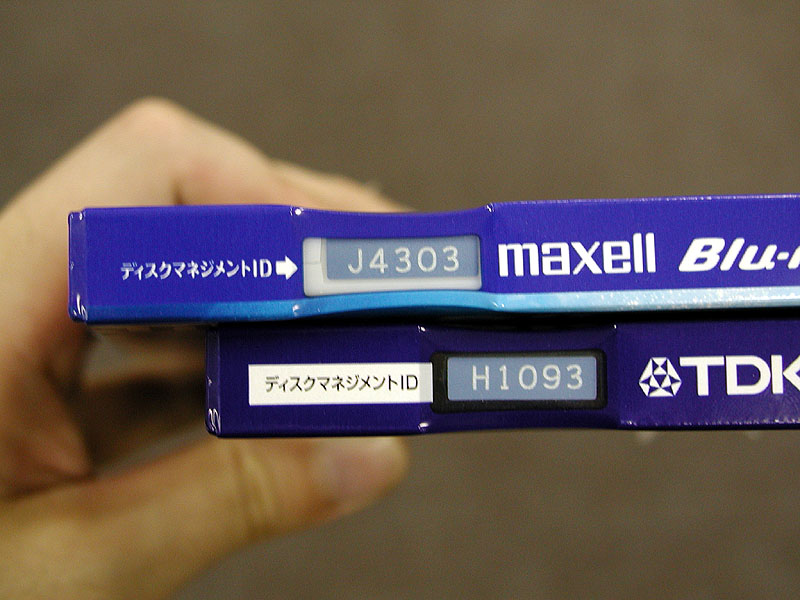
The discs were re-recordable and had a claimed capacity of 23GB in fully enclosed cartridges. Examples include the TDK BD-RE120N and Maxell BDF120. Each disc had an ID code for inventory and was suitable for recording Japanese HD broadcast satellite TV that required copy protection. In August 2003, the discs were 2880 JPY to 3180 JPY individually but with an RRP of 3600 JPY.