
Quantum computers, systems that process information leveraging quantum mechanical effects, are expected to outperform classical computers on some complex tasks. Over the past few decades, many physicists and quantum engineers have tried to demonstrate the advantages of quantum systems over their classical counterparts on specific types of computations.
Researchers at Autonomous University of Barcelona and Hunter College of CUNY recently showed that quantum systems could tackle a problem that cannot be solved by classical systems, namely determining the even or odd nature of particle permutations without marking all and each one of the particles with a distinct label. This task essentially entails uncovering whether re-arranging particles from their original order to a new order requires an even or odd number of swaps in the position of particle pairs.
These researchers have been conducting research focusing on problems that entail the discrimination between quantum states for several years. Their recent paper, published in Physical Review Letters, demonstrates that quantum technologies could solve one of these problems in ways that are unfeasible for classical systems.
"The basic scenario for these problems is that you are given a system that has the possibility to be in one of several different quantum states, and you want to design a measurement to tell you what state it is actually in," Mark Hillery, co-senior author of the paper, told Phys.org.
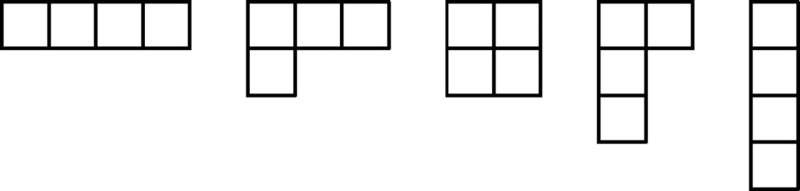
"In the current case, this idea is taken further. You start with a system of particles in an initial quantum state, and you permute them which changes their state. There can be as many possible final states as there are permutations. Then you want to measure the final state to determine whether the permutation is even or odd (even or odd on number of interchanges)."
Unveiling if the permutation of particles is even or odd
Rather than determining what permutation occurred (i.e., the new arrangement or final state of particles), the researchers were interested in uncovering a specific property of the final state. To explain the nature of this task, Hillery uses the analogy of a game in which two players re-arrange a set number of balls.