Julia Demaree Nikhinson, Associated Press
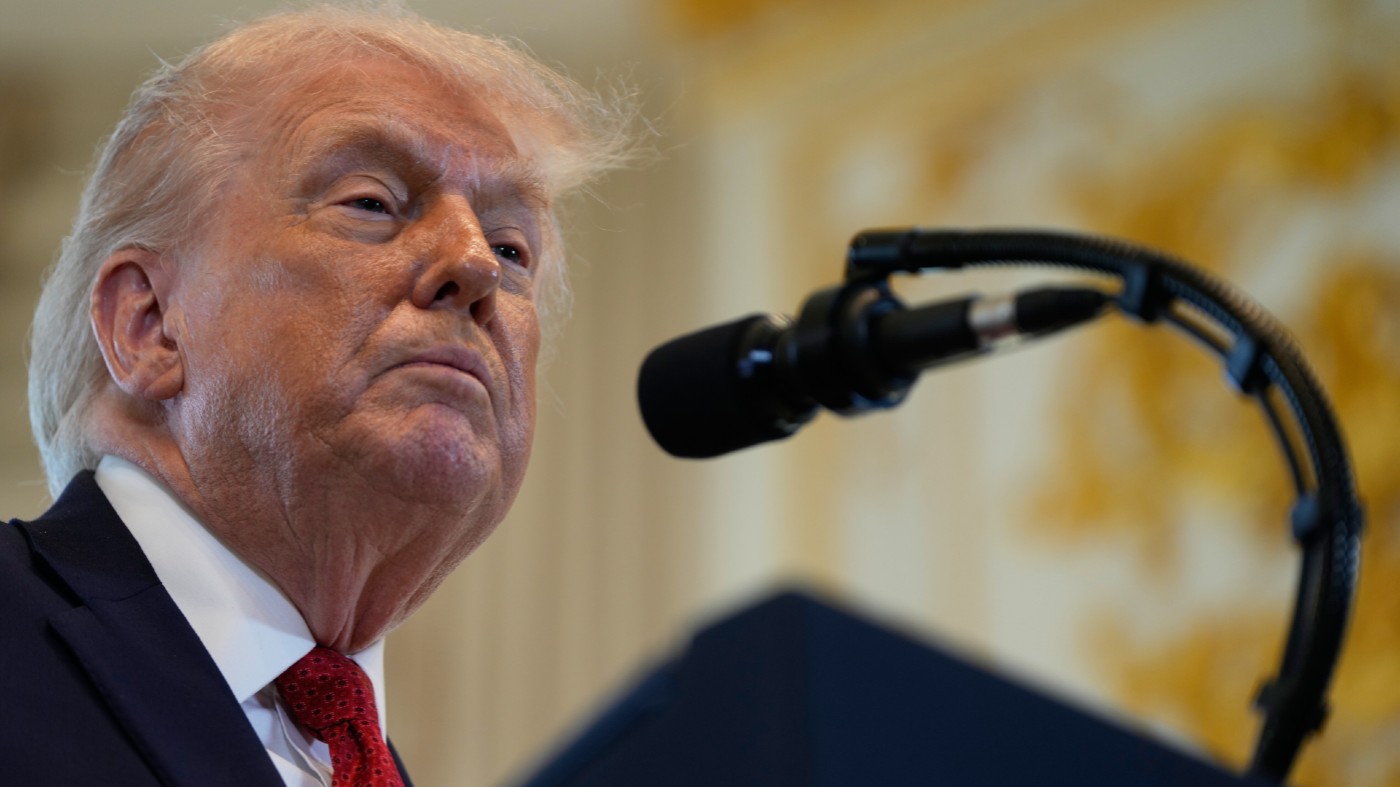
President Trump speaks at a dedication ceremony for a portion of Southern Boulevard, which the Town of Palm Beach Council recently voted to rename,”President Donald J. Trump Boulevard,” Jan. 16, 2026, at his Mar-a-Lago Club in Palm Beach, Fla.
Just over two weeks ago, in a “one-day war,” the U.S. launched a mission that seized Venezuelan leader Nicolas Maduro and his wife. As of a few days ago, in response to President Trump’s threat to acquire Greenland, several NATO allies deployed a small number of forces to prevent its NATO partner from invading a fellow NATO partner.
Given the bizarre nature of these events, it’s hard to believe they actually happened.
What hasn’t happened is another question. Why has the U.S. not yet attacked Iran to protect the Iranians rioting in protest against an incompetent and autocratic government? Let’s pose an entirely speculative thought experiment to address that question.
First, press reports have been vague as to why no strike has occurred. Trump was adamant. Many, myself included, believed that when the U.S. had sufficient forces in the region, an attack would be launched. For the time being, Trump has backed off that threat arguing that the mullahs in Tehran are no longer killing their citizens protesting their rule.
Whether that assessment is correct or not, it makes sense that a president would declare victory if they believed the killing had stopped. But let us speculate a bit more.