Balance is an essential ingredient for aging well.
A balanced body, evenly strong on the left and right side, equally mobile in the lower and upper body, is better able to handle the stresses and strains of daily living.
Imbalances, on the other hand, can lead to weakness and, ultimately, injury.
For certified kinesiologist and movement specialist Joshua Dillaha there is a simple solution: a pair of dumbbells.
“Dumbbells are easy to adjust, easy to learn, and they help people build strength evenly,” the founder of Semper Fitness Training tells Fit&Well.
Including unilateral movements (single-sided exercises) into your wo…
Balance is an essential ingredient for aging well.
A balanced body, evenly strong on the left and right side, equally mobile in the lower and upper body, is better able to handle the stresses and strains of daily living.
Imbalances, on the other hand, can lead to weakness and, ultimately, injury.
For certified kinesiologist and movement specialist Joshua Dillaha there is a simple solution: a pair of dumbbells.
“Dumbbells are easy to adjust, easy to learn, and they help people build strength evenly,” the founder of Semper Fitness Training tells Fit&Well.
Including unilateral movements (single-sided exercises) into your workouts means you can identify whether one side is weaker and address those imbalances.
“They force each side of the body to work independently, which is great for beginners who tend to have strength imbalances,” he adds.
Start your week with achievable workout ideas, health tips and wellbeing advice in your inbox.
About our expert
About our expert
Joshua R. Dillaha, M.S., NSCA-CPT, TSAC-F is a kinesiologist, movement specialist, and U.S. Marine Corps veteran. He is the founder of Semper Fitness Training in Sierra Vista, Arizona, where he focuses on biomechanics-driven strength training and injury-resistant movement.
How to do the workout
Whether new to dumbbell training or you’ve been wielding them for years, this six-move workout will help identify any imbalances.
The unilateral exercises—single-arm row and reverse lunge—isolate one side of your body independently from the other, your stronger muscles can’t compensate for the weaker ones.
Dillaha recommends selecting a pair of dumbbells that are a moderate weight for you.
1. Front squat
How to do a Dumbbell Front Squat | Proper Form & Technique | NASM - YouTube 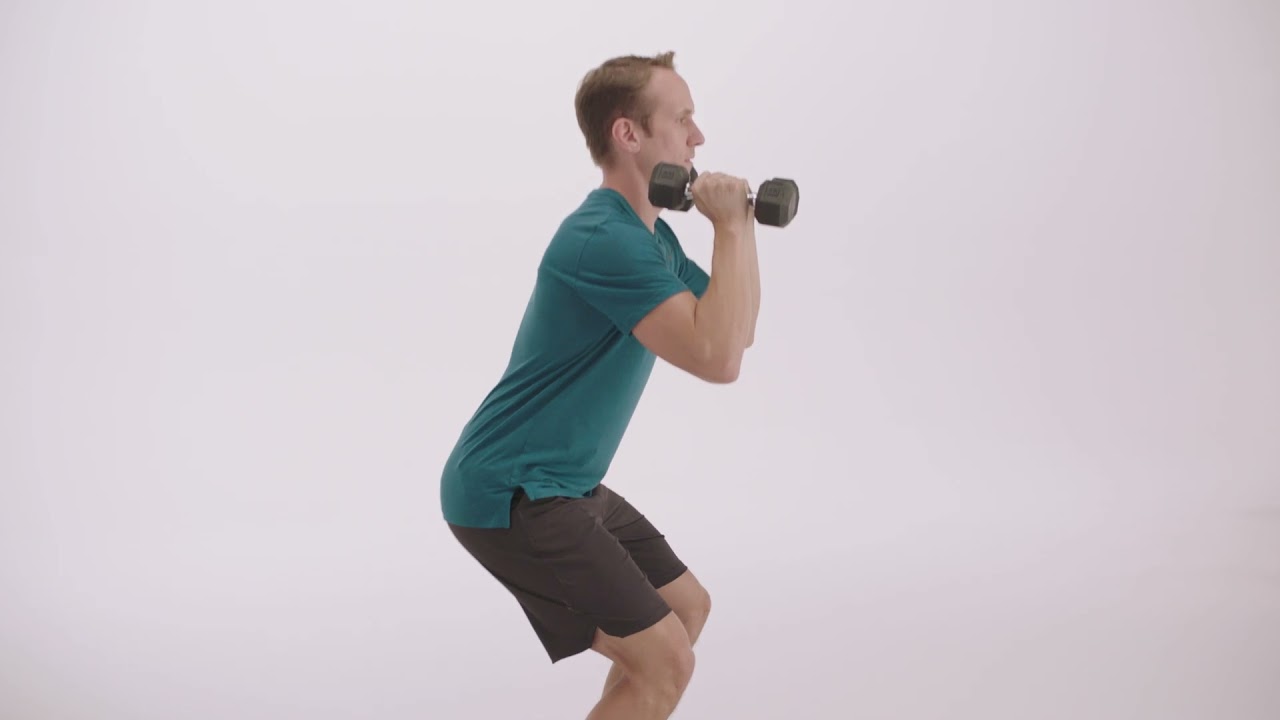
Targets: quads, glutes, core
**Sets: **3 Reps: 10-12 **Rest: **60-90sec
- Stand with your feet just wider than shoulder-width apart, toes pointing out slightly, holding dumbbells in front of your shoulders with your palms facing.
- Retract your shoulder blades to brace your upper back and engage your core.
- Keeping your chest facing forward throughout, bend your knees and push your hips back to lower, making sure your knees don’t cave in.
- Pause when your thighs are parallel to the floor.
- Push up through your heels and drive your hips forward to stand.
2. Single-arm row
Targets: lats, upper back, biceps, grip
**Sets: **3 Reps: 10 each side **Rest: **60-90sec
- Face a bench or other stable support and stand with your feet shoulder-width apart, holding a dumbbell in one hand.
- Hinge forward from your hips and place your free hand on the support to create a stable three-point base.
- Retract your shoulder blades and engage your core.
- Lift the dumbbell to your hip crease, bending your elbow and drawing it past your torso.
- Slowly lower the dumbbell, extending your arm fully.
3. Dumbbell floor press
How To Do A Dumbbell Floor Press - YouTube 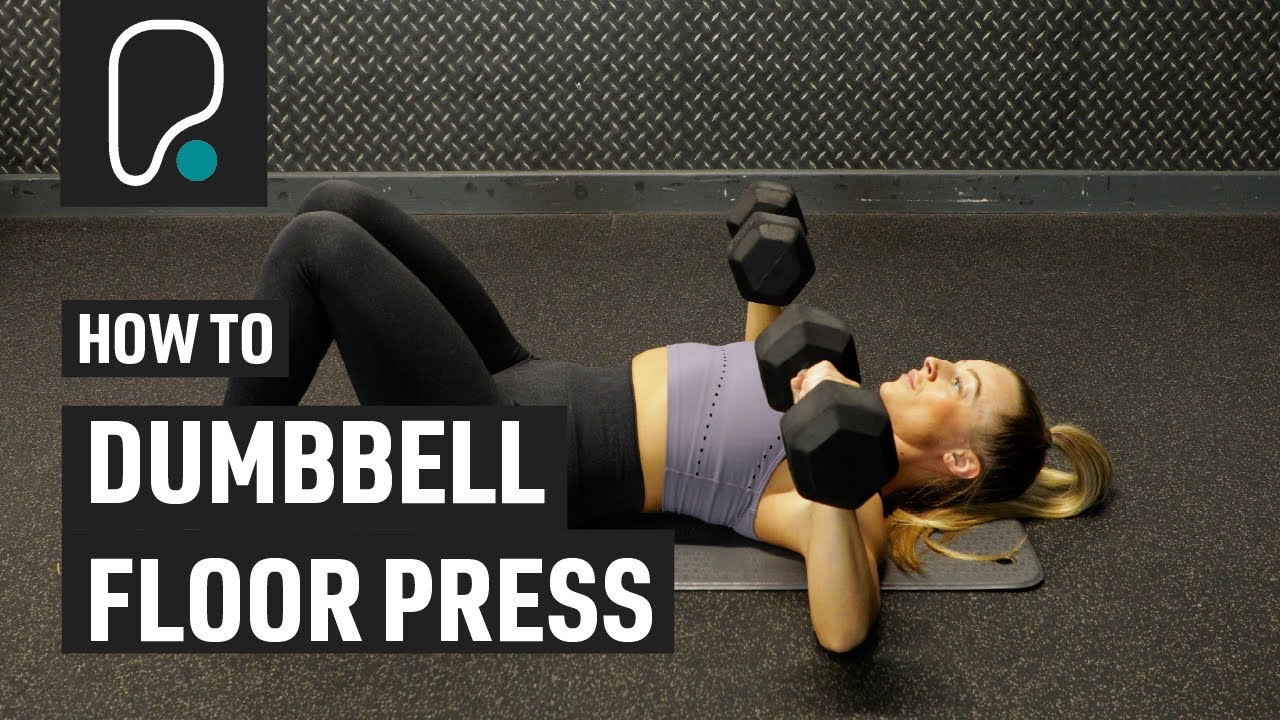
Targets: chest, shoulders, triceps
**Sets: **3 Reps: 10-12 **Rest: **60-90sec
- Lie on your back with your knees bent and feet flat on the floor, holding dumbbells by your chest, with your upper arms on the floor and elbows out to the sides.
- Engage your core and gently press your lower back into the floor.
- Press the weights straight up.
- Lower slowly until your elbows tap the floor, then go straight into the next rep.
4. Dumbbell Romanian deadlift
How to do a Dumbbell Romanian Deadlift | Proper Form & Technique | NASM - YouTube 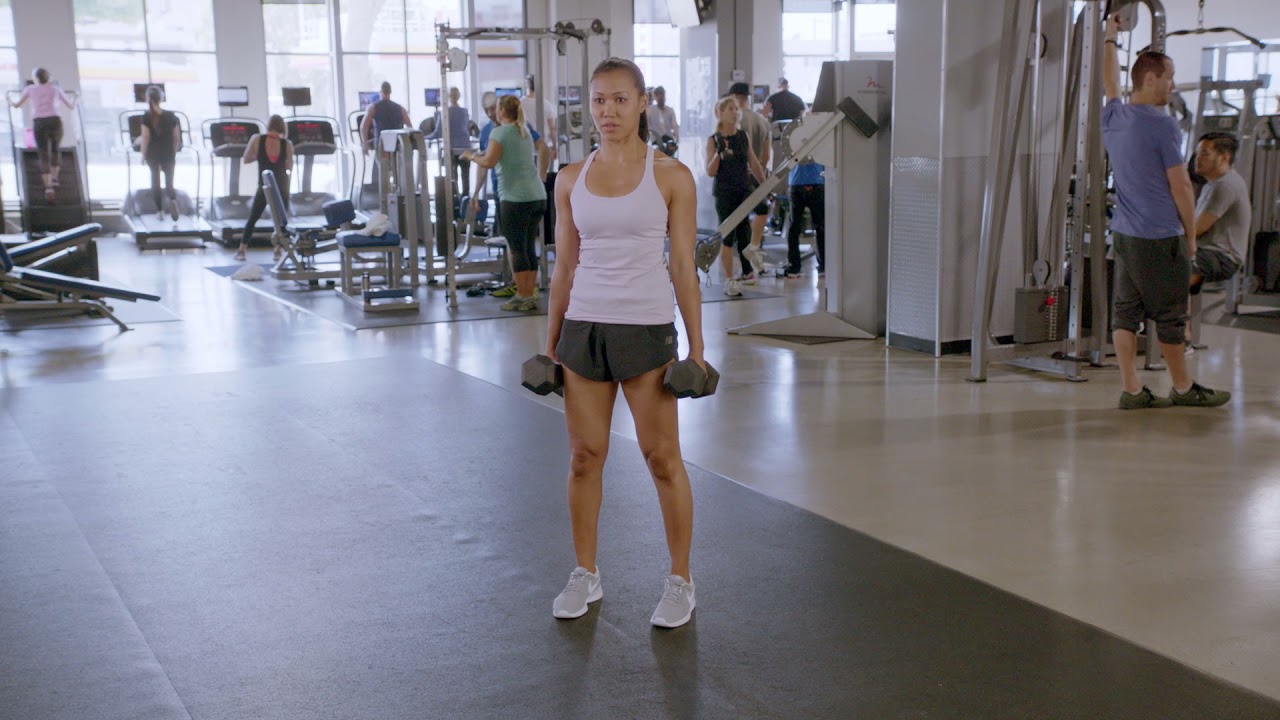
Targets: hamstrings, glutes
**Sets: **3 Reps: 10-12 **Rest: **60-90sec
- Stand with your feet hip-width apart and a slight bend in your knees, holding dumbbells in front of your thighs, palms facing you.
- Brace your core, retract your shoulder blades, then hinge forward from your hips, pushing your hips back to lower the weights, keeping the dumbbells close to your body.
- Lower slowly as far as you can without your back rounding, then drive your hips forward to stand.
5. Reverse lunge
Targets: legs, balance
**Sets: **2-3 Reps: 8 each side **Rest: **60-90sec
- Stand holding dumbbells by your sides with your palms facing.
- Take a big step back with your right foot and bend both knees to lower until both knees are bent to 90°.
- Gently tap your right knee to the floor, then push through your left foot to return to the start.
- Repeat on the other side, alternating sides with each rep.
6. Overhead press
How To Do A Shoulder Press - YouTube 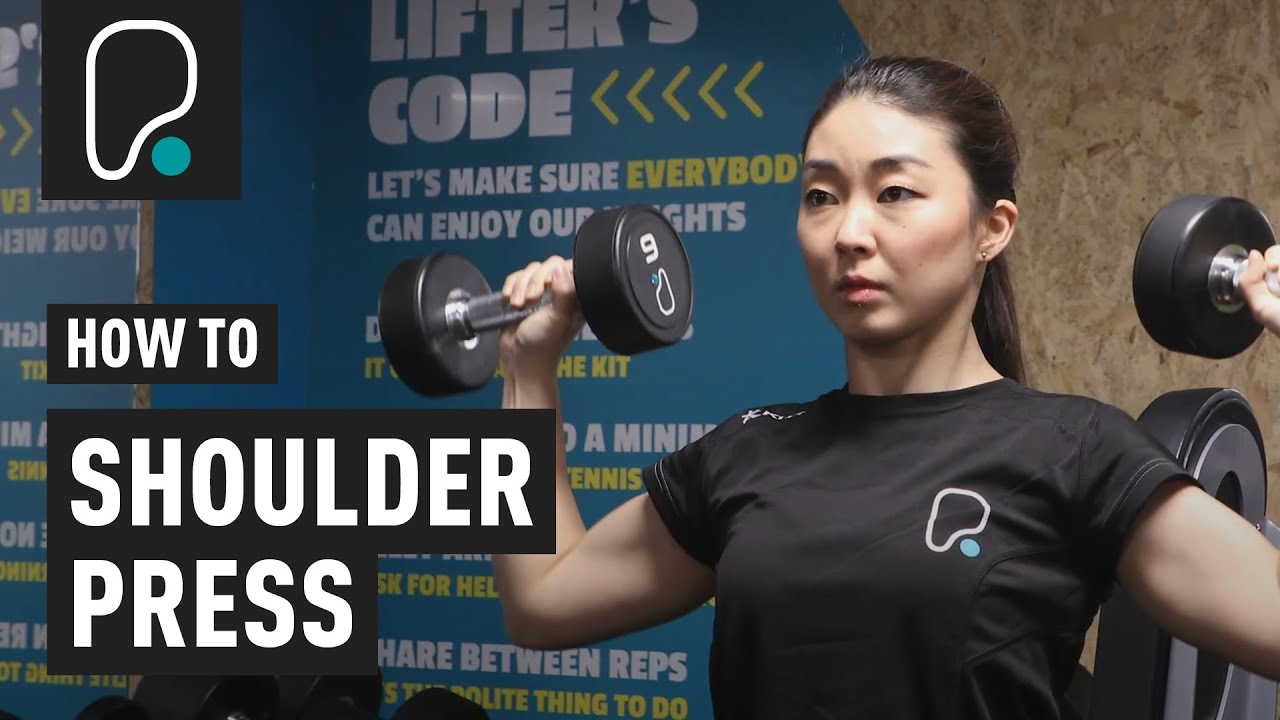
Targets shoulders, upper back
**Sets: **2-3 Reps: 8-10 **Rest: **60-90sec
- Stand, holding dumbbells by your shoulders with your palms facing forward and elbows out to the sides.
- Engage your core and squeeze your glutes.
- Inhale, then as you exhale, press the weights straight up so your arms are fully extended.
- Lower the weights slowly to your shoulders.
**Form tip: **If the weight feels too heavy and you don’t have lighter weights to switch to, use a quarter squat to generate power from your legs to help press the weights overhead—known as a push press.