The way fat is distributed on your body is just as important as how much you have. Your Waist-Hip Ratio (WHR) shows whether you carry more weight around the waist (“apple shape”) or the hips (“pear shape”) — and what that means for your risk of heart disease, high blood pressure, diabetes, and obesity (1✔,2✔).Try our free **Waist-to-Hip Ratio Calculator **to see your body shape and health risks. With your results, you’ll also get practical tips to maintain or improve your WHR.
This calculator is not recommended for bodybuilders as their muscle tissues weigh more, which ultimately results in overweight though they have limited extra fat.
Developed by Medindia Content Team | Calculator reviewed by [The Medindia Medical Revie…
The way fat is distributed on your body is just as important as how much you have. Your Waist-Hip Ratio (WHR) shows whether you carry more weight around the waist (“apple shape”) or the hips (“pear shape”) — and what that means for your risk of heart disease, high blood pressure, diabetes, and obesity (1✔,2✔).Try our free **Waist-to-Hip Ratio Calculator **to see your body shape and health risks. With your results, you’ll also get practical tips to maintain or improve your WHR.
This calculator is not recommended for bodybuilders as their muscle tissues weigh more, which ultimately results in overweight though they have limited extra fat.
Developed by Medindia Content Team | Calculator reviewed by The Medindia Medical Review Team Last Updated on Sep 18, 2025
What is Waist-Hip Ratio (WHR)?
- WHR is the circumference of your waist divided by your hips.
- It’s an easy way to assess body fat distribution.
- Apple-shaped bodies (higher WHR) indicate greater abdominal fat and higher risk of heart disease, type-2 diabetes, and metabolic syndrome (1✔,3✔,4✔).
- Pear-shaped bodies (lower WHR) store fat in hips/thighs and generally have lower metabolic risk.
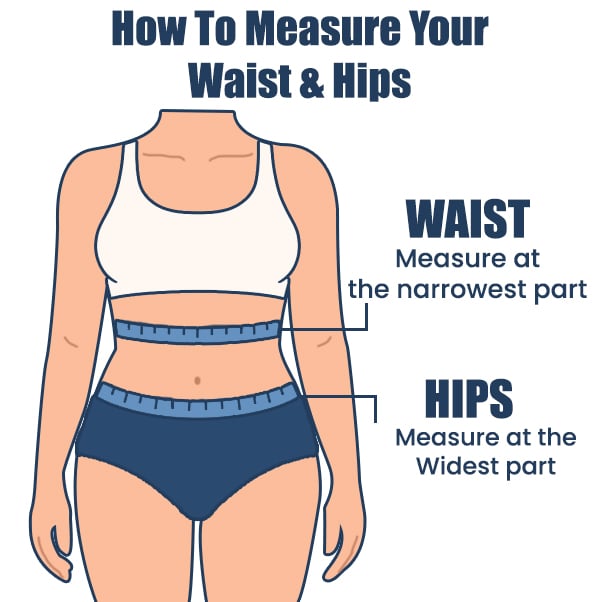
How to Measure Waist & Hips Correctly
- Waist: Measure around the midpoint between your lowest rib and the top of your hip bone (just above the belly button).
- Hips: Measure around the widest point of your buttocks.
- Stand relaxed, breathe normally, keep the tape parallel to the ground.
- Take measurements in centimeters or inches — just use the same unit for both.
WHR Cut-Offs and Health Risk Levels
| Gender | Low Risk | Moderate Risk | High Risk |
|---|---|---|---|
| Women | ≤ 0.80 | 0.81–0.85 | > 0.85 |
| Men | ≤ 0.90 | 0.91–1.0 | > 1.0 |
These are WHO global standards. However, studies show cut-offs can vary by ethnicity and population — for example, some Asian groups may have higher risk even at lower WHRs (2,6).
Global WHR Variations
- **Europe & North America: **WHO cut-offs apply widely; abdominal obesity linked to higher heart disease risk (1✔,3✔).
- Asia (South, East): Higher visceral fat at lower BMI/WHR, so risk can begin earlier (2✔).
- Africa & Middle East: Data suggests rising prevalence of apple-shaped obesity and metabolic syndrome.
- Latin America: Patterns similar to global averages, but rising WHR correlates strongly with diabetes prevalence (2✔).
Apple vs Pear Body Shape: What It Means
- Apple (abdominal fat): Higher risk of diabetes, heart disease, fatty liver, high blood pressure (3✔,4✔,5✔).
- Pear (hip/thigh fat): Lower metabolic risk but still requires healthy lifestyle.
- WHR complements other tools like BMI and body fat % — it shouldn’t be used in isolation (6✔).
How to Improve or Maintain a Healthy WHR
- Adopt a balanced diet rich in fruits, vegetables, protein, and whole grains.
- Exercise regularly — combine cardio with strength training.
- Sleep well & manage stress — both affect fat distribution.
- Track changes — monitor your WHR every few months.
- Consult professionals if your WHR is consistently high.
FAQs
1. What is a normal waist-hip ratio for men and women?
According to the World Health Organization (WHO), a WHR of **0.90 or less for men and ** 0.85 or less for women is considered low risk. Higher values suggest greater abdominal fat and increased risk of **heart disease, diabetes, and metabolic syndrome **(1✔).
2. Does age affect WHR?
Yes. As people age, fat distribution often shifts toward the abdomen, especially after menopause in women and with hormonal changes in men (6✔,8✔).
3. Is WHR more accurate than BMI?
WHR and BMI measure different things. BMI estimates overall body weight in relation to height, while WHR focuses on where fat is distributed. Many experts consider WHR a better predictor of health risks related to abdominal fat than BMI alone (3✔,4✔. Ideally, both should be assessed together.
4. Can genetics influence whether I’m apple or pear shaped?
Yes. Genetics play a major role in body fat distribution. Some people naturally carry more fat in the abdomen (apple shape), while others carry it around the hips and thighs (pear shape). However, lifestyle factors such as diet, exercise, stress, and sleep also strongly influence WHR (6✔).
5. How often should I measure WHR?
It’s best to measure WHR every 2–3 months to track long-term changes. Small fluctuations day-to-day are normal, so consistent tracking over time gives a clearer picture of your health trend (7✔).