The GCC nations are rapidly modernizing their tourism sectors through new digital frameworks designed to create a seamless experience for millions of international visitors. A new white paper from digital transformation firm Turismo Technologies explores how Gulf countries are building smart, connected, Al-enabled tourism ecosystems.
As part of broad national development plans, the GCC region is moving toward a future in which integrated technology manages every aspect of a trip, from the moment a traveler begins dreaming of a destination to when they share memories after returning home.
Economic forecasts indicate that the travel and tourism sector in the Gulf is on track to contribute $371 billion to the regional economy by 2034. In 2024, tourism contributed over 11% of the t…
The GCC nations are rapidly modernizing their tourism sectors through new digital frameworks designed to create a seamless experience for millions of international visitors. A new white paper from digital transformation firm Turismo Technologies explores how Gulf countries are building smart, connected, Al-enabled tourism ecosystems.
As part of broad national development plans, the GCC region is moving toward a future in which integrated technology manages every aspect of a trip, from the moment a traveler begins dreaming of a destination to when they share memories after returning home.
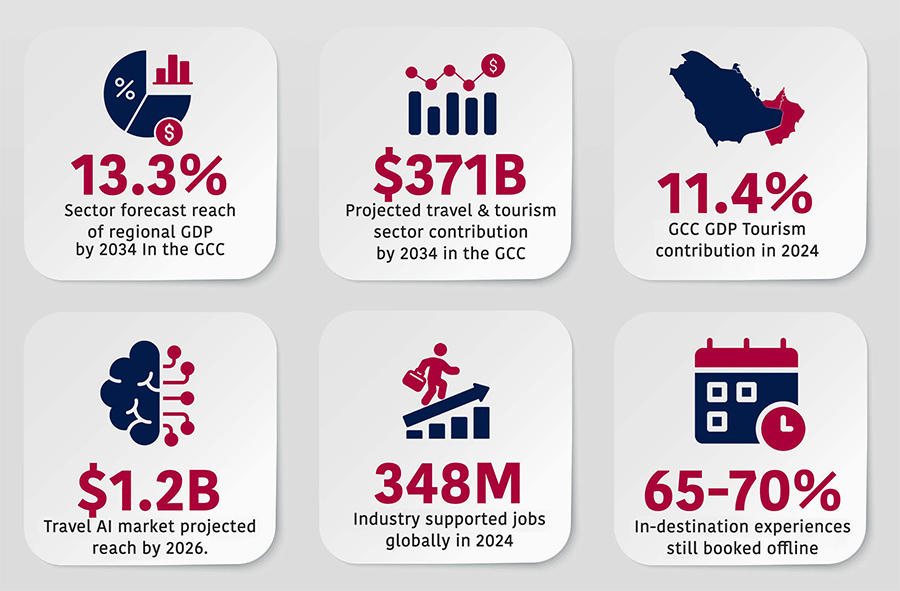
Economic forecasts indicate that the travel and tourism sector in the Gulf is on track to contribute $371 billion to the regional economy by 2034. In 2024, tourism contributed over 11% of the total GPD of the GCC and supported around 348 million jobs.
To support this massive growth, regional governments are prioritizing innovation to ensure they remain globally competitive. The shift toward a digital-first approach is intended to replace outdated systems with a more connected and intelligent environment.
At present, many tourism services operate in isolation. A visitor may have to navigate separate systems for visa applications, flights, and hotel bookings, while many small local businesses still lack the necessary tools to accept online payments or reach international audiences. This lack of coordination can lead to a disjointed experience for travelers and makes it difficult for authorities to understand visitor needs.
Building the ‘tourism experience’
To solve these challenges, Turismo Technologies has introduced a new digital architecture known as the Turismo Experience Stack. This system seeks to link physical infrastructure with data and engagement platforms.
The offering urges GCC nations to create unified national applications where travelers can manage their entire journey in one place. The system also uses data to help governments and businesses improve their services based on real-time feedback and visitor behavior.
For the traveler, this technology offers a more personalized experience. Upon entering the country, a visitor might receive a digital welcome package on their mobile device containing cultural information and event schedules based on their specific interests. Throughout the trip, the platform can provide constant support, including instant translations and answers to common questions through digital assistants.
Wider digital transformation
Digital transformation is a cornerstone of regional strategies such as Saudi Vision 2030, the UAE Tourism Strategy 2031, and Qatar National Vision 2030. The ambitious roadmaps seek to center sustainability as local economies diversify away from oil and gas, boosting other industry like the tourism industry.
“The evolution toward a smart, connected, Al-enabled tourism ecosystem strengthens every dimension of these national agendas: Economic diversification, job creation, cultural preservation, innovation, sustainability, and global competitiveness,” according to the white paper from Turismo Technologies.
Beyond improving the visitor experience, these initiatives are expected to create high-value jobs in technology and design while supporting the growth of local businesses. By investing in these smart systems, Gulf nations aim to build a resilient tourism industry that celebrates cultural heritage while leading the world in digital innovation.
The path forward
Achieving a fully connected, intelligent visitor ecosystem is a clear priority, and the GCC is uniquely positioned to lead this global transformation. To achieve this vision, regional tourism ministries, national tourism boards, and government stakeholders must take decisive, coordinated action, turning strategy into implementation and ambition into impact.
The white paper urges tourism boards to conduct comprehensive reviews of the existing digital gaps, invest in scalable platforms, and forge strong public-private partnerships. This is important for ensuring that investment and resources are allocated in the right direction.
Next comes building up a workforce with the digital skills needed for the future of tourism. When it comes to redesigning tourism infrastructure, tourism boards will need to focus on digitalized experience design and ultimately commit to long-term digital sustainability by focusing on governance, cybersecurity, and optimization.
“Governments, ministries and tourism boards across the GCC are embarking on an urgent digital transformation journey to modernize their visitor economies,” the white paper notes. “A vision for a connected, intelligent tourism ecosystem that aligns with national strategic goals and leverages cutting edge technology to enhance visitor experiences.”