By Tony Corbin 3 February 2026
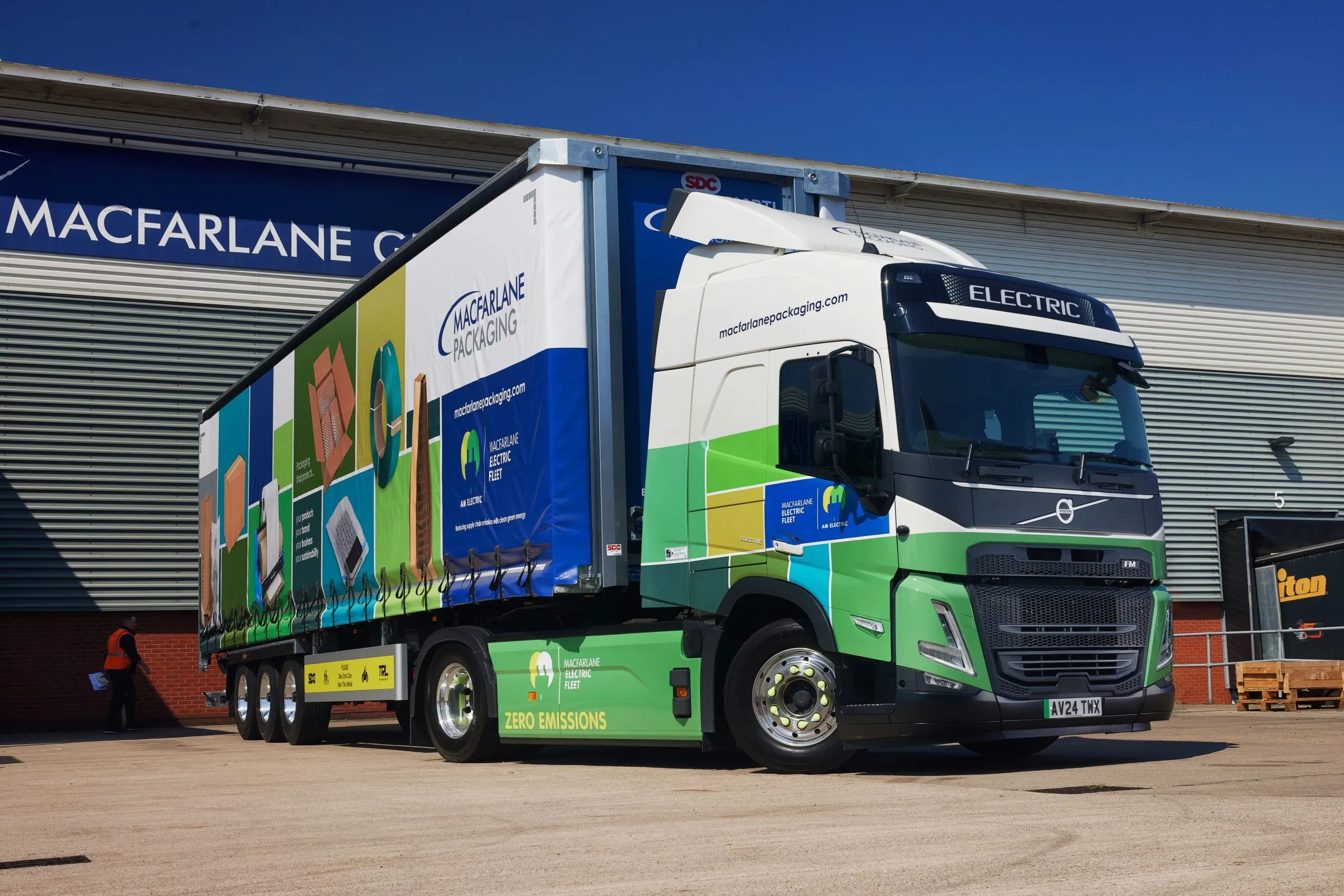
The introduction of the four new electric rigids and an electric articulated tractor unit more than doubles the size of Macfarlane’s electric fleet.
It is set to make a significant contribution to Macfarlane’s carbon reduction programme which, according to the company, has already delivered a 32% reduction in the company’s overall CO2 emissions.
The trucks, which are based across Macfarlane’s UK distribution network, significantly extend the group’s capacity to offer zero emission deliveries to its customers. The investment is also further supported by the wider progress being made by the group in transitioning its forklift and company car fleet to electric alternatives and its continuing inves…
By Tony Corbin 3 February 2026
The introduction of the four new electric rigids and an electric articulated tractor unit more than doubles the size of Macfarlane’s electric fleet.
It is set to make a significant contribution to Macfarlane’s carbon reduction programme which, according to the company, has already delivered a 32% reduction in the company’s overall CO2 emissions.
The trucks, which are based across Macfarlane’s UK distribution network, significantly extend the group’s capacity to offer zero emission deliveries to its customers. The investment is also further supported by the wider progress being made by the group in transitioning its forklift and company car fleet to electric alternatives and its continuing investment in renewable energy sources.
David Patton, Macfarlane’s head of sustainability, said: “Sustainability is at the heart of our strategy. It’s an important differentiator for us because it helps our customers achieve their goals and, at the same time, it improves our own operations.”
Packaging, much of which consists of corrugate, is intrinsically lightweight, which means that electric vehicles are a viable option for Macfarlane without compromising on delivery capability. All five new electric trucks are Volvos and have a recharging time of only 2.5 hours, meaning they can be recharged mid-shift, maximising the time that they can stay on the road and deliver to customers.
Patton added: “The trucks are further evidence of our sustainability strategy in action and represent an important part of our overarching approach to support our customers in finding better packaging solutions that can reduce cost and environmental impact.”
Lynsey Hart, regional business manager at Macfarlane’s Wakefield site, where the company’s largest electric vehicle is based, said: “We care passionately about the local community here in Wakefield, so we’re particularly pleased to be playing our part for the environment. Being able to deliver for our customers in and around West Yorkshire while reducing our carbon footprint is the ideal blend.”