There’s a strange disparity on the roads today.
On one side glide the whisper-quiet electric vehicles, which are sleek, connected and efficient. On the other hand, older cars still rumble and cough their way through towns and country lanes with their mechanical hearts beating beneath metal that was forged by hands and designed by eyes rather than an algorithm.
Between these two worlds lies a question that reaches far beyond horsepower or battery range. What have we gained and what have we lost?
When cars had character
There was a time when every car had a personality. The way a door closed, the shape of a bonnet, the sound of a cold engine waking up on a winter’s morning. These things mattered. Cars were imperfect, but they were alive. The driver was part of the machine, li…
There’s a strange disparity on the roads today.
On one side glide the whisper-quiet electric vehicles, which are sleek, connected and efficient. On the other hand, older cars still rumble and cough their way through towns and country lanes with their mechanical hearts beating beneath metal that was forged by hands and designed by eyes rather than an algorithm.
Between these two worlds lies a question that reaches far beyond horsepower or battery range. What have we gained and what have we lost?
When cars had character
There was a time when every car had a personality. The way a door closed, the shape of a bonnet, the sound of a cold engine waking up on a winter’s morning. These things mattered. Cars were imperfect, but they were alive. The driver was part of the machine, listening, learning, adjusting. A Sunday drive was not a digital experience but a physical one, full of smell, sounds and sensations.
Those who grew up around carburettors, choke levers and manual gearboxes often remember their first car as a route to freedom, not just a means of transport. You could feel the car’s mood. It rattled, it groaned, it sometimes refused to start, but it belonged to you. It wasn’t trying to be clever, predictive, or connected to the cloud. It was simply trying to move. And in that simplicity, there was joy.
Cars & computers
Today, the new car is a technological marvel. It can park itself, warn you about cross-traffic, update its own software and even stream your favourite music. It knows your habits, your routes and sometimes even your voice. Safety, comfort and efficiency have never been better.
Yet there’s something oddly distant about the experience. Modern drivers are often passengers in their own car. Everything is smoothed out, managed, and automated. The gentle humming of an electric motor doesn’t stir the heart in quite the same way an old inline six or V8 once did. Driving has become quieter, cleaner, safer, but perhaps also a little less human?
We’ve gained extraordinary reliability and reduced emissions, but we’ve also lost the mechanical intimacy that once defined the relationship between person and machine. Pop the bonnet of a new car, and you’ll soon find plastic covers and warning labels. The days of tinkering in the driveway are gone. The car, like the smartphone, is now a sealed unit.
The green agenda
Of course, we can’t pretend the past was perfect. Older cars are far from environmentally friendly. They guzzled fuel, they polluted with choking fumes, and they were built in an era that didn’t think too much about carbon footprints or sustainability. New vehicles are part of a vital shift; a genuine attempt to create cleaner air, quieter cities and a more responsible future for all.
But the sustainability argument isn’t as simple as it first appears. Manufacturing a new car, especially an electric one, uses vast amounts of energy and rare-earth materials. By contrast, keeping an older car on the road is, in its own way, a form of recycling. An old vehicle driven sparingly might have a smaller lifetime impact than a brand-new one.
This nuance has given rise to a fascinating movement: the electrification of classics. Around the world, companies are converting vintage Minis, Land Rovers and Jaguars into electric vehicles, preserving their style while bringing them into the modern age. It’s a kind of peace treaty between nostalgia and necessity. Proof that the old and the new can coexist rather than compete.
Emotion and identity
The car you drive still says something about who you are, even in an era of ride-shares and subscriptions. The person who maintains a thirty-year-old Saab or a 1960s Alfa Romeo is making a statement about values, patience, individuality and heritage. The driver of a new electric SUV is signalling something different, such as progress, responsibility and perhaps even optimism.
Cars have always been cultural mirrors. A 1970s sports car reflected rebellion and freedom. A 1980s saloon shouted about success and status. A 2020’s electric car expresses consciousness and connectivity. But it’s hard to ignore that as cars become smarter, they also become more anonymous. Wind tunnels and efficiency metrics have smoothed out their shapes, whilst software has taken away their personalities.
Older cars may be slower, less safe and environmentally dubious, but they tell stories. They remind us of an age when individuality mattered more than efficiency. Their paintwork bears the patina of time. Their engines carry the echo of journeys past. They don’t just transport us, they have time-travelled with us.
Economics and collectors
The market reflects these factors. While new car prices climb higher each year, fuelled by technology and regulation, many older cars are rising in value too. Not because they’re practical but because they’re personal and rare. A well-kept classic has become a tangible investment.
You can’t “update” a 1960s Porsche 911 or a Series I Land Rover via software. Its beauty lies in its permanence. In a world where everything else feels disposable, the enduring charm of a mechanical machine holds a different kind of value.
Meanwhile, the economics of modern motoring are shifting fast. As electric vehicles dominate production and governments push to end the sale of combustion engines, petrol-powered cars may soon enter their final chapter. That, in turn, could make them even more desirable to collectors and romantics. Not as museum pieces but as symbols of a more tactile era.
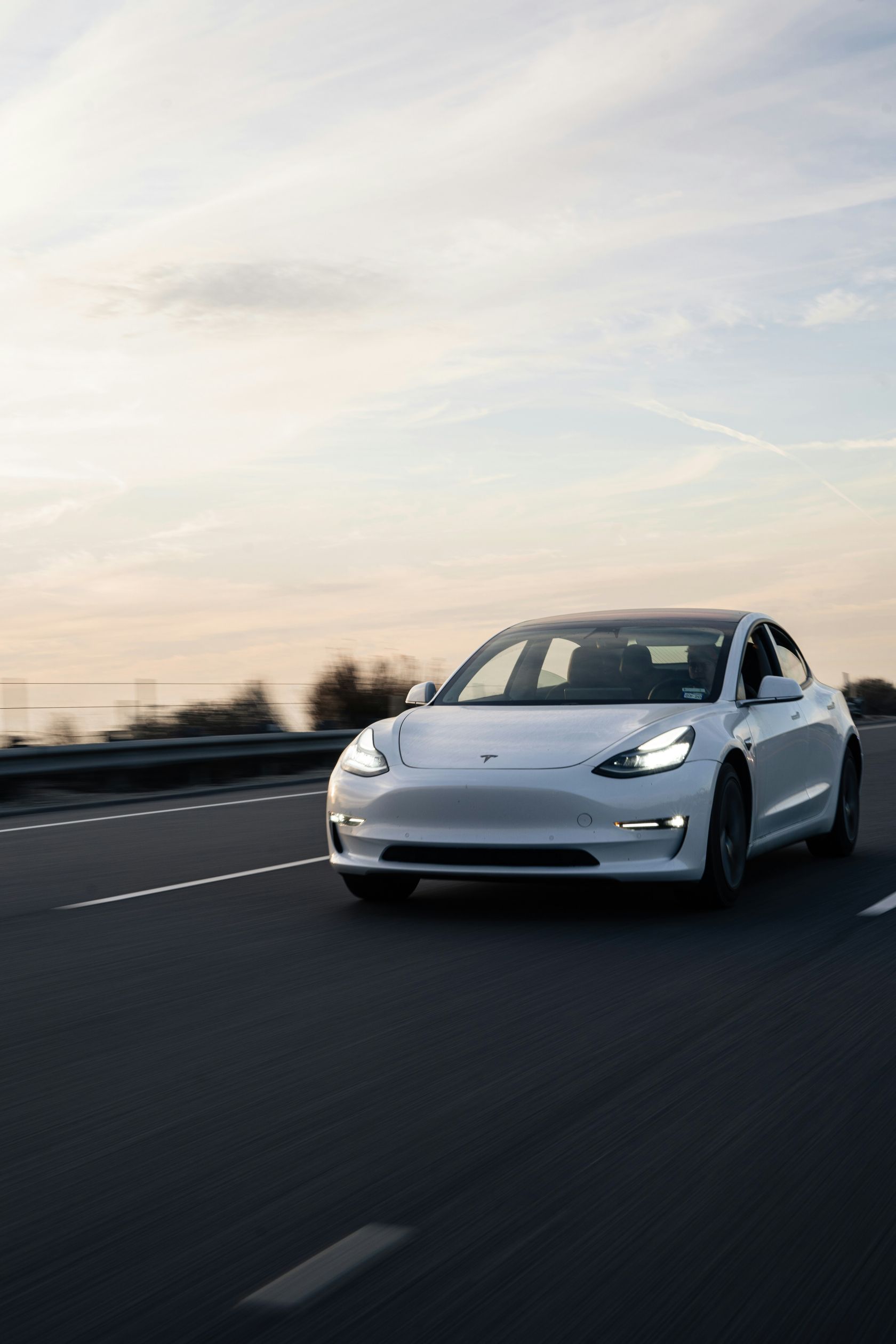 Credits: Wikipedia; Author: Carter Baran;
The future?
The future, inevitably, will belong to both worlds. There will always be those who crave the quiet efficiency of electric or hybrid mobility and those who cherish the roar and vibration of something older, louder and a bit flawed.
Already, we’re seeing a new kind of motoring culture emerging. One that respects history but embraces progress. Perhaps that’s the real beauty of the current moment? The car, like society itself, is learning to evolve without forgetting where it came from.
The joy of driving
At its core, driving has never been about the machine alone. It’s about a feeling. It’s about the sense of independence, the connection between mind and motion and the idea that a stretch of open road can clear your head far better than any computer or TV screen.
Old cars remind us that imperfection can be beautiful. They break down, they leak oil, and they demand attention. They make us care.
New cars remind us that progress is possible. They show us that comfort, safety and environmental awareness can coexist with nostalgia.
The best of both worlds would be to hold on to the emotion of the old and the intelligence of the new. If the industry can learn that lesson, then the car, that century-old symbol of human freedom, might yet retain its soul in an age of silence and screens.
In the end, whether you prefer the hum of an electric motor or the silken heartbeat of an old inline six, the motor car still represents something deeply human. Our desire to move, to explore and to connect our journeys with stories.
And maybe, just maybe, the perfect road lies somewhere between nostalgia and innovation; between memory and momentum.