Magnets make the recycled bike bounce
Content creator Colin Furze shows how opposing magnets can replace springs as suspension to make a recycled bike bounce up and down. Bicycles rely on springs, dampers, and shocks to manage force from the ground. These systems wear out, need tuning, and add parts that fail over time, so the creator asks whether suspension can exist without contact and tests it through magnetism.
He starts with a discarded bike frame, with the aim to replace the mechanical compression with magnetic repulsion. Opposing magnets resist each other when forced together, so if placed in the right position, that resistance can act like a spring. The design of the recycled b…
Magnets make the recycled bike bounce
Content creator Colin Furze shows how opposing magnets can replace springs as suspension to make a recycled bike bounce up and down. Bicycles rely on springs, dampers, and shocks to manage force from the ground. These systems wear out, need tuning, and add parts that fail over time, so the creator asks whether suspension can exist without contact and tests it through magnetism.
He starts with a discarded bike frame, with the aim to replace the mechanical compression with magnetic repulsion. Opposing magnets resist each other when forced together, so if placed in the right position, that resistance can act like a spring. The design of the recycled bike with magnets shifts the bicycle from a fixed triangle to a hinged structure, and the designer adds the attracting material where that closing force concentrates.
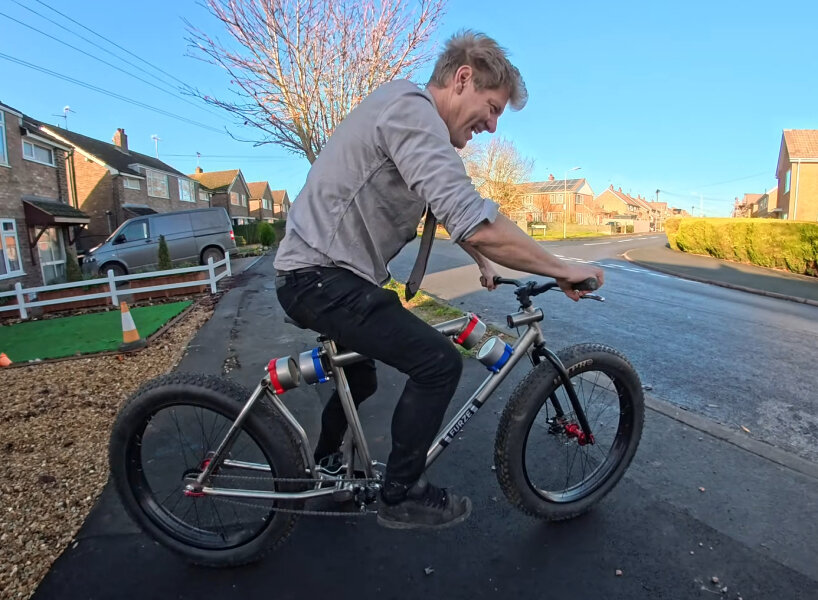 all images courtesy of Colin Furze
No springs or seals for the two-wheeler that bobs up and down
The first ride of the recycled bike with magnets fails because the frame flex overwhelms the system. The magnets work, but the ride itself does not. The content creator realizes that the issue is not magnet strength but the geometry and load paths. So for the second frame, he built it from thicker stainless steel tubing with reinforced joints. Cables are added to control separation when the bike is lifted, and each change responds to a specific failure observed during use. The initial magnets fail because common iron magnets don’t generate enough force.
Larger neodymium magnets perform better but introduce new problems because they attract tools, pull fasteners loose, and resist handling. The creator then chooses aluminum and stainless steel for the parts near the magnets. In this case, the frame itself becomes part of the problem and the solution. The final version, then, works within these limits. On flat ground and uneven paths, the recycled bike with magnets absorbs vibration. Small bumps disappear, and the rider feels movement without noise, oil, or compression parts. The system has no seals, no springs, and no damping fluid. It relies on distance and alignment. When pushed beyond everyday riding, the frame reaches its limit, but the content creator still manages to produce a bouncing recycled bike with magnets as its suspension.
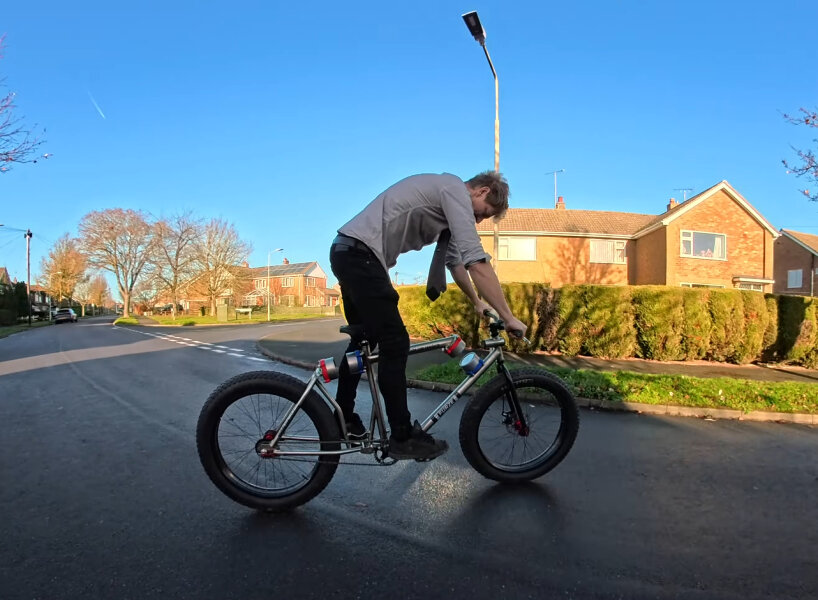 the ride can bounce up and down using magnets as suspension
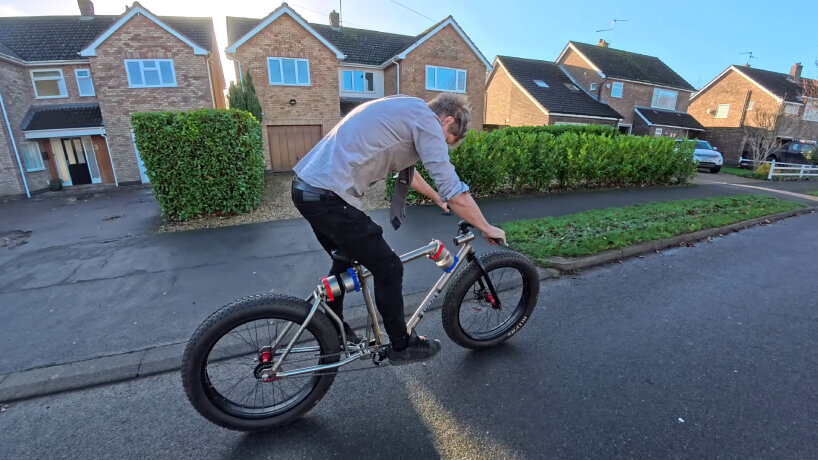 the opposing forces of the magnet allow them to act like the springs
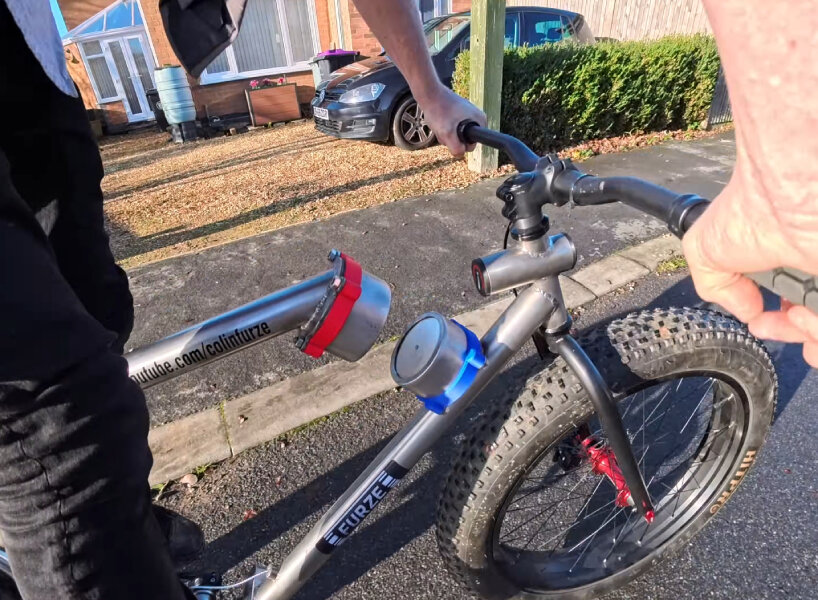 detailed view of the magnets
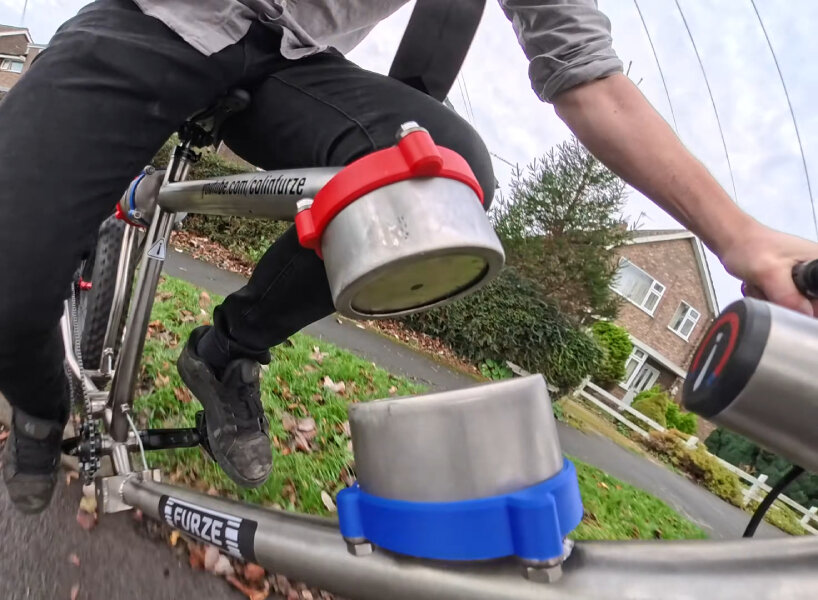 the creator chooses aluminum and stainless steel for the parts near the magnets
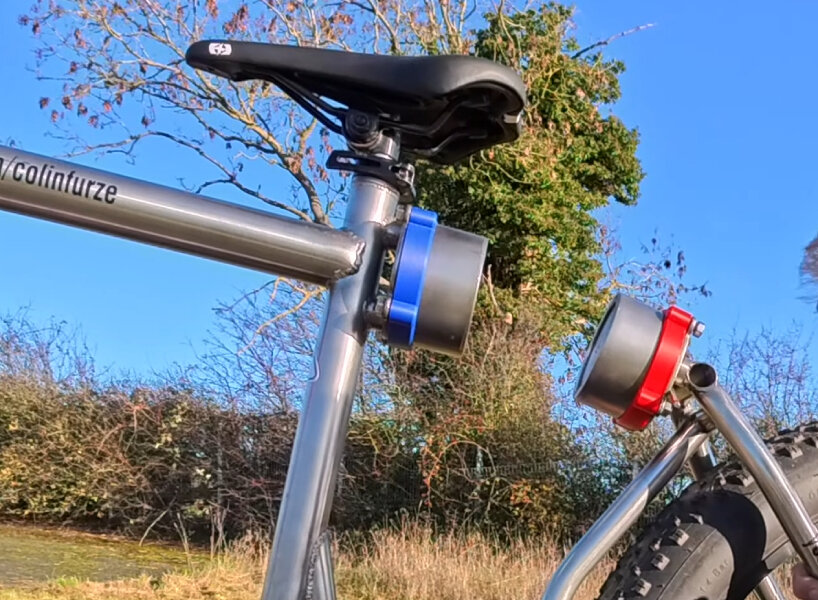 view of the rear magnets