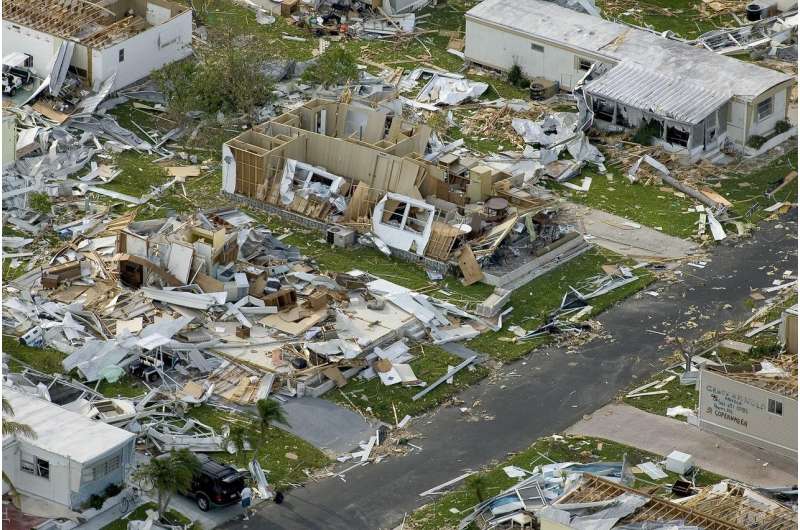
 Credit: CC0 Public Domain
The International Court of Justice reiterated in 2025 that the 1.5°C limit is the countries’ primary agreed target under the Paris Agreement. With record-high global temperatures in recent years, the world is firmly on track to exceed the limit in a decade or less, signaling our entry into an "overshoot" world.
In their commentary published in Nature, researchers from IIASA, the Humboldt University of Berlin, the Potsdam Institute for Climate Impact Research, and the Grantham Research Institute on Climate Change and the Environment, argue that our entry into an ["overshoot" era](https://phys….
Credit: CC0 Public Domain
The International Court of Justice reiterated in 2025 that the 1.5°C limit is the countries’ primary agreed target under the Paris Agreement. With record-high global temperatures in recent years, the world is firmly on track to exceed the limit in a decade or less, signaling our entry into an "overshoot" world.
In their commentary published in Nature, researchers from IIASA, the Humboldt University of Berlin, the Potsdam Institute for Climate Impact Research, and the Grantham Research Institute on Climate Change and the Environment, argue that our entry into an "overshoot" era—one for which existing climate strategies were not intentionally designed—requires a fundamental rethink of accountability in climate policy.
"Exceeding 1.5°C marks our failure to prevent minimum levels of dangerous human interference with the climate system established by the UN science-policy process," says IIASA Energy, Climate, and Environment Program Director, Keywan Riahi, one of the commentary’s co-authors. "This failure should make us reflect on whether current scientific approaches are fit-for-purpose to inform overshoot policy and avoid inadvertent support for target backsliding."
"Looking ahead to what we need to do to get back below 1.5°C is important, but it is equally essential to understand how we got here in the first place," says Gaurav Ganti, IIASA Guest Research Scholar and a Postdoctoral Researcher at Humboldt University of Berlin. "Scientific evidence is needed to clarify the foreclosed option space we could have had today with earlier, feasible, action—and who is responsible for not taking this action."
To address this new reality, the authors call for the Intergovernmental Panel on Climate Change’s (IPCC) 7th Assessment Report to firmly anchor 1.5°C in its assessment to inform overshoot policy. They call for a focus on quantifying equity and fairness under overshoot scenarios and a backward-looking view to unpack historical factors and decisions that resulted in warming exceeding 1.5°C. They also call for an integrated perspective on how different remedies—carbon removal, adaptation support, and loss and damage finance—relate to each other.
Their message to decision-makers is clear: "Exceeding 1.5°C means the task at hand just got a lot harder, and requires more, not less climate action." concludes IIASA Integrated Climate Impacts Research Group Leader, Carl Schleussner, who is also one of the commentary’s co-authors. "We need to talk about accountability if we want to succeed in navigating a 1.5°C overshoot world."
Publication details
Gaurav Ganti et al, Exceeding 1.5 °C requires rethinking accountability in climate policy, Nature (2026). DOI: 10.1038/d41586-026-00247-y
Journal information: Nature
Citation: Climate enters the overshoot era—science and policy need to react (2026, February 2) retrieved 2 February 2026 from https://phys.org/news/2026-02-climate-overshoot-era-science-policy.html
This document is subject to copyright. Apart from any fair dealing for the purpose of private study or research, no part may be reproduced without the written permission. The content is provided for information purposes only.