Synopsis
India’s transport and logistics sector is shifting from building infrastructure to focusing on digital integration, interoperability, and efficiency. Policy reforms, faster project commissioning, and platforms like the Unified Logistics Interface Platform are streamlining freight movement. Road transport’s dominance is expected to decline as rail and waterways grow.
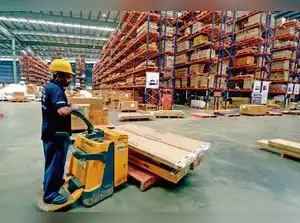 IANSThis is a representative image.
India’s transportation and logistics sector is entering a decisive phase, moving beyond large-scale infrastructure crea…
Synopsis
India’s transport and logistics sector is shifting from building infrastructure to focusing on digital integration, interoperability, and efficiency. Policy reforms, faster project commissioning, and platforms like the Unified Logistics Interface Platform are streamlining freight movement. Road transport’s dominance is expected to decline as rail and waterways grow.
IANSThis is a representative image.
India’s transportation and logistics sector is entering a decisive phase, moving beyond large-scale infrastructure creation to focus on interoperability, digital integration and efficiency-led growth. After a decade of heavy investment in highways, ports, freight corridors and terminals, policymakers and industry players are now betting on technology and coordinated planning to lower logistics costs and sharpen competitiveness, according to a recent Grant Thornton Bharat analysis.
The sector has undergone a structural transformation through 2025, driven by policy reforms, faster infrastructure commissioning and expanding digital platforms. Measures such as GST, FASTag and the E-Way Bill have reduced friction in road transport, while the PM Gati Shakti National Master Plan and the National Logistics Policy are attempting to bring 16 ministries onto a common planning and execution framework.
“India’s transportation and logistics sector has undergone a phase of structural transformation in 2025, driven by policy reforms, accelerated infrastructure commissioning, and expanding digital integration,” said Bhavik Vora, partner and transportation & logistics industry leader at Grant Thornton Bharat. “These forces are converging to shape a system that is increasingly connected, resilient and competitive. Yet, even as momentum builds, the next phase of progress will be judged not by capacity created, but by interoperability achieved.”
At the centre of this shift is the Unified Logistics Interface Platform (ULIP), which now connects over 125 APIs across multiple government departments. The objective is to enable real-time data sharing across road, rail, ports and waterways, making freight movement more predictable, faster and cheaper. This marks a transition from building physical assets to orchestrating infrastructure through data and digital systems—critical if India is to position itself as a global manufacturing and supply-chain hub.
Despite progress, challenges remain. Interoperability standards are uneven, governance across transport modes remains fragmented, and smaller logistics operators risk being excluded from digital compliance. Bridging these gaps is essential if India is to bring logistics costs down from an estimated 13–14% of GDP closer to global benchmarks of 7–8%.
The push for integration is also reshaping freight economics and the modal mix. Road transport, which accounted for around 72% of freight movement a decade ago, is projected to decline to nearly 50% by the mid-2030s. Rail and waterways are expected to gain share, supported by the commissioning of Dedicated Freight Corridors and inland waterway projects. This rebalancing is likely to improve efficiency and sustainability, aligning with India’s green freight and decarbonisation goals.
Deal activity in 2025 reflected this recalibration. While overall deal values moderated, transaction volumes rose, signalling a shift towards efficiency, resilience and technology adoption rather than large-ticket consolidation. Private equity and venture capital investors increasingly backed asset-light, tech-enabled logistics platforms focused on automation, visibility and route optimisation, while interest in capital-intensive warehousing and traditional freight forwarding remained muted.
GST-related changes have added another layer of complexity. Differential tax rates and input tax credit availability across transport modes are forcing companies to revisit procurement strategies, pricing and contract structures. While expanded credit availability in certain segments is positive, inconsistencies—particularly in multimodal transport—could slow adoption if not addressed.
Looking ahead, industry experts believe the next decade will be defined by integration and intelligence rather than concrete and steel. With much of the physical backbone already in place, success will depend on synchronising corridors with industrial clusters, encouraging private-sector adoption of digital platforms, and setting common performance metrics across agencies. If executed well, India’s logistics grid could become faster, greener and globally competitive—moving at the speed of data, not just roads and rail.
Read More News on
...moreless