Published 4 minutes ago
Ashley is a freelancer based in Wisconsin. She has worked with a host of international and domestic clients for over 10 years and is obsessed with everything gardening, especially helping people discover new plants and teaching people how to make them thrive. She loves sharing her knowledge and trying new DIY garden-based projects.
**Experience: **Ashley has worked as a freelance writer and editor for over 10 years, and was a greenhouse attendant and manager for more than eight, where she fell in love with all things gardening and plants. She co-founded a local community garden to help teach about growing food and sustainability.
Education: Ashley obtained her Master Gardener Certification in 2015 from the University of Wisconsin-Madison Extension.
**E…
Published 4 minutes ago
Ashley is a freelancer based in Wisconsin. She has worked with a host of international and domestic clients for over 10 years and is obsessed with everything gardening, especially helping people discover new plants and teaching people how to make them thrive. She loves sharing her knowledge and trying new DIY garden-based projects.
**Experience: **Ashley has worked as a freelance writer and editor for over 10 years, and was a greenhouse attendant and manager for more than eight, where she fell in love with all things gardening and plants. She co-founded a local community garden to help teach about growing food and sustainability.
Education: Ashley obtained her Master Gardener Certification in 2015 from the University of Wisconsin-Madison Extension.
Expertise: Growing trees and shrubs, plant care, houseplants
Summary
- Drying concentrates sugars, changes texture, and makes raisins shelf-stable.
- Sulfur controls color, not sweetness; texture comes from drying speed and final moisture content.
- Rehydrate to soften: short soaks help keep the fruits shape while a warm/long soak plumps them up for baking.
Raisins look simple, yet a lot happens between fresh grapes and the dried fruit that ends up in a pantry jar. Drying concentrates sugars, changes texture, and extends shelf life, which explains why they taste sweeter and feel chewier than the grapes they come from. Many cooks treat golden raisins and** black raisins** as a fixed ingredient, assuming their texture and flavor cannot change once drying is complete. That assumption leaves useful kitchen techniques unexplored.
**Re-hydrating brings flexibility back into how they are used. **Soaking restores moisture, softens the flesh, and shifts how they behave in recipes without undoing the drying process. Understanding how raisins are made, how drying affects nutrition, and what re-hydration actually does helps cooks decide when soaking improves raisin recipes and when dry options work better for things like raisin pies.
How Raisins Are Made From Fresh Grapes
Grapes lose water, concentrate sugars, and become raisins
Dried GrapesImage credits: Saaster via Canva
Golden raisins or black raisins form when fresh grapes lose a significant portion of their water content through controlled drying. That moisture loss concentrates sugars, acids, and minerals already present in the grape and drying stops once grapes reach a moisture level low enough to prevent fermentation or mold growth. Texture changes occur gradually as cell walls collapse and sugars thicken. The finished raisin becomes shelf-stable because microbes cannot survive without available water.
| Drying Method | How to do the Process | Final Product |
|---|---|---|
| Sun Drying | Harvested grapes are laid on paper trays outdoors for **two to four weeks in temperatures above 85 degrees Fahrenheit **with low humidity. | **Moisture drops, producing firm, chewy end results **with concentrated sweetness that makes them great in raisin recipes. |
| Shade Drying | Grapes hang or rest in ventilated structures for** three to five weeks with steady airflow and indirect light**. | Moisture settles slightly higher, creating softer skin and a more pliable interior. |
| Mechanical Drying | Heated air between 120 and 160 degrees Fahrenheit circulates through drying tunnels for 18 to 48 hours. | **Moisture levels reach commercial standards quickly, producing a uniform texture and color **that make them stand out in raisin pies. |
Where Drying Conditions Control Texture and Flavor
**Small changes in temperature, airflow, and time directly affect how raisins chew and taste. **Drying too fast hardens skin before interiors finish shrinking, while slower drying allows sugars to distribute evenly:
- Higher temperatures shorten drying time but reduce flavor complexity.
- Lower humidity speeds moisture loss without cooking the fruit.
- Steady airflow prevents mold during early moisture release.
- Final moisture percentage determines chewiness and shelf life.
Natural vs. Sulfured **Raisins **and Why Processing Matters
Sulfur treatment changes the appearance of golden and black raisins without changing sugar content
Golden and black raisinsImage credits: Alexthq via Canva and Vladislav Nosick via Canva
Natural fruits dry without chemical treatment, which allows sugars to darken as moisture leaves the grape. Fruits that receive a sulfur dioxide treatment before drying slows the browning reactions in the skin. **That treatment preserves a lighter color but does not increase sweetness or moisture. But it’s important to remember, texture differences come from drying speed rather than sulfur itself. **
The choice between the two affects appearance more than flavor strength:
| Raisin Type | How It’s Processed | Drying Time | Visual, Texture, and Flavor Outcome |
|---|---|---|---|
| Natural | Grapes dry in full sun with no sulfur treatment, allowing natural enzymes and sugars to darken the skin during dehydration. | Two to four weeks depending on temperature and humidity. | Long sun exposure produces a deep brown to black color, dense chew, and a more concentrated, caramel-like grape flavor. |
| Sulfured | **Grapes are dipped in sulfur dioxide to slow browning, **then dried using the sun and proper airflow. | One to two weeks due to faster moisture loss. | Preserved golden color pairs with a slightly softer texture and a brighter, less intense sweetness. |
| Golden | Sulfur-treated grapes dry in temperature- and humidity-controlled chambers instead of direct sunlight. | 18 to 48 hours under controlled conditions. | Rapid, even drying creates uniform golden color, plump texture, and a mild, clean grape flavor, making them great for raisin pies. |
Where Sulfuring Creates Confusion for Consumers
Sulfur treatment often gets mistaken for added sweetness or preservation beyond drying. The process exists to control color rather than extend shelf life or change nutrition:
- Sulfur dioxide prevents enzymatic browning during early drying stages.
- Sweetness comes from sugar concentration, not chemical treatment.
- Shelf stability depends on moisture level, not sulfur presence.
- Flavor differences stay subtle between treated and untreated.
Choose natural for deeper flavor and color, and select sulfur varieties when appearance matters more than visual contrast.
Dehydration Changes Raisin Texture and Nutrition
They get chewier while retainng nutrients
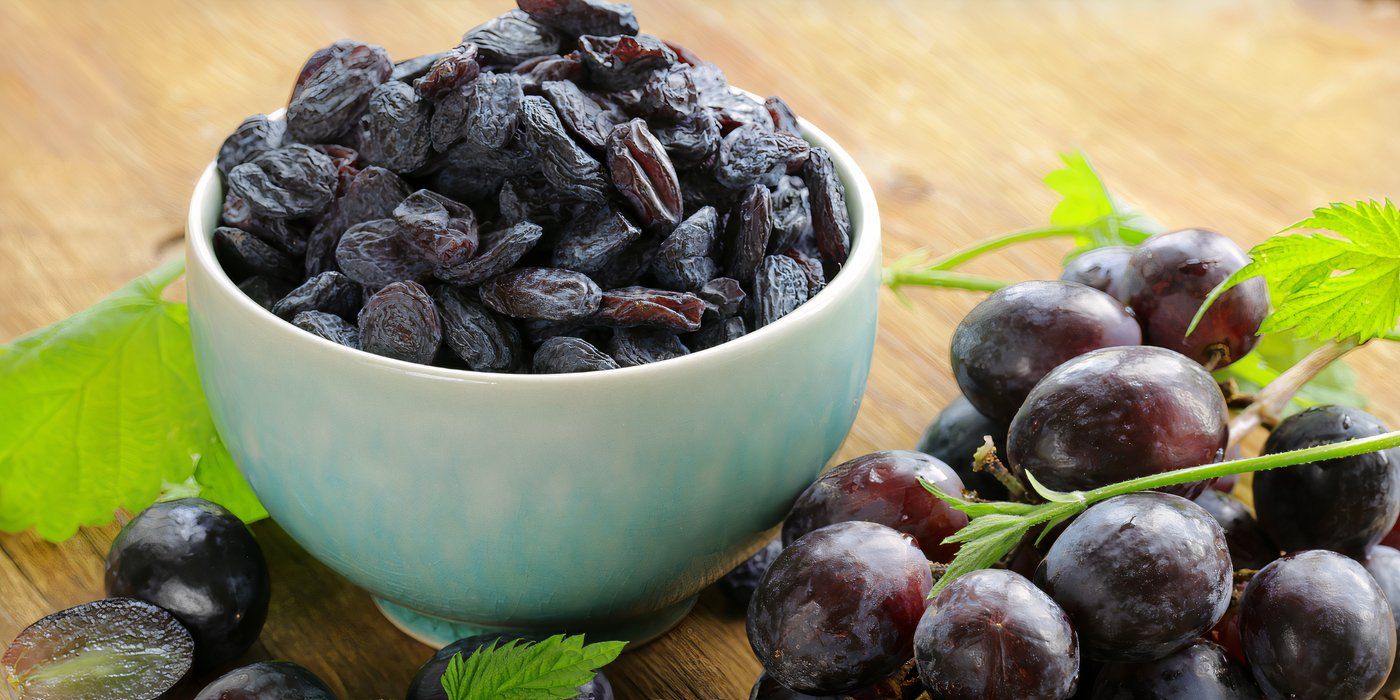
Dehydration removes most free water from grapes, which causes sugars and acids to concentrate inside the fruit, creating the dense, wrinkled texture associated with raisins. Sugar concentration increases without adding sugar, which explains the stronger sweetness per bite.
The best part? Fiber content stays intact because drying does not break down structural plant material. And the texture remains firm until moisture is reintroduced through soaking.
| Change | What Happens During Drying | Outcome |
|---|---|---|
| Water Content | Moisture drops from roughly 80 percent in fresh grapes to about 15 percent in gold or black raisins. | Shelf stability increases and microbial growth slows dramatically. |
| Sugar Concentration | Natural sugars become more concentrated as water evaporates for use in raisin recipes. | Sweetness per ounce rises without added sugars. |
| Texture | Cell walls compress and the skin wrinkles as moisture leaves. | **Flesh becomes dense and chewy **rather than juicy. |
| Fiber | Structural carbohydrates remain unchanged by drying. | Fiber content stays similar per gram of dried fruit, making them great for raisin pies. |
Where Nutrition Changes and Where It Does Not
Drying affects water-soluble volume rather than nutrient presence. Minerals and fiber remain stable, while vitamin levels shift depending on heat exposure:
- Potassium, iron, and magnesium remain concentrated after drying.
- Fiber levels stay intact because dehydration does not remove plant structure.
- Vitamin C decreases during drying due to heat sensitivity.
- Calorie density increases because water weight disappears.
Portion size matters because drying concentrates calories and sugars into smaller volumes.
How To Re-Hydrate Raisins Step by Step
Soaking restores moisture without reversing drying
Re-hydration adds water back into black or golden raisins without turning them into fresh grapes. Soaking allows dried cells to absorb liquid and soften, which changes texture but not sugar concentration. Liquid temperature and soak time control how plump the black raisins become but excess soaking can cause skin splitting and diluted flavor. Controlled re-hydration produces flexible fruit suited for cooking and baking.
| Soaking Liquid | Soak Time | Texture |
|---|---|---|
| Cool Water | 20 to 30 minutes | **Lightly softened fruit **that bends without breaking. |
| Warm Water (120 degrees Fahrenheit) | 10 to 15 minutes | Plump texture suitable for salads and cold dishes. |
| Simmered Water (Below 212 degrees Fahrenheit) | 5 minutes, then drain | Fully softened for baking raisin pies or cooking. |
| Juice or Broth | 15 to 20 minutes | Moist options that carry added flavor into** raisin recipes**. |
Where Timing Determines the Best Use
Soaking length controls how black raisins behave once added to a dish. Short soaks preserve structure, while longer exposure creates tenderness:
- Short soaking works best for salads and grain bowls.
- Medium soaking suits stuffing, pilaf, and pasta dishes.
- Full softening blends smoothly into batters and doughs.
- Immediate draining prevents excess liquid from watering down recipes.
Pat soaked golden raisins dry with a towel before cooking to control added moisture.
When Re-Hydrating Raisins Improves Cooking Results
Moisture changes performance in recipes
Rum apple raisin cakeImage credits: DebbiSmirnoff via Canva
Re-hydrated fruits behave differently than dry varieties once added to food. Added moisture softens texture, which prevents it from pulling liquid out of surrounding ingredients. **Softened fruits are distributed more evenly through batters, grains, and fillings. Over-soaking reduces structure and weakens flavor concentration. **
Choosing whether to soak depends on how the fruit interacts with heat and moisture in the recipe.
| Dish Type | Re-Hydration Effect | Best Prep Method |
|---|---|---|
| Backed Goods | Softened fruits prevent dry pockets in bread, muffins, or raisin pies. | Warm-water soak for 10 to 15 minutes, then drain. |
| Grain Dishes | Moist fruits blend smoothly with rice, couscous, or farro. | Cool-water soak for 20 minutes to retain shape. |
| Savory Sauces | Re-hydrated black or golden raisins dissolve partially and thicken sauces. | Simmered-water soak for 5 minutes. |
| Fresh Salads | Lightly softened gold or black raisins add chew without hardness to raisin recipes. | Short soak followed by thorough drying. |
Where Re-Hydration Creates Problems
Re-hydration does not improve every dish and sometimes works against the final texture. Too much moisture causes bleeding color and diluted sweetness:
- Excess soaking causes raisins to split and lose structure.
- Over-softened ones release liquid during cooking.
- A long soaking weakens the concentrated grape flavor.
- Dry fruits perform better in low-moisture recipes.
Skip re-hydration when the fruits are exposed to long baking times or dry heat.
Understanding** Raisins** Improves Everyday Cooking
The fruits change dramatically from fresh grapes through dehydration, which explains their sweetness, chew, and long shelf life. Drying concentrates sugars and nutrients, while sulfur treatment affects appearance rather than flavor. Re-hydration adds moisture back into the fruit without reversing the drying process, making black or golden raisins more adaptable in certain recipes. Knowing when to soak and when to use them dry helps cooks control texture instead of working around it.
Thoughtful preparation keeps the fruits from overpowering a dish or disappearing into it. Short soaking times suit salads and grains, while fully softened performs better in baking and sauces. Portion awareness matters because dehydration increases calorie density. With a clear understanding of processing and re-hydration, they become a deliberate ingredient rather than an afterthought.