In an age of burnout and brain fog, here’s how to revamp your 2026 by starting over with writing goals, a mental redo and decluttering your life
 Pic/iStock
These tips will help you cover it all — physical health, mental health, nutrition and diet, decluttering your relationships, taking a social media detox, and even setting writing goals for writers!
This 75-day reset is not a challenge, but more like a way to start the new year that will surely bring you good results.
Bring out the fitness freak again
 ***The key to maintaining a fit lifest…
In an age of burnout and brain fog, here’s how to revamp your 2026 by starting over with writing goals, a mental redo and decluttering your life
Pic/iStock
These tips will help you cover it all — physical health, mental health, nutrition and diet, decluttering your relationships, taking a social media detox, and even setting writing goals for writers!
This 75-day reset is not a challenge, but more like a way to start the new year that will surely bring you good results.
Bring out the fitness freak again
The key to maintaining a fit lifestyle is setting realistic goals
Gym membership registrations begin to soar as soon as it’s January 1. However, you don’t need to immediately hit the gym to have a fit lifestyle. The founder of Parana Wellness, a fitness coach and a yoga teacher, Shirin Kapadia, gives us really good insights as to how one can plan their 75-day reset with fitness in mind. She says, “Strength training complimented with cardio works as a good routine. Additionally, one can also incorporate mindfulness techniques such as meditation and yoga to have a holistic routine.”
If you are someone who has never exercised consistently before, you don’t need to worry. All you have to remember is to not take the extreme route and start slowly, and pick up pace once you feel comfortable in whatever techniques you are using. Kapadia adds, “Beginners need to start with small, but realistic goals. They do not need to be demanding, but need to be effective. Instead of completing 10,000 steps a day, one could settle for 6000 to 7000 steps, and that’s okay.”
 Shirin Kapadia
It is also important to remember to take ample rest days. According to Kapadia, “If one does two to three days of strength training in a week accompanied with completing 7000 steps, every alternate day can be a rest day.” Training does not mean tiring yourself out completely, so do remember to take breaks and rest days whenever you can.
Kapadia shares a consistent plan that one can follow. “Two to three days of strength training over five days a week can be done with a cardio of one’s choice. Additionally, adding yoga or stretching works well to increase mobility and avoid injuries. Lastly, add just a few minutes of a mindfulness practice like meditation or pranayama to reduce stress.
New year, new diet
 A reset can build good eating habits
Everyone enjoys delicious food at new year parties. The guilt begins slowly settling in once people realise that they might have made diet plans, but did not end up sticking to them. In this case, a 75-day reset could do wonders for your dietary habits. Nutritionist Dimple Desai Sheth says, “A 75-day reset is good enough to get back into a routine and restore balance in eating habits.” She further adds, “I recommend people to have rhythm and structure. For the first 25 days, one could start by having meals at regular times. They can eat home-cooked meals and stay hydrated,” she adds.
To make a dietary plan, she further adds, “From days 26-50, one can focus on strengthening their routine. They can add protein, along with exercising, and ensuring that they get a good amount of sleep.”
 Dimple Desai Sheth
Recommended Dietary Allowance (RDA) for protein is a modest 0.8 grams of protein per kilogram of body weight. It can be incorporated in the diet by consuming lean meats, fish, eggs, dairy, beans, or tofu.
Later in the reset, one can also become flexible with their routine. Like Desai Sheth puts it, “It is okay to become flexible with the dietary plan, especially from days 51-75. You can indulge in the food you like having, even if it is sweet, as long as it is in limited quantities.”
Find that work-life balance
 It is necessary to have a work-life integration plan ready
New year also means new things to achieve at the workplace and a whole lot of stress. People find themselves in a bottleneck situation where they do not know how to move forward. As a mindset coach for entrepreneurs who have built their businesses, Radhika Dhawan says, “A reset is not about becoming a new person, but becoming a version of yourself that feels more intentional.” One is not motivated all the time, and there will be times when one will face disruptions. The key to navigating these problems is to ease into this reset.
Finding one’s own rhythm can be extremely helpful in situations like these. “Discipline feels too rigid,” she says, “When one finds their rhythm, it helps them stay consistent even when their motivation levels dip. It can also outrun enthusiasm in the long run.”
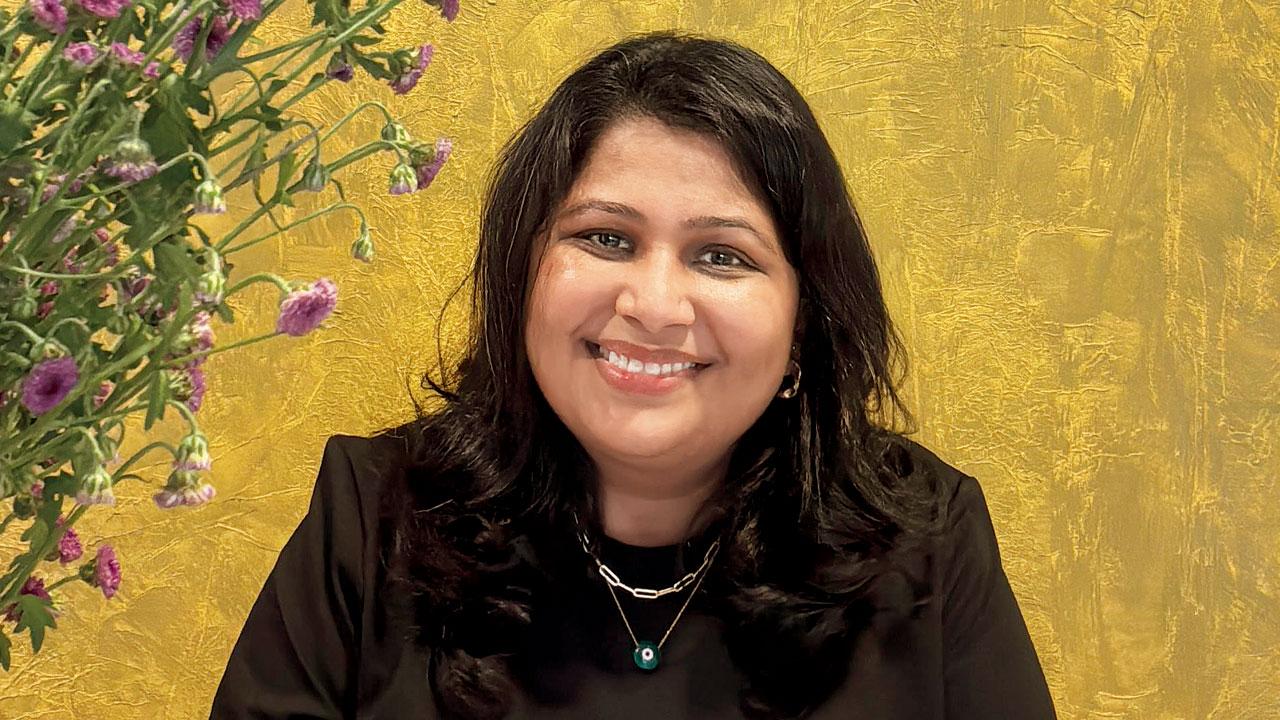 Radhika Dhawan, entrepreneurship mindset coach
To Dhawan, the term work-life integration makes more sense. “Balance implies that there needs to be equal attention paid to both, which is nearly impossible,” she explains. “Life moves in seasons, and different seasons bring different levels of importance to be placed on various aspects of life. The key is to ask oneself what aspect of life requires more time and attention, and then work accordingly.”
So, go out and watch a movie, participate in pottery workshops around the city, attend a comedy show or even attend a concert. These could all be ways of showing up for yourself, grounding yourself and functioning better.
Taking care of mental health
 Begin by defining what the reset means to you
A 75-day reset can work wonders for mental health. A task that everyone must complete before they begin it is defining what the reset means to them — a reset is not adding more goals to the already existing ones, but more similar to hitting the refresh button, completing all unfinished tasks and seeing closure to everything that was previously left undone.
Therapist and psychologist Priyanka Varma claims that there are three pillars to having a good emotional and mental health — to eat, sleep and exercise. “It does not add to your list of things but provides you the fuel to complete what you started. One must also focus on getting regular with things that they have previously wanted to achieve, like taking a walk every day,” she says, “A reset is not about an overnight change. It’s about an evolution in your identity, closer to what you would like to be versus trying to snap your fingers and transform yourself. That’s a key takeaway I recommend.” When one looks forward to a reset, it is essential to focus on things that are sustainable and bring them closer to a version of themselves that they’d like to be. Another important thing that needs to be added to this list is seeking therapy. Whether or not one is facing any hurdles in life, therapy is a good solution to maintaining a good mental health.
 Priyanka Varma
“Therapy can always help a person if they are feeling lost or overwhelmed,” says Varma, “From experience, I have also noticed that therapy overwhelms a lot of people, but they need to realise that they need to take it slow, pace it out, and continue to unpack their emotions and burdens to achieve better results. It is bound to get overwhelming, but it matters how one persists and continues to figure it all out despite the hurdles it poses.” Moreover, one could always try out different therapists and check whether they are really able to form a relationship with them. Guftagu Counseling and Psychotherapy Services provide queer affirmative therapy services online, while Prafulta offers therapy for people based in Mumbai.
There may also be times that one begins to feel burnt out. A 75-day reset may sound quite a lot when one needs to focus on fitness, diet, mental health, work, and so much more. According to Varma, “A reset is about closing loops, it’s about aligning with yourself. Burnouts are bound to occur if you are practising something that does not align with who you are and who you want to be. If one feels burnt out while performing their reset, then they need to evaluate their reset tasks and redesign them.”
One also needs to remember that reset may look different for different people. There is no one way to set goals or to ensure that the goals are achieved. People need to realise what they are comfortable doing and slowly execute it.
It’s time to clean up your mess
 The new year is the perfect time to do a full house reorganising. Pic/iStock
December can be a hectic month. Between the long days at work and even longer nights at holiday parties, no one has the time to clean. The result? A room that is just a heap of clothes and drawers that have random coins and make-up lying around. Take the new year as a sign to sort this mess for good. We ask professional organisers and founders of Bless The Mess, Raina Jain and Zuweina Kapasi, how to do a realistic 75-day reset without feeling overwhelmed.
The first rule, they say, is to resist the urge to attack your wardrobe head-on. “The biggest area people struggle with is their clothes, but that’s not where we recommend starting,” says Kapasi. Instead, begin small. “Start with your bedside table or your work desk. Small wins give you the motivation to move on to bigger spaces.”
 Raina Jain and Zuweina Kapasi
If you are itching to open that wardrobe anyway, Jain suggests breaking it down. “Do one shelf at a time or one category. Just gym clothes or just homewear. It doesn’t have to be everything at once,” she says. Organisation, after all, is not a one-weekend project. “It’s an ongoing process. The goal is to create systems you can actually maintain,” Kapasi adds.
Their biggest hack? Declutter before you organise. “If you’re organising things you don’t use or that don’t add value to your life, you’re just organising clutter,” Kapasi explains. “That negativity stays around and the system won’t last.” Jain agrees, “Declutter as you go. That’s the only way organising makes sense.”
For shared spaces like kitchens, living rooms, bathrooms, labels can be life-changing. “When multiple people use a space, segregation and labelling make sure everyone knows where things belong,” says Kapasi. It saves time, arguments and endless searching.
Most importantly, don’t clean for its aesthetic value. Cleaning is deeply tied to mental clarity. “If there’s clarity in your space, there’s clarity in your mind,” Kapasi says. A cluttered desk, she points out, is like having “multiple tabs open on your laptop. How do you function?” Jain adds that clutter quietly kills productivity. “You end up wasting time just finding things. The vibe of a room completely changes once you declutter it.”
A simple rule to maintain balance? The one-in, one-out method. “If I buy three new tops, I let go of three old ones,” Jain says. Kapasi recommends keeping a donation box at home at all times. “It makes letting go much easier.”
Finally, don’t forget your digital life. “Digital clutter eats up mental space too,” says Kapasi. From deleting unused apps to unsubscribing from pointless emails and unfollowing accounts you no longer resonate with, a digital clean-up is just as essential. “Do it on the go,” Jain adds, “If it doesn’t serve you anymore, let it go.” A cleaner phone, like a cleaner home, makes space for a calmer, clearer new year.
Make journalling a habit, not a task
 Journalling does not necessarily have to be on a paper; typing your thoughts into a phone or writing your thoughts on the canvas of the clouds work as well, says Dipti Shah. Pic/iStock
In a world that rarely slows down, journalling can become an introspective reset button. Dipti Shah, 58, who has been conducting journal-writing workshops since 2020, believes the practice matters most during periods of transition. “In the chaos of career, college, and all the in-between phases, you do need mental peace,” she says. What began as online Zoom and Google Meet sessions has now evolved into a weekly ritual on a WhatsApp group called Write Practice, where she sends out one simple writing prompt for the day or the week.
According to Shah, journalling doesn’t need structure or pressure to be effective. Its purpose is reflection, helping people gain clarity, clear their minds, and express thoughts they may not voice otherwise. For those looking to restart or build a journalling habit in the new year, her advice is intentionally gentle.
 Dipti Shah
“You don’t have to journal every day at a fixed time, especially if you have other priorities,” she says. Journalling shouldn’t be performative or driven by trends. Keep it minimal and organic. If you don’t have a notebook, your phone works just as well. “Sometimes, even looking at the sky and writing your thoughts on the canvas of the clouds is writing enough.”
Missing days is part of the process. What matters is returning without guilt. “Don’t reprimand yourself,” Shah adds. “Otherwise, it becomes a chore, not something you love.” With patience and kindness, the practice slowly becomes a habit that supports reflection rather than demanding discipline.
With inputs from Akshita Maheshwari and Tanisha Banerjee
"Exciting news! Mid-day is now on WhatsApp Channels  Subscribe today by clicking the link and stay updated with the latest news!"Click here!