Europe should have seen it coming but the US government’s new National Security Strategy (NSS) nevertheless sent a chilling wind across the Atlantic. The messaging has been there since Trump took office in January: his vice-president, JD Vance, set the tone at the Munich Security Conference in February when he declared that Europe was on the brink of destroying democracy and might not deserve future US assistance.
It has been put down on paper in a 33-page document alleging that the vieux continent is facing “civilizational erasure” because of migration, while being governed by “unstable minority governments” who “trample on basic principles of democracy to suppress opposition”. Reading more like a blueprint for...
Europe should have seen it coming but the US government’s new National Security Strategy (NSS) nevertheless sent a chilling wind across the Atlantic. The messaging has been there since Trump took office in January: his vice-president, JD Vance, set the tone at the Munich Security Conference in February when he declared that Europe was on the brink of destroying democracy and might not deserve future US assistance.
It has been put down on paper in a 33-page document alleging that the vieux continent is facing “civilizational erasure” because of migration, while being governed by “unstable minority governments” who “trample on basic principles of democracy to suppress opposition”. Reading more like a blueprint for covert action against a despotic regime than a pragmatic assessment of relations with the US’s oldest allies, the strategy suggests “cultivating resistance to Europe’s current trajectory within European nations”.
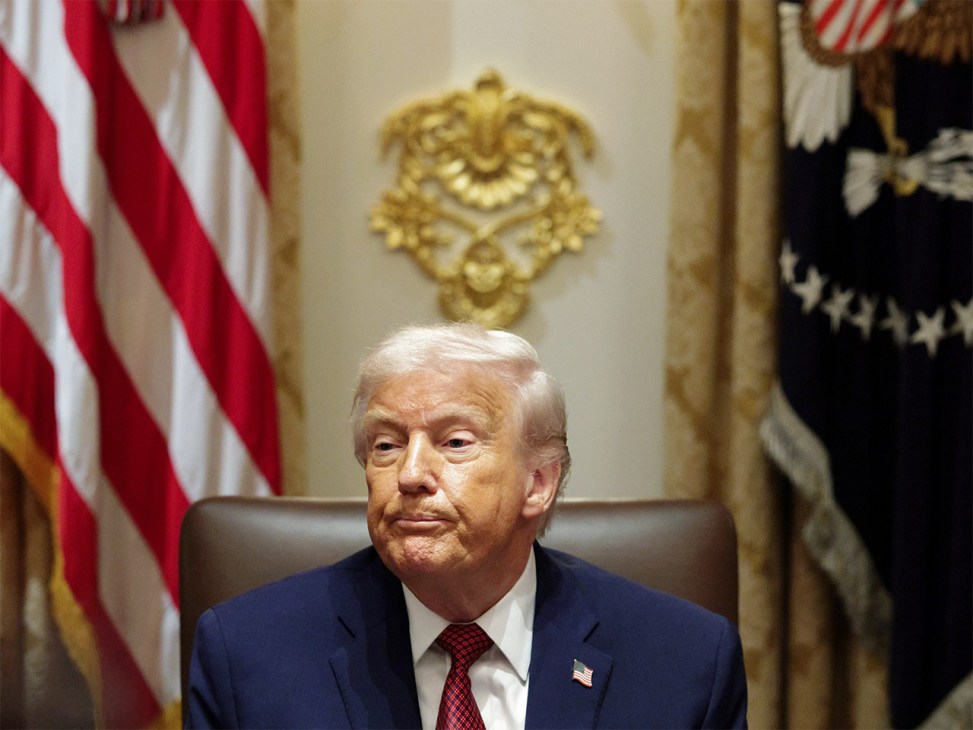
Which resistance to cultivate is also spelled out: “The growing influence of patriotic European parties indeed gives cause for great optimism,” the document reads, clearly referring to rising far-right, anti-immigration forces in Europe. While this document could be dismissed as more Trump bluster as he seeks to get his own way on the international stage, particularly on Ukraine, the formalisation of such a fundamental shift in US priorities should be a huge cause for concern in European capitals.
The NSS is an outline of the foreign-policy doctrine and national security interests of the US, periodically published by the White House to reflect any significant shift in policy. It is meant to inform relevant agencies and embassies about how they should target both their diplomatic efforts and their funding. Trump’s foreign-policy approach is a long way from Joe Biden’s democracy-first agenda, in which Europe was seen as an essential partner in promoting security around the world.
The president campaigned on an “America First” platform, vowing to protect national interests above all else, which is reiterated in the strategy’s preamble: “The affairs of other countries are our concern only if their activities directly threaten our interests.” What will disturb many in Europe is how closely US interests appear to align with those in the Kremlin. The country is only mentioned in the general context of Europe, stating that the US goal is to “re-establish strategic stability with Russia”. Kremlin spokesperson Dmitry Peskov smugly confirmed that the strategy was “largely consistent with our [Russia’s] vision”.
Beijing also gets off lightly, with most of the focus on China’s potential as an economic competitor rather than a strategic geopolitical threat. Middle Eastern nations are off the hook for any human-rights violations, with the strategy dismissing the “misguided experiment with hectoring these nations – especially the Gulf monarchies – into abandoning their traditions and historic forms of government”.
The US also shows much more interest in its backyard, declaring that relations with Latin America will be reset, along with a warning that “the use of lethal force” would be deployed if needed to stop narcotics smuggling. Any illusions that the strategy is mere words are disproved by Trump’s recent actions. In essence, the document distils everything that Trump has done on foreign policy since his re-election.
He has given an easy hand to Russia and China and cosied up to authoritarian regimes in the Gulf, while frequently chastising Europe and bombing alleged drug-trafficking boats in the Caribbean. That the strategy and its hammering of the transatlantic alliance came out just as Trump tries to sell his Ukraine peace plan to a reluctant Europe is no coincidence.
It sends the message that the US has no interest in alliances unless its partners embrace the whole Trump-Maga doctrine. Any misconceptions in Europe that another fawning Oval Office visit will shift the dial on Ukraine or any other matter should be shattered for good.
Charlotte McDonald-Gibson is a Washington-based journalist and regular Monocle contributor.

The post Trump’s new National Security Strategy picks a side. Hint: it’s not Europe’s appeared first on Monocle.