[Back to the homebrew computers page]
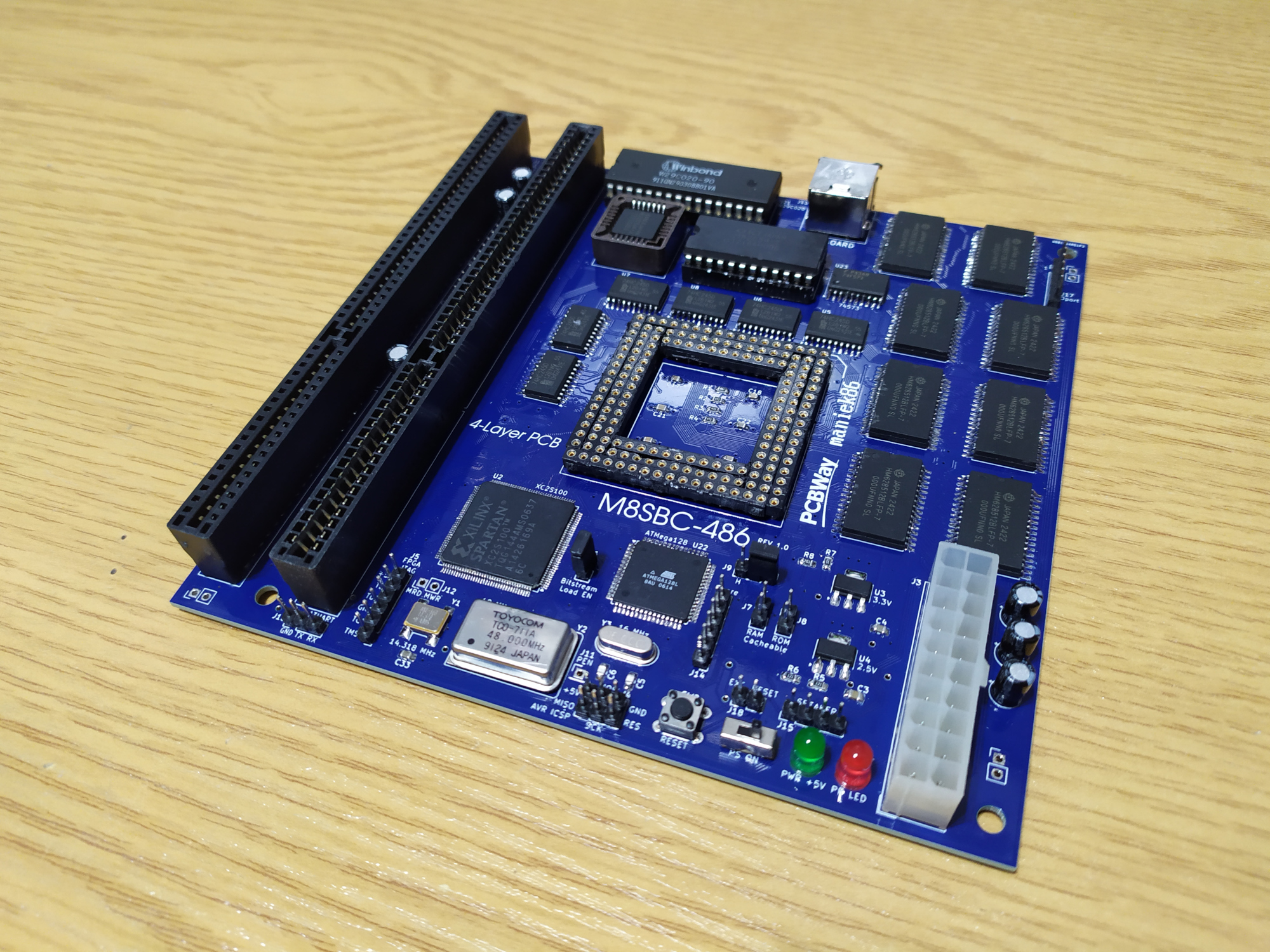
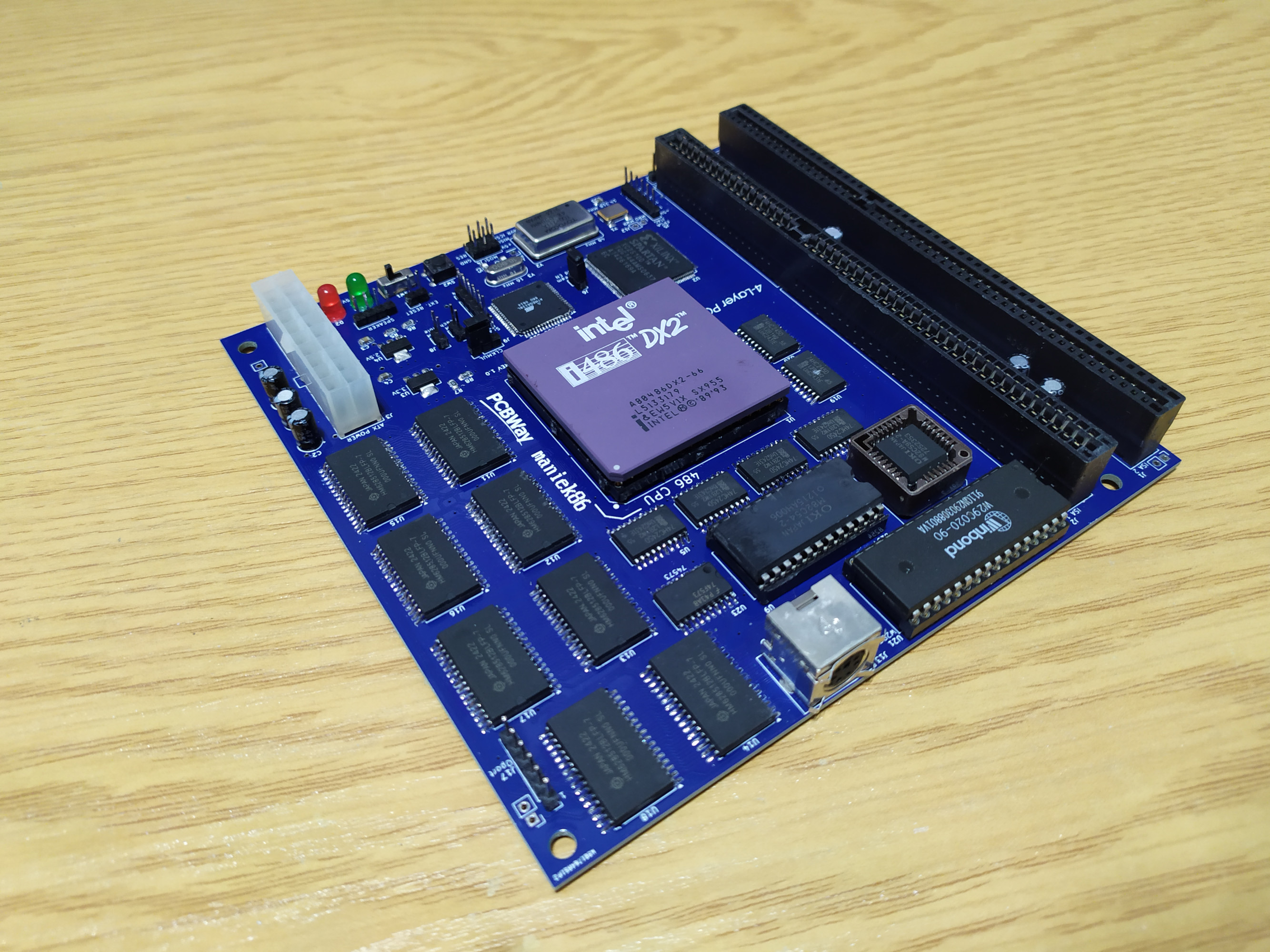
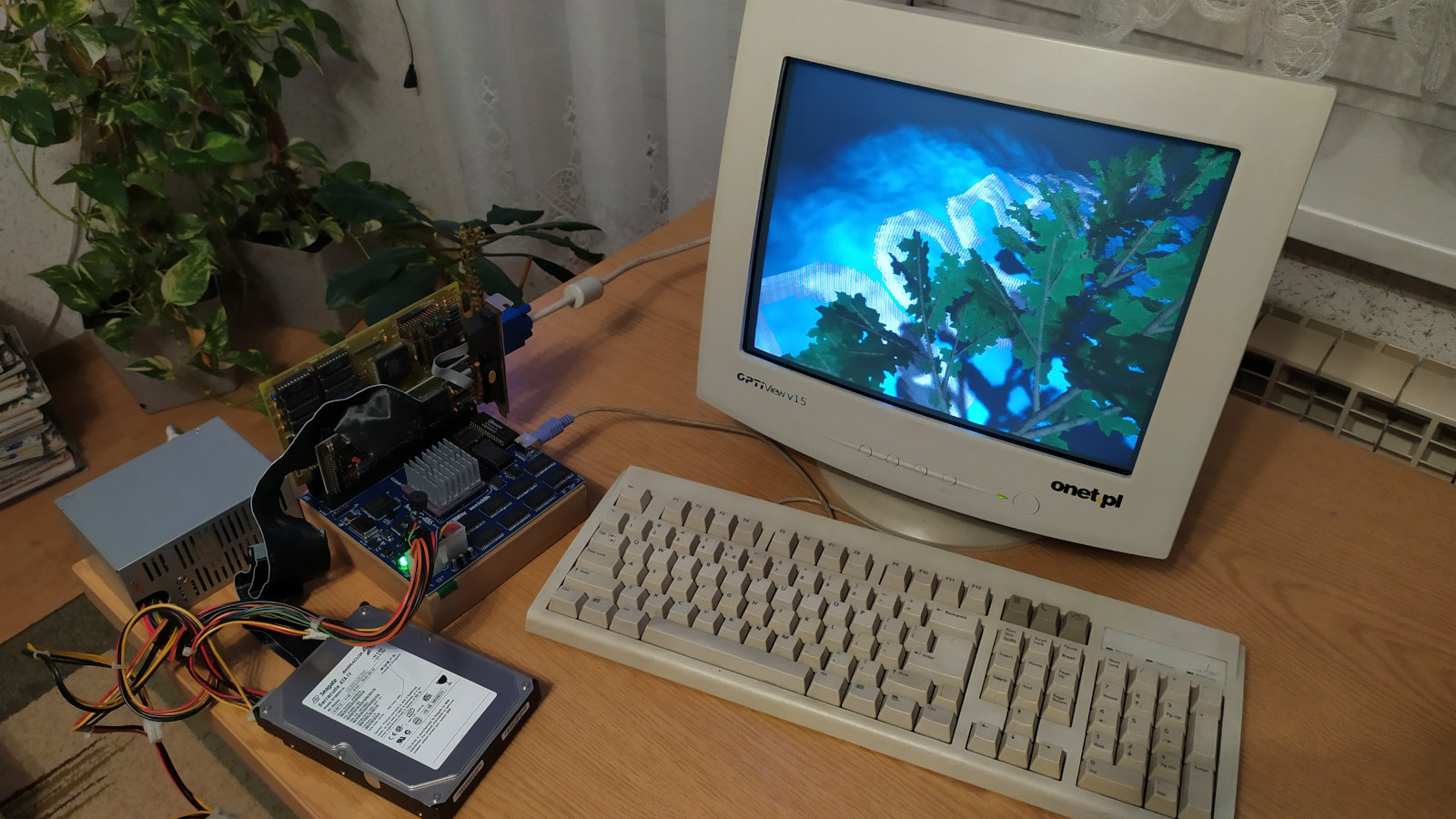
The M8SBC-486 is a 486 homebrew computer motherboard made from scratch. From the schematic and PCB to the chipset! It is not based on existing designs, but rather on my experience with my previous experimental 486 homebrew (page about it coming soon!). I started working on it back in August 2025 and I started researching the 486 CPU in April 2025. I initially planned to make it just a 486 homebrew with the ordinary goal of getting it to run Linux and DOOM. However, my design choices made it compatible enough to run other cool stuff!
I call it "kinda PC compatible" because it has a lot in common …
[Back to the homebrew computers page]
The M8SBC-486 is a 486 homebrew computer motherboard made from scratch. From the schematic and PCB to the chipset! It is not based on existing designs, but rather on my experience with my previous experimental 486 homebrew (page about it coming soon!). I started working on it back in August 2025 and I started researching the 486 CPU in April 2025. I initially planned to make it just a 486 homebrew with the ordinary goal of getting it to run Linux and DOOM. However, my design choices made it compatible enough to run other cool stuff!
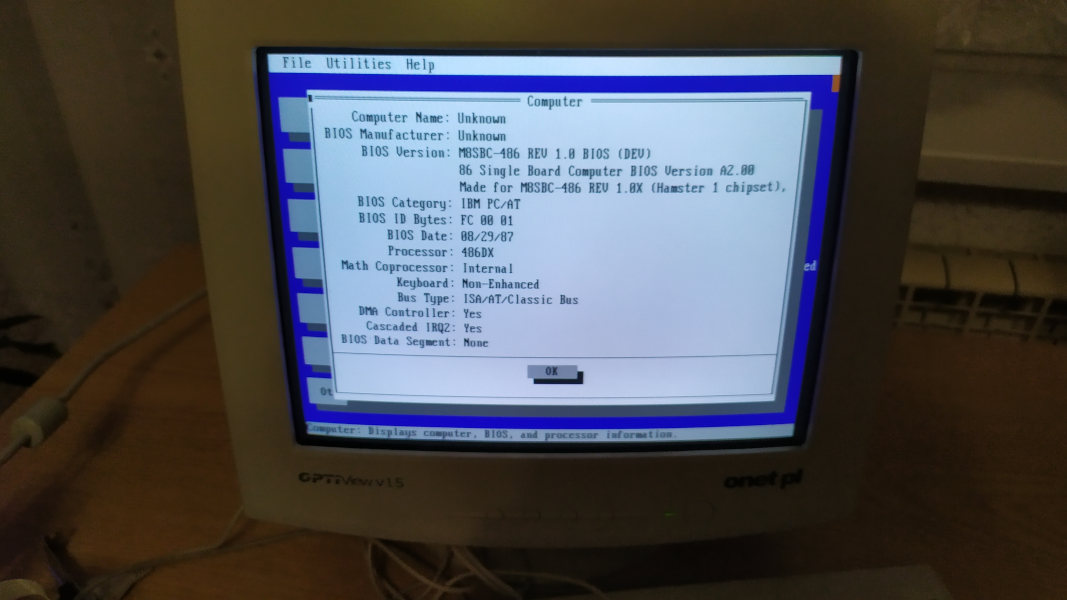
I call it "kinda PC compatible" because it has a lot in common with standard older x86 PCs. The main things missing here are the secondary PIC and DMA. However, based on my tests on this board, many programs can work without these. The missing DMA especially removes sound card support. Just see below the compatibility table!
GitHub repository of the project: https://github.com/maniekx86/M8SBC-486 TheRetroWeb entry (thanks!): https://theretroweb.com/motherboards/s/maniek86-m8sbc-486
Page / subpages last updated: 09/01/2026 (Quite a bit may not yet be described, as I was making "dev blogs" in a forum channel on a particular Discord server. I am slowly working to write it all down here.)
Specs:
- 150*150mm 4 layer PCB. Custom holes placement!
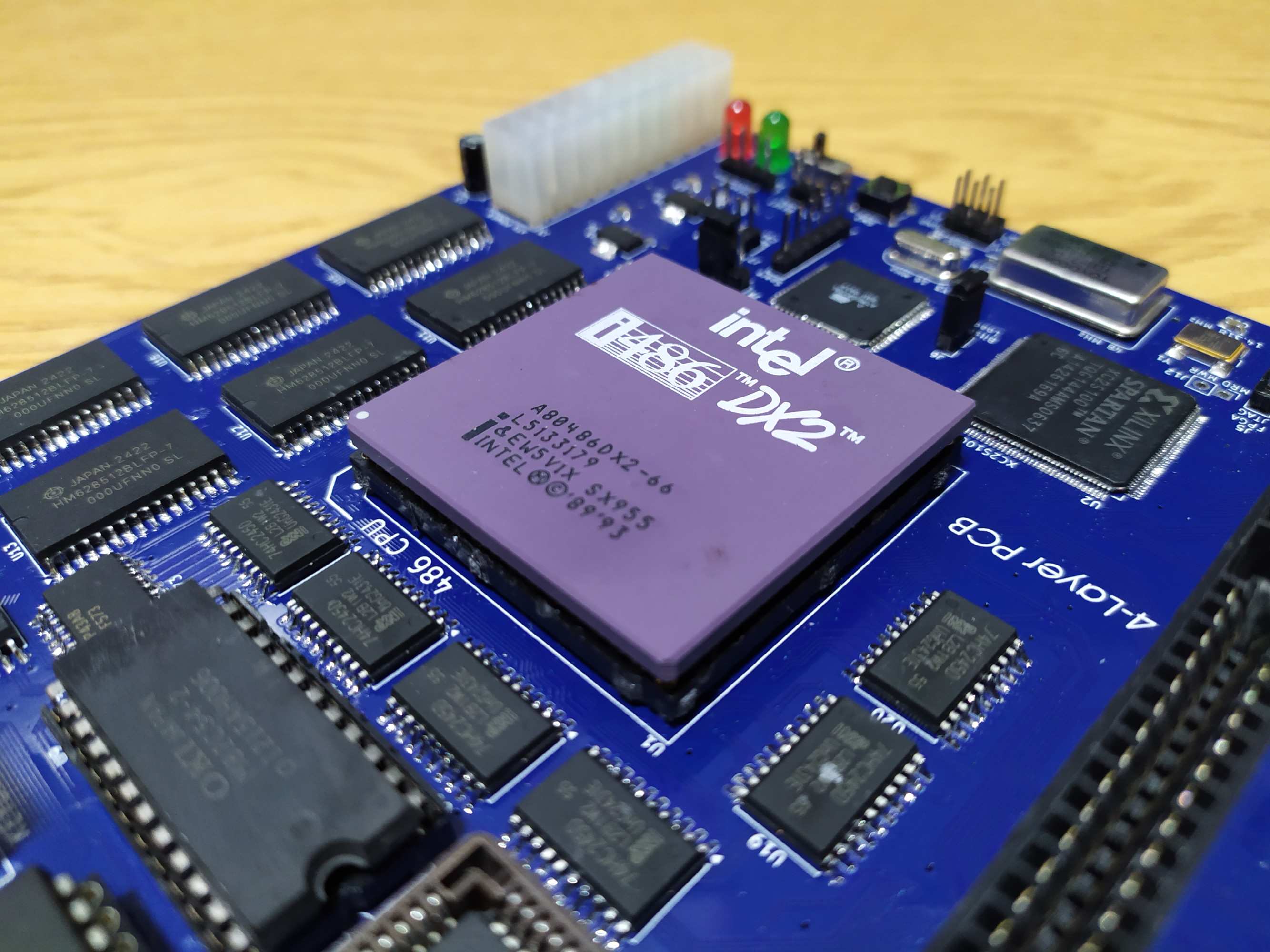
- PGA-168 socket for 5V 486 CPUs. FSB currently runs at 24 MHz meaning that DX2 CPUs work at 48 MHz
- Currently operating at 24 MHz FSB
- Xilinx Spartan II XC2S100 FPGA as the chipset. Codename "Hamster 1"
- 4 MB of SRAM
- 256 KB (224 KB accessible) ROM for BIOS
- 8254 Programmable Interval Timer (PIT)
- 8259 Programmable Interrupt Controller (PIC)
- Two 16-bit ISA slots
- PS/2 Keyboard port. Controller is implemented in the FPGA
- Simple CMOS RTC and CMOS storage. Implemented in the FPGA too
- ATMega128 as reset circuit handler, nonvolatile CMOS storage and bitstream loader.
As this project is pretty big and took me much more time than my previous homebrew computers, I decided to split this page about it into multiple pages. Many answers to questions about why I did something a certain way rather than another can be found on these subpages, so I invite you to read on.
- Intro, schematic and PCB design
- Initial hardware and chipset
- Soldering and testing first board
- Software: BIOS
- Software: Linux (coming soon)
- Software: MS-DOS & FreeDOS (coming soon)
Big shout-out to PCBWay!
Thanks to PCBWay’s support, I was able to start this project. The idea for this large homebrew project emerged during the development of my previous projects, which were also sponsored by PCBWay. Their support essentially allowed me to start this project.
PCBWay is a well-known PCB prototyping and manufacturing service, providing high-quality boards and excellent customer support. I have worked with their boards in the past and can say that they are of great quality. The sponsorship also included a free quick delivery option. If you’re looking for reliable PCB prototyping and manufacturing services, I highly recommend checking them.
Compatibility
Last updated: 09/01/2026
ISA Cards
Currently, the BIOS is not capable of the ISA PnP feature. Therefore, only cards that are not PnP or that can operate in a non-PnP mode will work.
- CGA, EGA, MDA: No (TODO?).
- **VGA: **Mixed. Currently all graphics cards are initializing in 8-bit mode due to problematic ISA driver (16-bit transfers). Table below shows my tests
| Card (chip on it) | Works? | Notes | BALE issue (see bottom of Initial hardware and chipset page) |
|---|---|---|---|
| Trident TVGA8900C | Yes (8-bit mode) | Small rare glitches in some cases, good compatibility with software. 16-bit transfers can be achieved after tweaking registers with DEBUG. | No |
| Trident TVGA9000C | Yes (8-bit mode) | Works but bad compatibility with software (programs freeze). Reads don’t work on this card? | Yes |
| Cirrus Logic GD5428 | Yes (8-bit mode) | Reads from video memory are broken a lot | Yes |
- **Multi IO controllers (Serial, LPT, Floppy, IDE): **Yes. Floppy controller is unsupported because of missing DMA.
- **Sound cards: **No, however AdLib might work.
- **Ethernet cards: **Untested, but might work? As far as I know, some of these cards can work in non-PnP mode and they don’t require DMA.
- **SCSI cards: **Untested.
Operating systems
Tested mostly on preinstalled images
| Operating system | Type | Works? | Preinstalled image? | Notes |
|---|---|---|---|---|
| MS-DOS 6.22 | DOS | Yes | Yes | Works without HIMEM enabled. |
| FreeDOS 1.4 | DOS | Yes | Yes | See note about included Jemmex bellow |
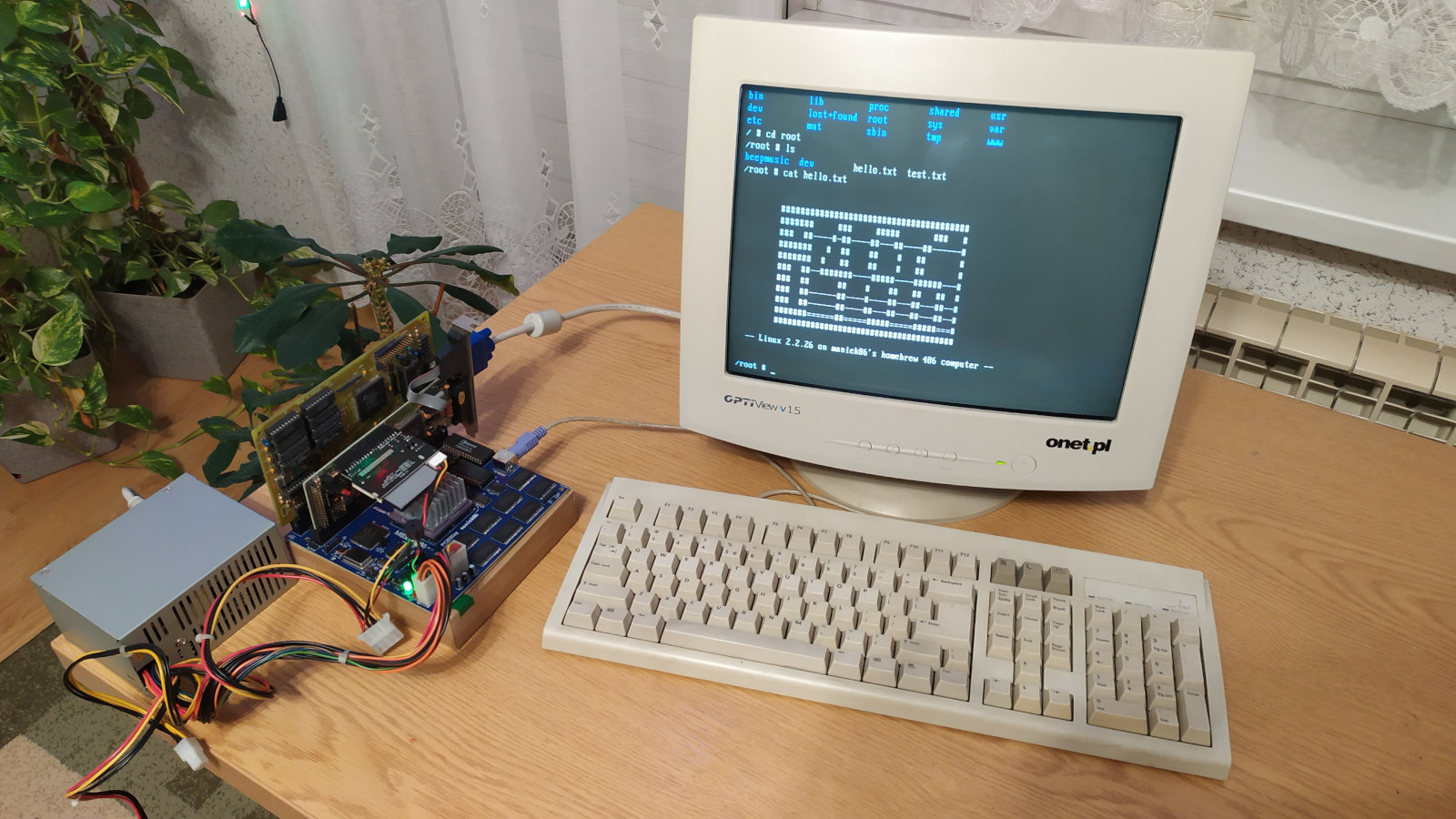
| Linux 2.2.26 | Linux | Yes | Yes | Needed custom kernel build, bodge wire to reroute IDE IRQ to PIC, few kernel parameters and custom bootloader but works fine |
| Windows 3.1 (enhanced mode) | Windows | Kinda | Yes | Tested on FreeDOS 1.4 with the "win31 kernel". Had to tweak a bunch of settings. It launches, gets to the shell and is usable with keyboard, but I can’t get mouse to work! |
| Windows 3.1 (standard mode) | Windows | No | Yes | Errors |
| stillalive-os | Hobby OS | Yes | Yes | Works |
| cubicDoom | Hobby OS | Yes | Yes | Works |
DOS software
| Program | Type | Works? | Notes | Tested on |
|---|---|---|---|---|
| HIMEM | Memory extender | No | Freezes. To recheck | MS-DOS 6.22 |
| Jemmex | Memory extender | Yes | Works fine | FreeDOS 1.4 |
| HIMEMX | Memory extender | Yes | Works fine | FreeDOS 1.4 |
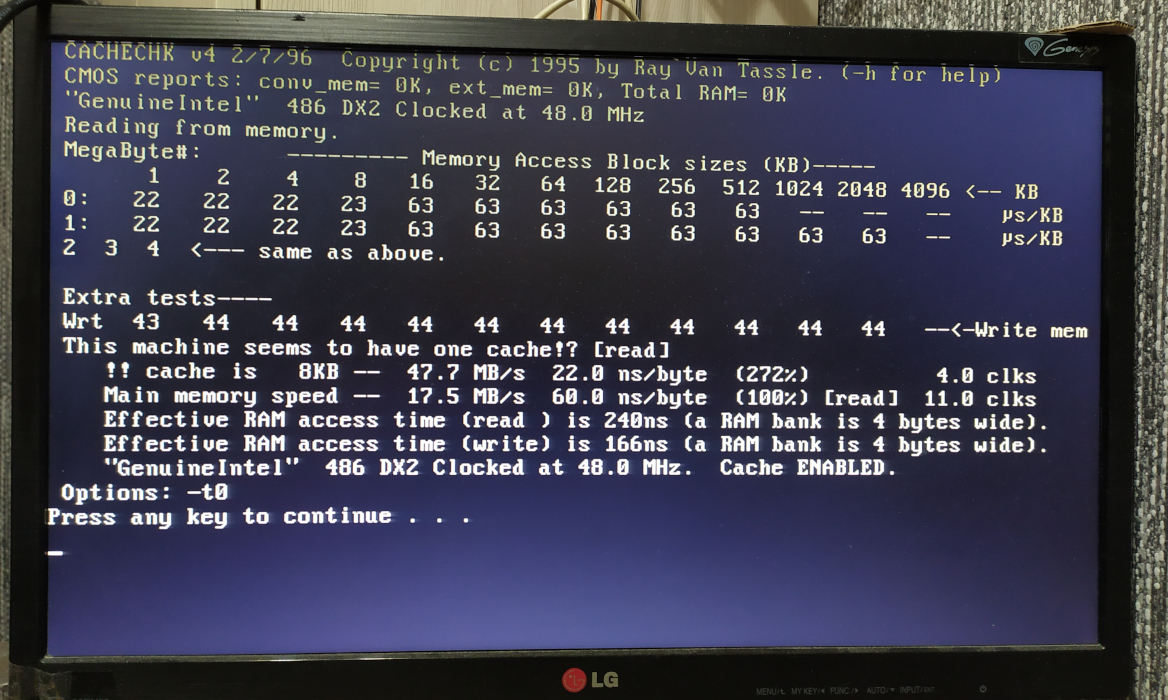
| CACHECHK | Utility | Yes | Results | MS-DOS 6.22 & FreeDOS 1.4 |
| Second Reality | Demo | Yes | Works when using TVGA8900C or GD5428 with minor issues at two parts of the demo. | MS-DOS 6.22 & FreeDOS 1.4 |
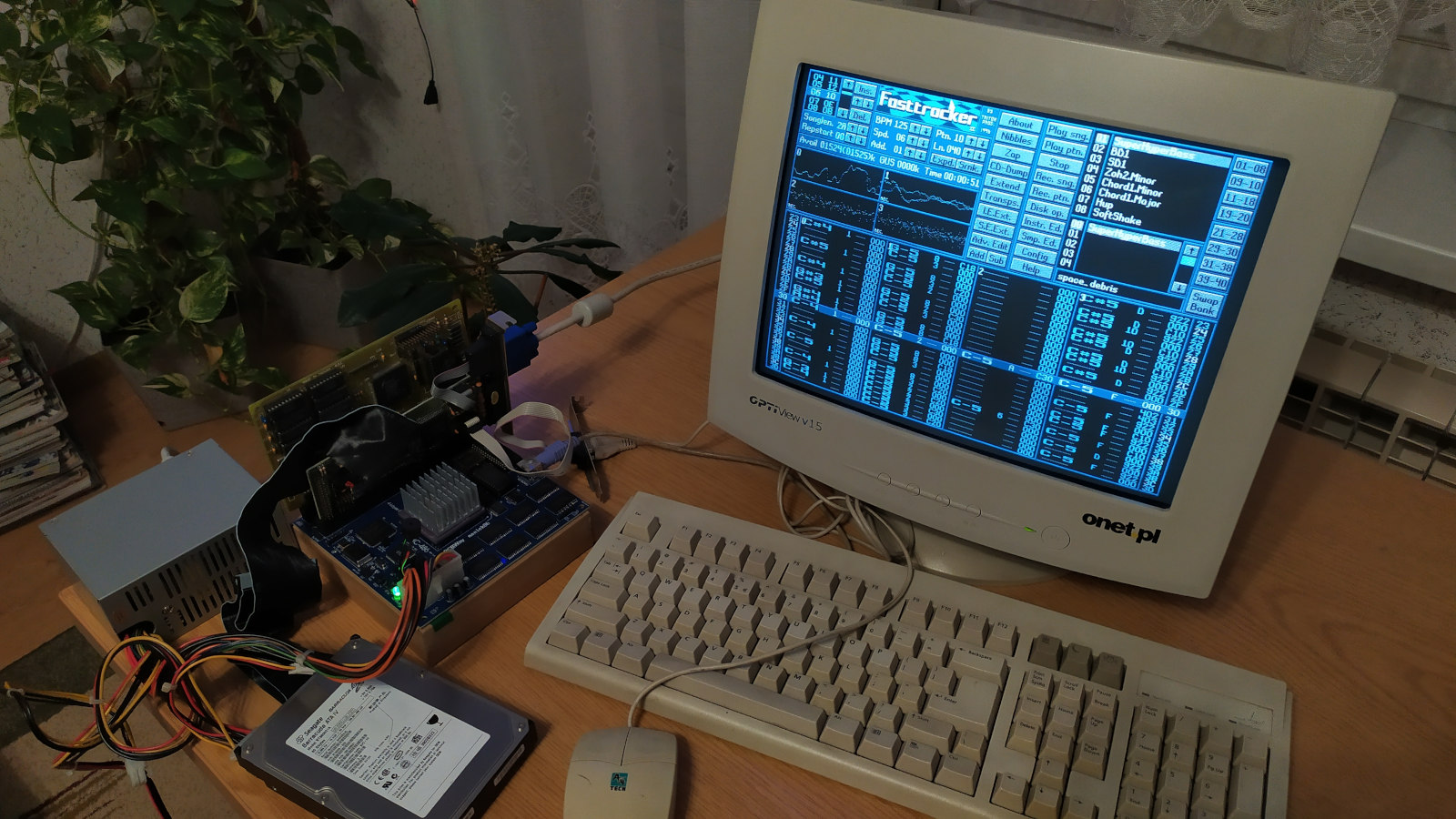
| FastTracker II | Program | Yes | Works fine. Sound output can be achieved via "PC speaker" in "Pulse mod." mode or "Soundplayer" (LPT DAC: Covox Speech Thing) | FreeDOS 1.4 |
| 3DBench 1.0 | Bench utility | Yes | Works fine (poor result because graphics cards work in 8-bit mode currently) | FreeDOS 1.4 |
| 3DBench 1.0c | Bench utility | Yes | Works fine, scores 8.7 (poor result because graphics cards work in 8-bit mode currently) | MS-DOS 6.22 & FreeDOS 1.4 |
| Prince of Persia | Game | Yes | Works perfectly fine | MS-DOS 6.22 |
| CHKCPU | Utility | Yes | Works fine | MS-DOS 6.22 |
| Wolfenstein 3D | Game | Yes | Works fine | MS-DOS 6.22 |
| **DOOM **(FastDOOM) | Game | Yes | Works fine | FreeDOS 1.4 |
Disclaimer
This project is essentially my hobby, as I like retro, electronics, digital circuits and low-level programming. I never expected this computer to run DOS in the first place. I consider it pretty much experimental and made to research the workings of older x86 chips. I am pretty sure that this work could be used to build something more robust and stable or even to develop fully custom-made boards for other x86 CPUs. It took me a lot of time, but I don’t regret it. There are still many issues, but it’s heartwarming that I can get so much existing software to work. And, thanks to everyone for support!
Gallery
Videos coming soon!
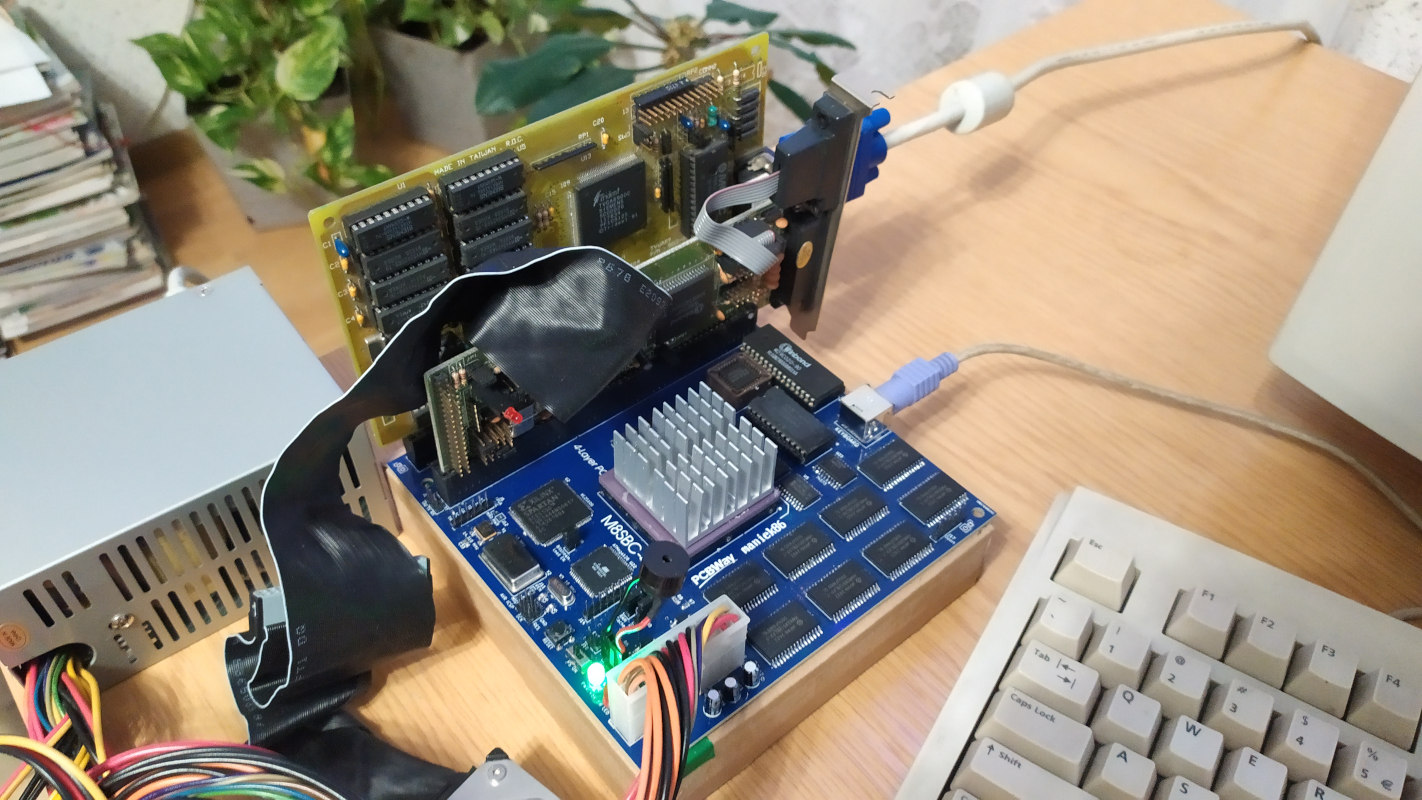
Linux & FreeDOS
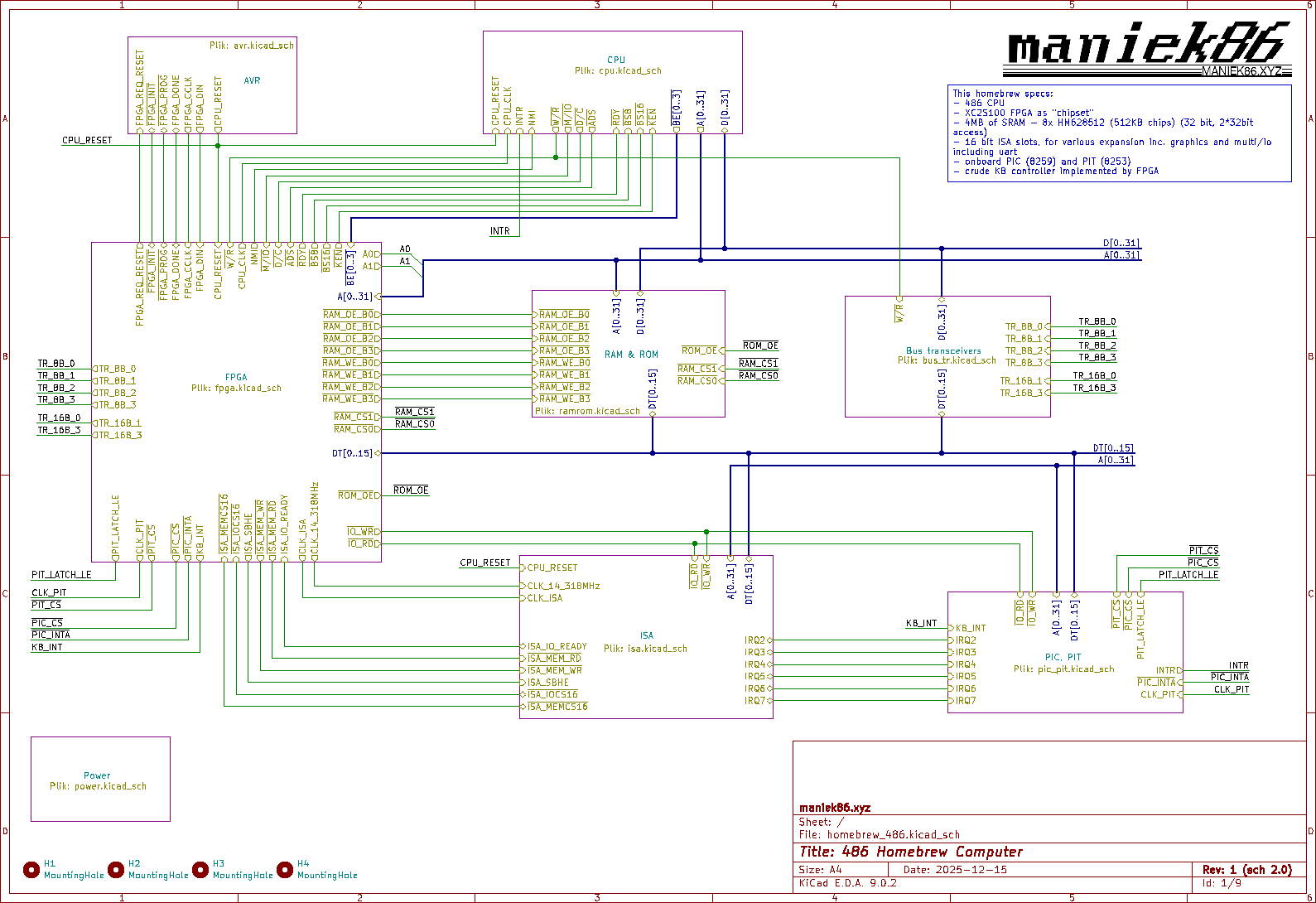
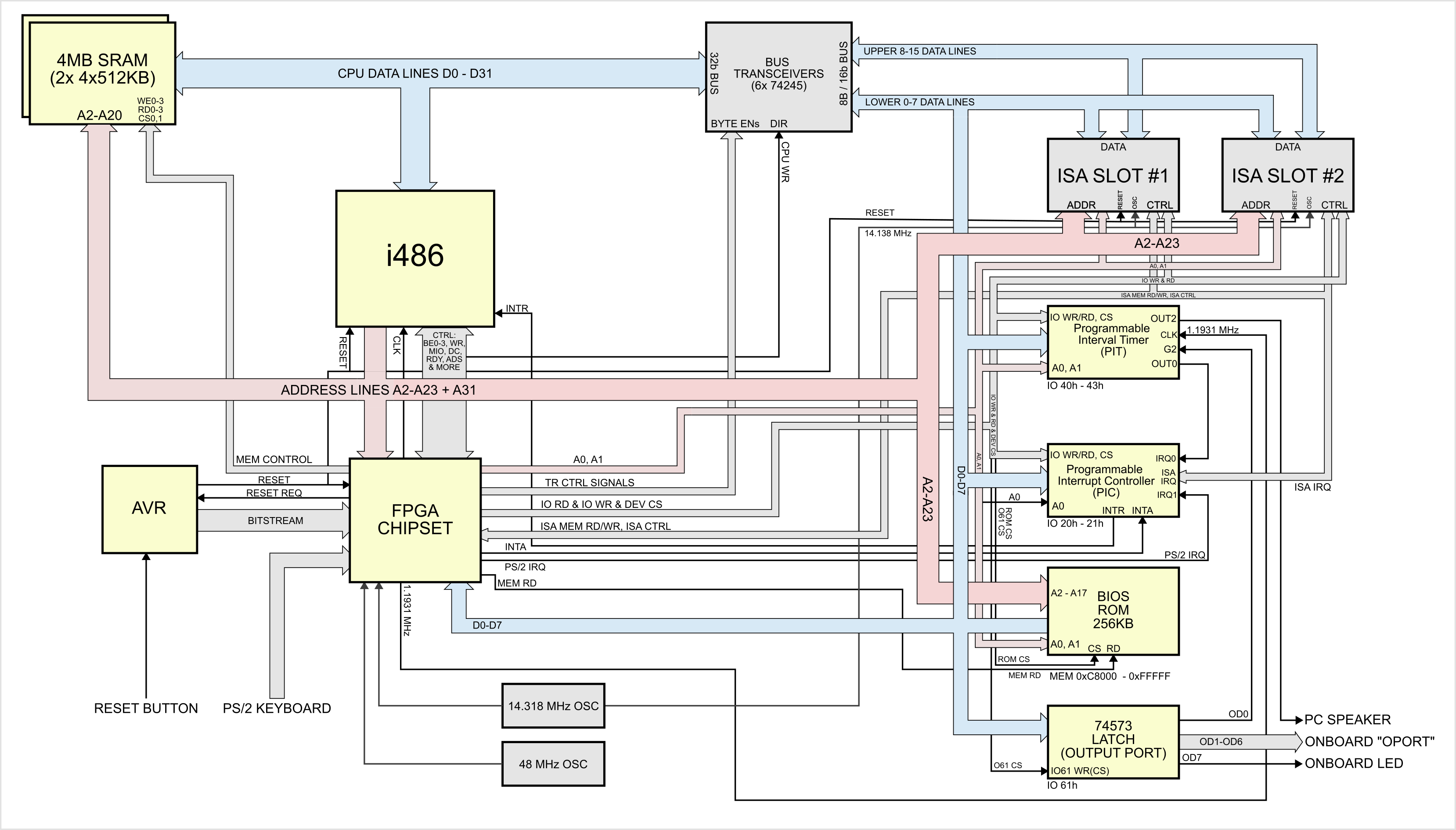
Board architecture. First page of the schematic shows it pretty nice as well.