Humans may be far more monogamous by nature than previously thought, researchers say.
Monogamy in humans is comparable more to the exclusive mating seen in meerkats and beavers than in our primate cousins, Cambridge university anthropologist Mark Dyble says.
Monogamy, or the practice of mating with only one partner at a time, is widely theorised to be a cornerstone of society, even though researchers continue to find…
Humans may be far more monogamous by nature than previously thought, researchers say.
Monogamy in humans is comparable more to the exclusive mating seen in meerkats and beavers than in our primate cousins, Cambridge university anthropologist Mark Dyble says.
Monogamy, or the practice of mating with only one partner at a time, is widely theorised to be a cornerstone of society, even though researchers continue to find a range of mating norms among humans.
A new measure developed by Dr Dyble shows that humans do practise monogamy a lot more than other primates. The measure calculates monogamy rates for various species by looking at their proportions of full and half-siblings.
Species with higher monogamy rates are likely to produce more full siblings, Dr Dyble reasons.
He used this logic to develop a computer model that mapped sibling data from genetic studies conducted in recent years onto the known mating strategies of various species to derive their estimated monogamy rates.
“There is a Premier League of monogamy, in which humans sit comfortably while the vast majority of other mammals take a far more promiscuous approach to mating,” he said, likening his ranking system to the standings table of football teams in England’s top division. “The finding that human rates of full siblings overlap with the range seen in socially monogamous mammals lends further weight to the view that monogamy is the dominant mating pattern for our species.”
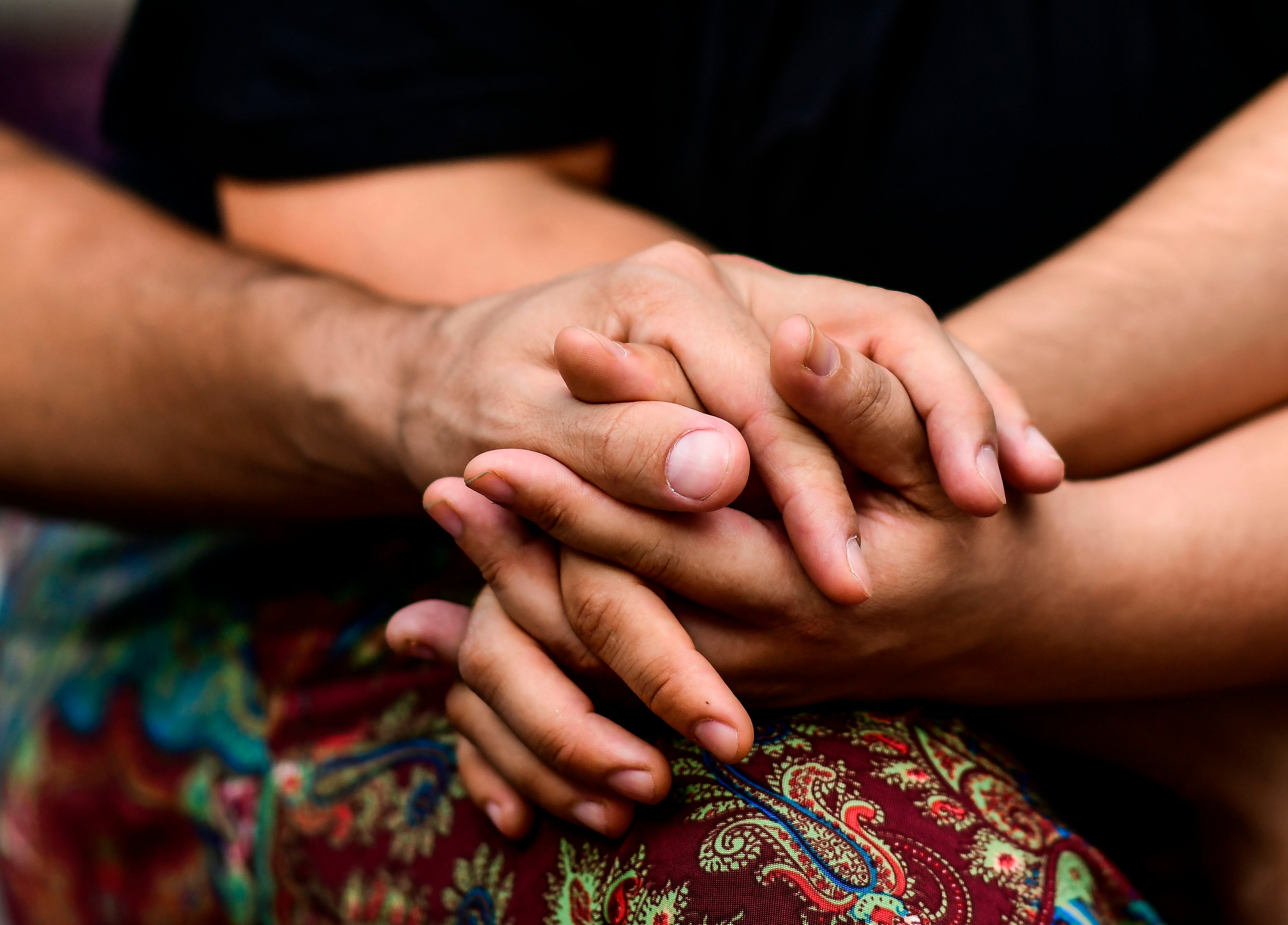
People join hands at the Pueyrredon Park in Buenos Aires (AFP via Getty)
In a study published in *Proceedings of the Royal Society B, *Dr Dyble calculates the human monogamy rate based on genetic data obtained from the Bronze Age burial grounds in Europe and Neolithic sites in Anatolia. The study also takes into account cultural information about 94 human societies such as the Tanzanian Hadza hunter gatherers and Indonesian Toraja rice farmers.
The research reveals a 66 per cent rate for full siblings in humans, placing us seventh of 11 socially monogamous species covered by the study. "Humans have a range of partnerships that create conditions for a mix of full and half-siblings with strong parental investment, from serial monogamy to stable polygamy,” Dr Dyble noted.
In comparison, meerkats show a 60 per cent full-sibling rate, while beavers just beat us for monogamy with 73 per cent.
Our fellow primates take the bottom of the table, with mountain gorillas managing a 6 per cent full-sibling rate, chimpanzees 4 per cent, and various macaque species from 2 to 1 per cent, indicating a highly promiscuous lifestyle.
“Based on the mating patterns of our closest living relatives such as chimpanzees and gorillas," Dr Dyble said, “human monogamy probably evolved from non-monogamous group living, a transition that is highly unusual among mammals.”
The anthropologist noted that the study “measures reproductive monogamy rather than sexual behaviour”.
“In most mammals, mating and reproduction are tightly linked,” he said. “In humans, birth control methods and cultural practices break that link.”