195 pages Edited by Susan Kaye Quinn (2024)
Read this if you like: Solarpunk, short speculative fiction, inventive worldbuilding
tl;dr summary: Collection of shorts that each imagine a hopeful future in a different way
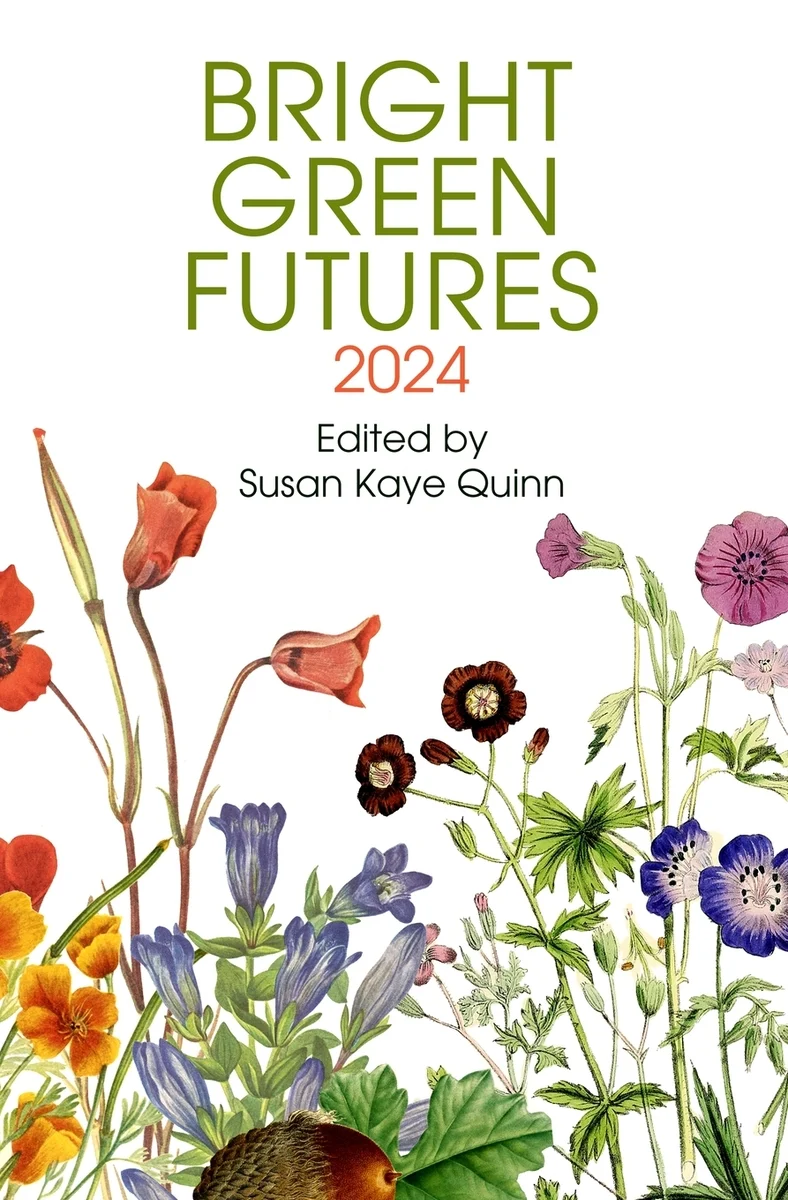
One of the coolest things about science fiction is its capacity to inspire actual change in the real world by showing people what’s possible. There are plenty of examples of technology imagined in the pages of a novel and later created in a physical form. And it can have a similar impact on how people think and view the world. This is one of the reasons I’ve been getting more into solarpunk. It’s an antidote fo…
195 pages Edited by Susan Kaye Quinn (2024)
Read this if you like: Solarpunk, short speculative fiction, inventive worldbuilding
tl;dr summary: Collection of shorts that each imagine a hopeful future in a different way
One of the coolest things about science fiction is its capacity to inspire actual change in the real world by showing people what’s possible. There are plenty of examples of technology imagined in the pages of a novel and later created in a physical form. And it can have a similar impact on how people think and view the world. This is one of the reasons I’ve been getting more into solarpunk. It’s an antidote for that overwhelmed hopelessness that sets in when I think about climate change and how incredibly fucked the planet is. Stories might not be able to solve the whole problem, but I like reading about one potential way that we could sidestep disaster (or at least be okay, still, after the disaster happens). I also feel a smidge of hope knowing that someone has put a solution out into the world that, just maybe, someone else can run with to make some aspect of reality just a little bit better.
All of the stories in this collection nailed that spirit of solarpunk. There are elements of nearly every story that are depressing or downright terrifying on their own: a flooded future Rio de Janeiro; a derelict space station populated by giant centipedes; an invisible beast trapped behind a city fence. But these potential downers serve as jumping off points for very hopeful narratives, and that ability to find the points of light hidden inside something very dark is really what’s so magical about solarpunk in general for me.
Getting a bit more specific with this collection, I found the worldbuilding to be on point across the stories. They were consistently able to ground the reader in a very vivid setting without bogging it down with tons of description. ”The Doglady and the Rainstorm” especially is a perfect example of how using the right specific details can build an entire world in just a few paragraphs. The opening image is the main character, Joseane, boating down a street-turned-canal between vertical gardens, accompanied by the buzz of pollinator drones. By the second page, I’m fully anchored in a place and can place it roughly in the semi-near future, and I’m ready to move with Joseane through this world.
“Centipede Station” is another one where the worldbuilding is on-point and accomplished very quickly through choice descriptions (it also just might be my favorite, though that’s a hard choice because all of the stories have their strong points). In the first two paragraphs, we understand both that Pebble and Moss are on a space station, and that we’re dealing with something more organic than what you might expect from that setting. It’s not easy to both establish and subvert a reader’s expectations that quickly without giving them whiplash. It’s accomplished here by keeping the language straightforward and the characters central. It doesn’t start with a zoomed-out view of the station—it starts with two characters huddled around a campfire, then extends outward to the centipedes chittering in the dark, then finally hovers over them to show the context.
Something else I enjoyed about both of these stories is how they defied reader expectations. I’ve read stories set in flooded cities before, but never one that focuses on a dogwalker as a protagonist like “The Doglady and the Rainstorm” does. Telling the story through that unexpected perspective, and then adding in the surprise wrinkle that she has a paralyzing fear of rainstorms, makes the familiar trope feel completely new. With “Centipede Station” I was able to see the ending coming from fairly early on, but in that “I feel smart” way, not a way that kills the tension. Instead, it shifts the tension, away from a fear of the centipedes and the environment and more toward the other layers, like how the characters are dealing with their grief while navigating this alien landscape.
As a cryptid fanatic, “What Kind of Bat Is This?” was pretty much written for me to love it. It has a somewhat familiar setup: a scientist, Bree, accidentally falls into an unsearched cave and in the process stumbles across a long-hidden form of life. What I like is how this premise is balanced against Bree’s relationship with Izzy, a former colleague. The emotional arc isn’t just the combination of fear and excitement associated with discovering a new species, but also Bree’s complicated relationship with Izzy, and the way it sours what should otherwise be an incredible discovery. I also like the way it comes around at the end, with the ultimate conclusion being one of sharing the joy and working together, which is a spirit I think is central to the idea of solarpunk in general.
When it comes to which stories in the collection I think have the most helpful and in-the-moment beneficial message, “A Merger in Corn Country” tops that list, I think. The premise of this one, in brief, is that a sustainable commune buys the farm next to an old, set-in-his-ways corn farmer. And spoiler: it doesn’t veer into the obvious conflict you’d expect from that set-up. Instead, it’s generally a warm-fuzzy feel-good romp, and I enjoyed every minute of it. The voice really helped with this. It’s charming and folksy without veering into caricature. There isn’t a ton of conflict or tension in the story—but in this case, I feel like that’s the point. In a way, the reader’s expectations generate the main tension. I, at least, just kept waiting for the other shoe to drop and for there to be some big fight and falling out between Dennis and the commune, and I was glad to be proven wrong and have the story go a different direction.
“The Park of the Beast” has the darkest, most ominous feel of all of them. At first, I would say there’s a more dystopian vibe to the caged-off substation than the utopian world most of the stories inhabit. But there’s a quirkiness to the voice that lightens it, pushing it more toward absurdism than horror. The beast is frightful, but described in a way that makes it feel like something to root for more than something to fear. Maybe I’m reading into this, but it felt to me like the narrator was eager for the day the beast would break free of its cage, like it would be the force that freed all of them from a larger fear. I liked that inversion of the expected, and that’s what kept it feeling like it belonged in this collection.
I think it’s fitting that “The Park of the Beast” comes after “Ancestors, Descendants” because it’s another one that starts off feeling more dystopian. It opens on the protagonist alone in his town after the rest of its inhabitants abandoned it; when he does find more people, they’re not exactly friendly. This turns in the second half, though, and ultimately the arc is one of finding strength in community. From a craft standpoint, I was impressed by how “Ancestors, Descendants” covered such a broad span of time and still gave the reader characters to care about. It’s written as a kind of diptych of flash pieces, each with its own arc. That’s an unusual format but one that works for this story because it keeps the characters completely separate in the reader’s mind, and lets them fully sink into each world and get to stay with each character for a whole stretch.
“Coriander” feels like an excellent anchor for the collection for multiple reasons. For one, I like the symmetry of starting and ending with flooded worlds. In the case of “Coriander”, that world is the city where her great-grandmother (her ah-zho) grew up. The narrator is there to connect with her lineage, and that mission also puts the story in conversation with “Ancestors, Descendants.”
I often focus on the individual stories in a collection, but the overall reading experience is important, too, and Bright Green Futures does an excellent job in that regard. The variety of settings and voices keeps each story feeling fresh, but they have enough of a thematic thread running through them that they feel like they all belong together. I’d definitely give this collection a strong recommend for anyone who wants to dig deeper into the solarpunk genre.
See similar posts: